A STANDARD FOR THE NATIONS

PMW 2023-089 by Kenneth L. Gentry, Jr.Cross over all

Isaiah provides us with a glorious and encouraging Messianic prophecy in Isaiah 11. Let us quickly summarize his teachings.

Isa. 11:1–2: a shoot will spring from the stem of Jesse
Along with Assyria, Israel has been chopped down to a stump (10:18–19, 33–34). Yet the Messiah, the true Davidic king, will arise from the lineage of Jesse (vv. 1, 10; David’s father, 1 Sam. 16:10–31). Christ is the greater David who was typified in David. He will be endowed with “the Spirit of the LORD” (v. 2), thereby exercising wisdom, understanding, counsel, strength, knowledge, and the fear of the LORD (v. 2).

Isa. 11:3–6: with righteousness He will judge the poor
Where Israel’s rulers failed and earned God’s judgment, the Messiah will exercise righteous rule (cf. v. 9).
Continue reading

KINGDOM GRADUALISM

PMW 2023-088 by Kenneth L. Gentry, Jr.Gradualism

God’s redemptive kingdom develops gradually over time, unfolding incrementally. It begins small and will eventually grow to dominance. In a number of verses, we can see this principle of gradualism in God’s providence.

An historical indicator of kingdom gradualism appears in the Promised Land’s conquest. In Deuteronomy 7:22 we read: “And the Lord your God will clear away these nations before you little by little; you will not be able to put an end to them quickly, lest the wild beasts grow too numerous for you.” Here Moses specifically informs Israel that gradual conquest is for her good, allowing her people to conquer where they could secure and maintain control.
Continue reading

PSALM 45 AND THE MESSIAH

PMW 2023-087 by Kenneth L. Gentry, Jr.Ancient wedding

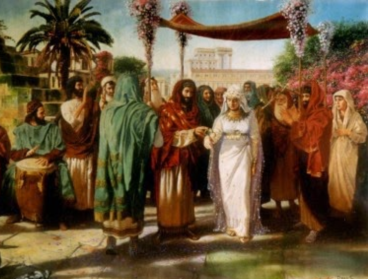
Psalm 45:1–7 is a royal wedding hymn psalm. It engages in praise that is so exalted that it is primarily Messianic in function. However, it could apply to an earthly king in an ideal sense as the goal at which his rule should aim. Yet its Messianic purpose is the ancient view among both Jewish and Christian interpreters. We even see its Messianic function in the New Testament (Heb. 1:8–9). In this regard, notice the following.

The title of this Psalm is the longest by far in all the Psalms: “For the choir director; according to the Shoshannim. A Maskil of the sons of Korah. A Song of Love.” This emphasizes its deep and solemn significance in presenting the glorious wedding hymn — for the Messiah.

Continue reading

BIBLICAL TYPOLOGY

typologyPMW 2023-086 by Kenneth L. Gentry, Jr.

A biblical “type” is an Old Testament person, event, or institution that serves as an anticipation of a greater New Testament person, event, or thing, which is known as an “anti-type.” The Old Testament type is a God-ordained matter that is intentionally designed as a pointer to its future, greater “fulfillment.” Thus, Scripture often engages in a recurring pattern of divinely-ordained relationships between the Testaments.

True “types” are not just accidental similarities which we may develop by our own interpretive ingenuity. They are God-ordained similarities that are purposely embedded in Scripture and serve a significant theological purpose. The type may not be understood initially by the saints in the Old Testament, but they are finally demonstrated as such in the New Testament, usually through specific confirmation.

Continue reading

THE SONS OF GOD IN GENESIS 6

PMW 2023-085 by Kenneth L. Gentry, Jr.Seth v Cain

The episode occurring in Genesis 6:1–4 is quite difficult to interpret and has been the subject of much debate. Though there are several interpretations of this passage, historically two views have dominated the debate: (1) the angelic offspring view and (2) the human seed-line view.

Though the seed-line view is the traditional Christian understanding, perhaps the oldest view in extra-biblical antiquity is the angel-human interpretation. It is found as far back as 200 B.C. in the non-biblical book of 1 Enoch (6:11–7:6) as well as in the first-century book by Josephus called Antiquities (1:3:1). This view holds that fallen angels came down to earth and engaged in sexual relations with women who then bore giants as their offspring.

The seed-line view holds that the godly line of Seth (4:25) that has been the focus of Genesis since Genesis 5:3 is beginning to intermarry with unbelieving women (“whomever they chose” without reference to their faith. These women would be largely represented by the Cainite line (4:17ff). This appears to be the proper interpretation due to its fitting the context and avoiding bizarre results.
Continue reading

PAUL & THE LAW OF CHRIST

PMW 2023-084 by Kenneth L. Gentry, Jr.Law and Jesus

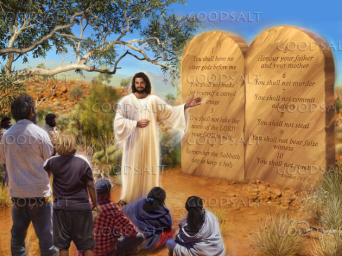
In 1 Corinthians 9:21 we read the following statement by Paul:

“to those who are without law, [I am] as without law, though not being without the law of God but under the law of Christ, that I might win those who are without law.”

The italicized phrases in this statement have presented material to anti-theonomists, suggesting that Paul here declares that in Christ — and, therefore, in the Christian era — a new law prevails, which he denominates: “the Law of Christ.” This new Law of Christ supplants the older Law of God as the ethical norm for Christian behavior.
Continue reading

CALVIN AND POSTMILLENNIALISM

PMW 2023-083 by Greg L. BahnsenDoubting prayer

INTRODUCTION

When we understand the distinctive character of postmillennialism (i.e., historical optimism”), it is important to go on and see that this position is not eccentric in terms of the outlook of orthodox theology, nor is it a recent innovation (associated, as some erroneously say, with the rise of nineteenth-century humanistic optimism). Rather, the postmillennial hope has been the persistent viewpoint of most Reformed scholars from the sixteenth century into the early twentieth century. In light of that fact, the position deserves to be examined again today for its biblical support and not lightly dismissed as somehow an obvious theological mistake. That is, there is no prima facie reason to reject postmillennialism as foreign to the thinking of the most respectable theological teachers or the unwitting parallel to specific secular movements. The position has been endorsed by the most dependable and outstanding theologians and commentators from the Reformation to the present.
Continue reading