
 PMW 2022-060 by Kenneth L. Gentry, Jr.
This is the second and final part of a brief series arguing that the “many waters” of Rev. 17:1, 15 refer to Jerusalem’s influence over the diaspora Jews, many of whom were proselyte from the nations.
My second observation regarding the Babylonian-harlot’s sitting on many waters represents Jerusalem’s political influence exercised by means of the diaspora — particularly against Christians —- which is exerted throughout the empire and among the “peoples and multitudes and nations and tongues” (17:15).
Remembering the Jewish danger to Christians (Rev. 2:9; 3:9; cp. Acts 4:3; 5:18; 8:3; 9:2; 12:4; 18:6; 22:4; 24:27; 26:10; Rom 15:31; 2 Cor. 11:24; 1 Thess. 2:14-17; Heb. 10:33-34) and the role of the martyrs in Rev (Rev. 6:9-10; see also: Rev 1:9; 2:9-10; 3:9-10; 11:7-8, 11-13, 18; 12:10; 13:10; 14:11-13; 16:5-6; 17:6; 18:20, 24; 19:2; 20:4, 6), this is a quite significant implication of John’s image. After all, we discover “the common reflection of Jewish opposition in the NT writings” (Rick Van de Water, “Reconsidering the Beast from the Sea (Rev 13.1),” 248). Continue reading
 PMW 2022-059 by Kenneth L. Gentry, Jr.
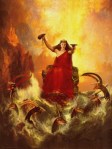 In my last blog article I began a brief argument for John’s Babylon being a metaphor for first-century Jerusalem. In this study I will bring the argument to a conclusion. Though I welcome questions!
 PMT 2014-013 by Kenneth L. Gentry, Jr.
 In my previous study I noted that the rider on the white horse could not be Christ. In this one I argue that he probably represents the Roman general Vespasian who was the general Nero commissioned to put down the Jewish war, and whose forces eventually destroyed the temple.
 This is my third and final article on the theme of Revelation, which is found in Rev 1:7. I have been presenting evidence that it prophesies the AD 70 judgment on Jerusalem and the temple, even though it seems like it is speaking of Christ’s second coming. Let us consider the remaining evidence.
  In my last article I opened a study of the question regarding the theme of Revelation. I began presenting evidence that John’s theme verse, Rev 1:7, speaks of the AD 70 destruction of Jerusalem and the temple, which concludes forever the old covenant. Though it sounds like he is speaking of the second advent, this is not the case. I will continue with my seriatim presentation of the evidence supporting the AD 70 interpretation.
 Postmillennial Worldview
Recent comments