OUR CHURCH MEMBERSHIP OBLIGATION

PMW 2025-065 by Kenneth L. Gentry, Jr.cjir

I see so many Christians in America who have disassociated themselves from particular church membership. They do not see any reason for or value in joining a local congregation. So what is the biblical argument for formal church membership? Though there are many arguments, here are four that should encourage us in seeking church membership.

First, Scripture teaches that believers are to associate themselves together in worship.

In Hebrews the writer is discouraging Jews who have professed faith in Christ not to leave the church and return to the synagogue: “not forsaking our own assembling together, as is the habit of some, but encouraging one another” (Heb 10:25). In fact, in the earliest appearance of Christianity we see the disciples doing just that: “They were continually devoting themselves to the apostles’ teaching and to fellowship, to the breaking of bread and to prayer” (Acts 2:42). Continue reading

HELPFUL ESCHATOLOGICAL OBSERVATIONS

PMW 2025-064 by Kenneth L. Gentry, Jr.

I am currently working on a book on the Two Ages of Redemptive History, which is a book that will supplement another project I have almost completed researching: “The Olivet Discourse in Context.” In this blog posting I will simply list some well-stated, random observations of various theologians regarding eschatological phenomena. I hope you find these helpful, for I will have them in my book!

Just for fun, I will begin with one of my own:

Ken Gentry
In Romans 8:23 Paul speaks of the redemption OF the body, not a redemption FROM the body. This fits nicely with his statement in the much abused fifteenth chapter of 1 Corinthians, where Paul speaks of “THIS” body being resurrected, NOT removed or replaced. See verses 53–54.
Continue reading

CHRIST AND OUR CALENDAR

PMW 2025-063 by Kenneth L. Gentry, Jr.

Gentry note:
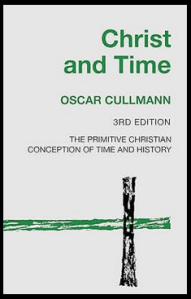
These few paragraphs are taken from Oscar Cullman’s book, Christ and Time. His book is arguing that God controls time and that history is properly divided by the birth of Christ as the key event in history. In other words, he is presenting ancient Christianity’s Christo-centric view of history. These few sentences below are important to understand.

Cullmann:
Our system of reckoning time does not number the years in a continuous forward-moving series that begins at a fixed initial point. That method is followed, for example, in the calendar which Sextus Julius Africanus created at the opening of the third century A.D., and in the Jewish calendar, which thinks it possible to fix the date of the creation of the world, and hence designates that event by the year 1 and simply numbers forward from that point. Our system, however, does not proceed from an initial point, but from a center; it takes as the mid-point an event which is open to historical investigation and can be chronologically fixed, if not with complete accuracy, at least within a space of a few years. This event is the birth of Jesus Christ of Nazareth. Thence proceed in opposite directions two enumerations, one forward, the other backward: “after Christ,” “before Christ.” Continue reading

“THE FINAL TRIUMPH OF GOD” REVIEW

PMW 2025-062 by Kenneth L. Gentry, Jr.

James P. Ware’s The Final Triumph of God: Jesus, the Eyewitnesses, and the Resurrection of the Body in 1 Corinthians 15 (Eerdmans, 2006) is one of the most compelling and insightful books I have read in many years. It is absolutely spell-binding in its careful exegetical observations regarding the physical resurrection of the body in 1 Corinthians 15. And in our day of the arising of a new neo-Gnosticism (!) it is a “must have” book. I highly recommend this book to anyone interested in Christ’s physical, bodily resurrection or our own. And to any who might want to witness to hyper-preterists (or liberals who hold the views). This might be a good tract to  give them.

Instead of my own personal review, I will simply cite most of the Foreword by A. Andrew Das. He focuses on the essence of the book and the importance of Ware’s own triumph! Continue reading

REFORMATION & MODERN POSTMILLS

.PMW 2025-061 by Kenneth L. Gentry, Jr.

In a previous posting I listed a few ancient postmillennial writers, noting that this would have been a budding postmillennialism, not a full-blown postmillennial scheme. In this article I will present the names of some Reformation postmillennialists, as well as some contemporary ones

Reformation Postmillennialism

As Donald Bloesch notes, “postmillennialism experienced an upsurge in the middle ages,” as illustrated in the writings of Joachim of Fiore (A.D. 1145-1202) and others. But a more fully developed postmillennialism enjoys its greatest growth and influence in the seventeenth through nineteenth centuries, especially under Puritan and reformed influence in England and America. Continue reading

HYPERPRETERISM VS. THE GOSPEL (3)

PMW 2025-060 by Kenneth L. Gentry, Jr.

Introduction
This is my third and final article in a short series on 1 Corinthians. I am showing that Paul is warning the Corinthians that denying the physical resurrection ends up denying the gospel. Thus, 1 Corinthians should serve as a warning to any Christians being tempted by hyper-preterism and its neo-Gnostic spiritual resurrection of the body. Sadly, hyper-preterists who teach a “spiritual” resurrection instead of a “bodily” resurrection are adopting humanism over biblicism.

The wisdom of the world
Once again, I am beginning with Paul’s first major section opening the main body of his epistle: 1 Cor. 1–4. In this section, which is the foundation for the whole epistle, Paul is warning against the wisdom of the world (i.e., that of fallen man) as he sets it over against the wisdom of God, which is found in Paul’s preaching. In 1 Cor. 3:18 he expresses concern about some “among” the Corinthians who are teaching the wisdom of the world in the church there [1]:

“Let no man deceive himself. If any man among you [en humin] thinks that he is wise in this age [sophosen to aioni touto], he must become foolish, so that he may become wise. For the wisdom of this world [sophia tou kosmou toutou] is foolishness before God. For it is written, ‘He is the one who catches the wise in their craftiness’; and again, ‘The Lord knows the reasonings of the wise, that they are useless.’ So then let no one boast in men.” Continue reading

HYPERPRETERISM VS. THE GOSPEL (2)

PMW 2025-059 by Kenneth L. Gentry, Jr.

Introduction
This is the second in a three-part series on 1 Corinthians that will be showing that Paul warns that a denial of the physical resurrection ends up denying the gospel of Jesus Christ. This should be a deep concern for any young theologue toying with hyper-preterism and its neo-Gnostic convictions. This charge of neo-Gnosticism arises due to hyper-preterists denying the physical nature of the resurrection body, arguing that the resurrected body is composed of spirit.

In this series I am slowly building my case from Paul’s first letter to the Corinthians. Paul was no hyper-preterist! Continue reading