THE BLACK WOMAN IN SOLOMON’S SONG

PMW 2023-098 by Kenneth L. Gentry, Jr.Song of songs ch 1
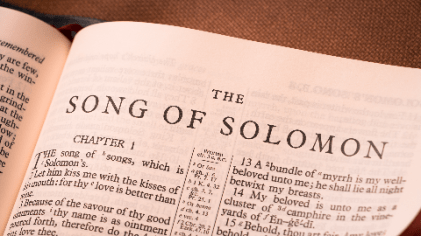
In today’s posting I will focus on the opening verses of the Song of Solomon. The text regarding Solomon’s black bride-to-be is usually misinterpreted — along with the rest of the book.

Song is perhaps the most difficult book in the Old Testament to interpret, rivaling even Revelation in the New Testament. Interpretations include its being an allegory (either of God’s love for Israel or for Christ and the Church), a drama (an actual romantic play), a cultic celebration (i.e., speaking of a fertility cult), a funeral cult ritual (cf. 8:6), an actual wedding ceremony text, or a love song (either of an historical event or a purely poetic exercise). Yet, sufficient evidence suggests that it is a love poem celebrating the sexual relationship between a bride-to-be and her husband-to-be. It is not a love story presented as a formal drama, per some interpreters (e.g., the famed Franz Delitzsch), for it offers little character development and virtually no plot line.
Continue reading
INTRODUCING ISAIAH (3)

Isaiah textPMW 2023-097 by Kenneth L. Gentry, Jr.

This is my final article on the introduction to Isaiah. Please see previous two posating before reading this one.

SPECIAL ISSUES

One of the most hotly-debated issues in biblical studies concerns the authorship of Isaiah: was it written by one author or by several over a 100+ year period, only eventually being compiled as one book. Before the rise of modern biblical criticism, the unity of Isaiah was the historic position of Judaism and Christianity. Before the eighteenth century, only the twelfth century Jewish commentator Ibn Ezra (1089–1167 AD) questioned the book’s unity.
Continue reading

INTRODUCING ISAIAH (2)

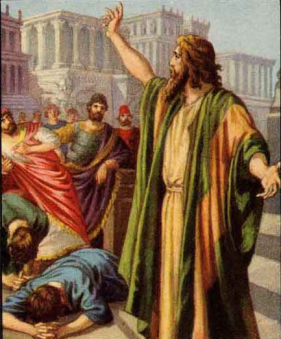
PMW 2023-095 by Kenneth L. Gentry, Jr.isaiah preaching 2

In this posting, I am continuing a brief historical and literary introduction to the Book of Isaiah. Such knowledge is helpful for better interpreting the text. We move now to consider:

PURPOSE

Isaiah ministered during a dangerous, tumultuous, and critical time. Judah and Israel have major world powers Egypt (Isa. 19), Assyria (Isa. 36), and Babylon (Isa. 13) either on the scene or looming in the near future. This problem is compounded by Israel’s unfaithfulness (e.g., 1:10–11; 6:9; 42:14–25; 43:22–28; 48:1–2). Therefore, some of Isaiah’s leading purposes include:

Isaiah calls Judah and Israel to repentance. Isaiah opens with a call to heaven and earth to serve as witnesses to God’s legal indictment against Judah and Israel (1:2–9). It was important for Isaiah to call the people to repentance by teaching salvation by grace (e.g., Isa. 1:18–20; 40:2; 43:1–7, 25; 44:28; 51:2; 55:1–13; 63:7–9).
Continue reading

INTRODUCING ISAIAH (1)

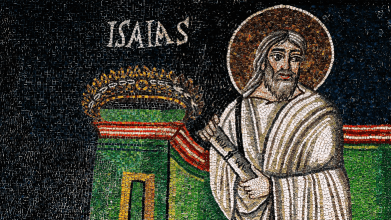
PMW 2023-094 by Kenneth L. Gentry, Jr.Isaiah mosaic

Isaiah is one of the best-known, best-loved and most studied OT prophets. When opening a book of the Bible, it is always helpful to have at least a general understanding of several key issues. The Bible is an historical book dealing with real history. The more we know about its setting and issues, the better we can understand it. In this brief series I will introduce Isaiah.
Continue reading

CHRIST AND THE REBELLIOUS SON LAW

PMW 2023-094 by Kenneth L. Gentry, Jr.Mob violence

Christ upholds God’s Law. And this includes his upholding one of the laws most commonly misunderstood and employed today. This law is often used in arguing against the continuing relevance of God’s Law in the civil sphere. He upholds the law calling for capital punishment for incorrigible criminality. Even the parents of a dangerous individual are expected to turn him over to civil authorities for capital punishment:

And He answered and said to them, “And why do you yourselves transgress the commandment of God for the sake of your tradition? For God said, ‘Honor your father and mother,’ and, ‘He who speaks evil of father or mother, let him be put to death.’ But you say, ‘Whoever shall say to his father or mother, “Anything of mine you might have been helped by has been given to God,” he is not to honor his father or his mother.’ And thus you invalidated the word of God for the sake of your tradition.” (Matt 15:3–6)

Continue reading

THE TWO WITNESSES OF REVELATION (2)

PMW 2023-093 by Kenneth L. Gentry, Jr.

This is the second and concluding article on the identity of the two witnesses in Revelation. In this installment, I present my own view and a portion of my evidence for it.

The first view is that the two witnesses may represent the whole Old Testament order (religious and civil) or content (law and prophecy). The second view is that the two witnesses may represent first century Christianity as a whole.

Third, more probably, the two witnesses may represent Continue reading

THE TWO WITNESSES OF REVELATION (1)

PMW 2023-092 by Kenneth L. Gentry, Jr.

The two witnesses in Rev. 11 have generated much discussion among Revelation enthusiasts. Though they only appear here in John’s forensic drama, they play an important role regarding the temple’s destruction. But debate continues over their identity. In this and my next blog posting, I will present the three leading options on their identity. Continue reading