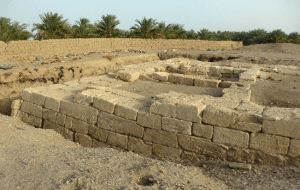
TEMPLE MEASURING AND EZEKIEL

PMW 2024-002 by Kenneth L. Gentry, Jr.

I appreciate the questions readers send to me. I regret that I am not able to answer them quickly, due to my schedule. However, here is one that is a favorite among dispensationalists. And it is an intriguing one.

Reader’s question:

You argue that John must be measuring an actual, historical temple in Rev 11:1-2. Yet Ezekiel measures a temple, even though it does not exist in history. This suggests that the temple does not need to exist for John to measure it. How do you explain this problem for your view?

My response:

Thanks for your perceptive question. Please consider the following response. Continue reading

THE TEMPLE IN REVELATION 11

Temple 2PMW 2024-001 by Kenneth L. Gentry, Jr.
Revelation is an important book in eschatological discussions. The most vigorous Revelation debate in ecclesiastical circles today revolves around the dispute between preterism and futurism. Preterism holds that Revelation was largely fulfilled not long after John wrote it. Futurism holds that it deals largely with events yet to come.

Because of this debate, the identity of the temple in Rev 11 arises as a serious matter. In Revelation 11:1, 2 we read:

And there was given me a reed like unto a rod: and the angel stood, saying, Rise, and measure the temple of God, and the altar, and them that worship therein. But the court which is without the temple leave out, and measure it not; for it is given unto the Gentiles: and the holy city shall they tread under foot forty and two months.

Here we find a Temple standing in a city called “the holy city.” Continue reading

WHERE DO WE GO AT DEATH?

New earth

PMW 2023-100 by Kenneth L. Gentry, Jr.

A writer sent a note asking:

“One thing I’m a little confused about is the ultimate end of history. Does man remain on earth when Christ returns? After Christ has put all enemies under his feet and handed over the kingdom to the Father, does heaven and hell “merge” and man remains on earth for a lack of better words while Christ is present physically (assuming also still in some sense everywhere present because he’s God). I’m so confused as I feel like I always hear by and large from Christians is to just go to heaven and it seems many believe the present earth to be destroyed. Or is there something else beyond earth/heaven?”

Ken Gentry responds:

Basically, I believe that when we die now (in history) we go to heaven — as did the disciples, the thief on the cross, and Paul the apostle: Continue reading

INTERPRETING MESSIANIC PSALMS

PMW 2023-099 R. T. France

I am reading R. T. France’s excellent work, Jesus and the Old Testament. He has much that is helpful for the postmillennialist and the (orthodox) preterist. Below I will quote three paragraphs that ought to be an encouragement to my readers. These present to us a helpful hermeneutic approach to many Old Testament passages.

I am sure France did not intend them as postmillennial observations, but they do help us in understanding the postmillennial hope nonetheless. Continue reading

THE VIRGIN BIRTH

PMW 2023-098 by Kenneth L. Gentry, Jr.Virgin birth

The most crucial aspect of the debate over the prophecy in Isaiah 7:14 is the meaning of the Hebrew word alma. It is translated “virgin” in most English versions (ASV, ESV, ISV, NASB, NIV, NKJV), though most of those have a marginal note offering the option “maiden” or “young woman.” A few versions do not have “virgin” as the main translation (NAB, NET, NRSV, RSV).

“Therefore the Lord Himself will give you a sign: Behold, a virgin will be with child and bear a son, and she will call His name Immanuel. (Isa. 7:14)”
Continue reading

THE BLACK WOMAN IN SOLOMON’S SONG

PMW 2023-098 by Kenneth L. Gentry, Jr.Song of songs ch 1

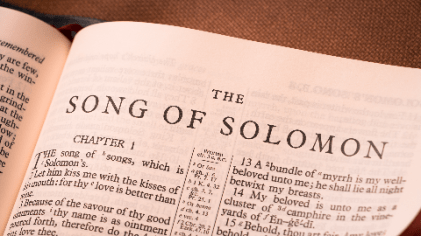
In today’s posting I will focus on the opening verses of the Song of Solomon. The text regarding Solomon’s black bride-to-be is usually misinterpreted — along with the rest of the book.

Song is perhaps the most difficult book in the Old Testament to interpret, rivaling even Revelation in the New Testament. Interpretations include its being an allegory (either of God’s love for Israel or for Christ and the Church), a drama (an actual romantic play), a cultic celebration (i.e., speaking of a fertility cult), a funeral cult ritual (cf. 8:6), an actual wedding ceremony text, or a love song (either of an historical event or a purely poetic exercise). Yet, sufficient evidence suggests that it is a love poem celebrating the sexual relationship between a bride-to-be and her husband-to-be. It is not a love story presented as a formal drama, per some interpreters (e.g., the famed Franz Delitzsch), for it offers little character development and virtually no plot line.
Continue reading

INTRODUCING ISAIAH (3)

Isaiah textPMW 2023-097 by Kenneth L. Gentry, Jr.

This is my final article on the introduction to Isaiah. Please see previous two posating before reading this one.

SPECIAL ISSUES

One of the most hotly-debated issues in biblical studies concerns the authorship of Isaiah: was it written by one author or by several over a 100+ year period, only eventually being compiled as one book. Before the rise of modern biblical criticism, the unity of Isaiah was the historic position of Judaism and Christianity. Before the eighteenth century, only the twelfth century Jewish commentator Ibn Ezra (1089–1167 AD) questioned the book’s unity.
Continue reading