JESUS WARNS THE SANHEDRIN

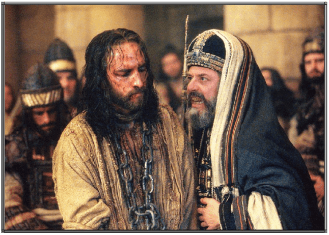
PMW 2024-060 by Kenneth L. Gentry, Jr.Jesus before high priest
As we near the end of Matthew’s Gospel, we see further evidence of the Jewish rejection of the Messiah and evidence of Gentile inclusion in the people of God. Once again, this helps justify the Olivet Discourse given just a day or so earlier.

In Matthew 26:3–5 Israel’s chief priests and elders along with the high priest counsel Jesus’ death. They begin implementing their evil plan in verses 14–15 where they pay Judas to betray Jesus to them (cp. vv. 21–25, 45). But once again we find another indicator of Gentile inclusion: “Truly I say to you, wherever this gospel is preached in the whole world, what this woman has done will also be spoken of in memory of her” (v. 13). Continue reading
JESUS ENTERS JERUSALEM

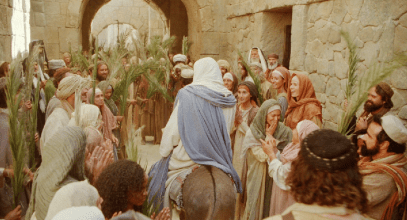
PMW 2024-059 by Kenneth L. Gentry, Jr.Triumphal entry

I have been doing a few surveys in Matthew’s Gospel. These are showing the failure of Israel and the expectation of Gentile salvation. I will skip now to the end of Matthew to continue this survey. By this means, I am tracing Matthew’s highly-structured presentation of Jesus’ ministry to show how it leads up to the Olivet Discourse in Matthew 24–25. Now in Matthew 21:10 Jesus enters Jerusalem (for the first time in this Gospel). Jerusalem is the capital of Israel, the home of God’s temple, the seat of the high priesthood and their religious rule over Israel.

Matthew is clearly organizing his material to emphasize Jesus’ climactic entry into Jerusalem to confront and rebuke Israel’s religious authorities. As noted above, this confrontation has been brewing since Matthew 16:21: “From that time Jesus Christ began to show His disciples that He must go to Jerusalem, and suffer many things from the elders and chief priests and scribes, and be killed, and be raised up on the third day” (cp. 20:18). Continue reading

REVELATION, RE-APPLICATION, INTERPRETATION

PMW 2024-058 by Kenneth L. Gentry, Jr.

All Christians are called by God to study the Bible, for it is his Word designed for and graciously given to us for our good. As Paul says: “All Scripture is inspired by God and profitable for teaching, for reproof, for correction, for training in righteousness; so that the man of God may be adequate, equipped for every good work” (2 Tim. 3:16–17).

And because of this, the Bereans are commended for their studious diligence in seeking to understand the Scriptures: “Now these were more noble-minded than those in Thessalonica, for they received the word with great eagerness, examining the Scriptures daily to see whether these things were so” (Acts 17:11). Continue reading

EZEKIEL 37 AND ISRAEL

Ezekiel dry bonesPMW 2024-057 by Patrick Fairbairn

Gentry reader asks:

Thanks so much for all your resources. I’ve been slowly studying the postmil eschatology for about a year now and it has been eye opening. I have a question regarding Ezekiel chapter 37. How does the postmil Eschatology respond to the details of the unification of Israel as a nation and the land promises that seem to be so literal? Thank you! (Z.K.)

Gentry lets Fairbairn respond:

The commentary on Ezekiel by Patrick Fairbairn (1805-1874) is an extremely helpful analysis of this great prophet. I will simply post the relevant portion of his commentary to full answer your question. I am citing from pages 408–412. I will only edit it in terms of more paragraph breaks. Older writers did not believe in paragraph breaks for their weary readers. Continue reading

PRETERISM IN REVELATION (4)

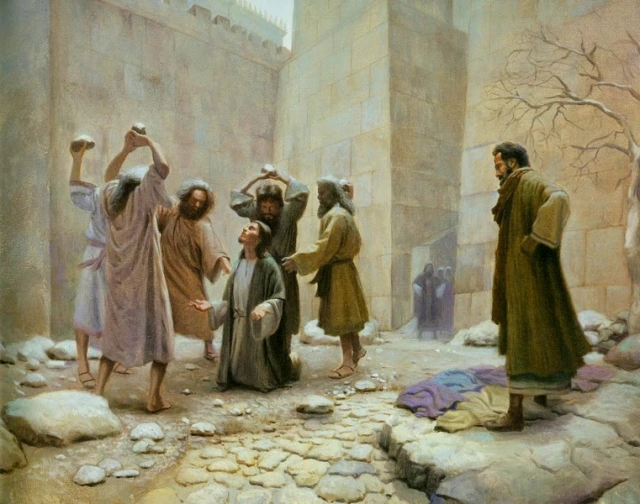
stoning the prophetsPMW 2024-056 by Kenneth L. Gentry, Jr.

As mentioned in the previous article, the theme of divine judgment on Israel fits perfectly with the Olivet Discourse. Virtually all commentators note the remarkable thematic parallels between Matthew 24 and Revelation 6. These parallels are sufficient alone to suggest the same theme, but other correspondences exist.

In Matthew 23 Christ scathingly denounces Israel’s leadership as he approaches the dramatic conclusion of his earthly ministry. He notes that Israel’s present failure is not an isolated event, but the culmination of a lengthy historical pattern — as do Stephen (Ac 7) and Paul (1Th 2:14-16). He concludes his rebuke with a prophecy that Israel will “fill up” (Mt 23:32) her guilt in “this generation” (23:36) when she “persecutes” those Jesus is “sending” (23:34; cp. Ac 8:1; 1Th 2:14-16). Continue reading

PRETERISM IN REVELATION (3)

12 tribesPMW 2024-056 by Kenneth L. Gentry, Jr.

As I continue my brief introduction to preterism in Revelation, we come now to the important: Historical Indicators

I agree with John Lightfoot: Revelation appears to prophesy Christ’s judgment upon the Jews in A.D. 70. John’s opening statement of purpose (1:7), the seven letters (2:9; 3:9), and the body of Revelation (4-19; e.g., 7:1-8; 11:1-8) all reflect this truth.

Just after mentioning the nearness of the events (1:1, 3) and just before alluding to the dire circumstances of his original audience (1:9), verse 7 warns: “Behold he comes with the clouds, and will see him every eye and those who him pierced, and will wail over him all the tribes of the land. Yes, amen” (Alfred Marshall, The Interlinear Greek-English NT; cp. Robert Young, Literal Translation). Though this sounds like a Second Advent reference, the following evidence points to A.D. 70. Continue reading

PRETERISM IN REVELATION (2)

Ancient preachingPMW 2024-055 by Kenneth L. Gentry, Jr.

I began this brief series to introduce the preterist approach to Revelation to those who might be unfamiliar with it. And there are about 7.95 billion of those people. (I would really like to tap into that market!) In the first article I laid down the founding principle: temporal indicators. In this article we will move on to a second exegetical indicator:

Audience Indicators. John emphasizes the nearness of his prophetic events, in a way most relevant to his original recipients. In fact, to delay the prophetic events thousands of years would contradict his whole point in writing Revelation.

First, John writes to seven historical churches. Immediately after twice declaring the nearness of the events (1:1, 3) we read: “John to the seven churches that are in Asia” (1:4a). In 1:11 and 2:1–3:22 he specifically names the churches. John informs these first century churches of events ‘soon’ (1:1) to come to pass because “the time is near” (1:3). Continue reading