DABNEY ON THE RESURRECTION BODY (2)

PMW 2025-021 by Robert L. DabneyGeneral resurrection

Note: This concludes our previous posting presenting Robert L. Dabney’s argument for the physical resurrection of the dead.

Objection From Wonderfulness, Answered
The general objection is from the incredible greatness of the work. That is, since the particles that composed human bodies are scattered asunder by almost every conceivable agency, fire, winds, waters, birds and beasts of prey, mingled with the soil of the fields, and dissolved in the waters of the ocean, it is unreasonable to expect they will be assembled again.

We reply (reserving the question whether a proper corporeal identity implies the presence of all the constituent particles; of which more shortly), that this objection is founded only on a denial of God’s omnipotence, omniscience, and almighty power. The work of the resurrection does indeed present a most wondrous and glorious display of divine power. But to God all things are easy. Continue reading

DABNEY ON THE RESURRECTION BODY (1)

PMW 2025-020 by Robert L. Dabneyflower in concrete

Gentry note:

R. L. Dabney (1820–98) was a Reformed Presbyterian theologian who served as professor of systematic theology ot Union Theological Seminary (back when it believed something in particular), then he served as Professor of Mental and Moral Philosophy at the University of Texas. This excerpt below is from pp. 832–34 of his Lectures in Systematic Theology. Please note: I have slightly tweaked some of his punctuation, Roman numerals, and nineteenth century style without changing his meaning.

True Meaning of Resurrection
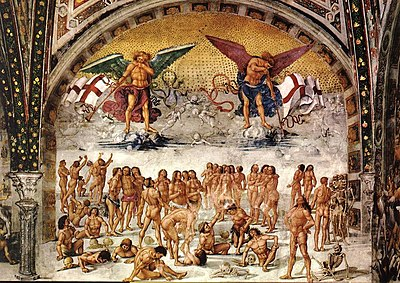
In Scripture the image of a resurrection, anastasis, is a undoubtedly used sometimes in a figurative sense, to describe regeneration (John 5:25; Eph. 5:14). And sometimes to speak of restoration from calamity and captivity to prosperity and joy (Ezek. 37:12: Isa. 26:19). But it is equally certain that the words are intended to be used in a literal sense, of the restoration of the same body that dies to life, by its reunion to the soul. This then is the doctrine. For when the resurrection of the dead (nekron), of those that are in their graves, of those that sleep in the dust of the earth, is declared, the sense is unequivocal. Without at this time particularizing Scripture proofs, we assert that they mean to describe a bodily existence as literally as when they speak of man’s soul in in this life, as residing in a body. And this, though wonderfully changed in qualities, is the same body in the proper, honest sense of the word “same,” which the soul laid down at death. This resurrection will embrace all the individuals of the human race, good and bad, except those whose bodies have already passed into heaven, and those of the last generation, who will be alive on the earth at the last trump. But on the bodies of these the resurrection change will pass, though they do not die. The signal of this resurrection is to be the “last trump,” an expression probably taken from the transactions at Sinai (Exo. 19:16, 19; cf. Heb. 12:26), which may, very possibly, be some literal, audible summons, sounded through the whole atmosphere of the world. But the agent will be Christ, by His direct and almighty power, with the Holy Ghost. Continue reading

CHRISTIANITY AND FUTURE REVIVAL

PMW 2025-019 by O. T. AllisAllis

Gentry note:
O. T. Allis (1880-1973) was an internationally recognized philologist and Reformed theologian who helped found Westminster Theological Seminary, along with J. Gresham Machen, Robert Dick Wilson, and others. He is noted especially for his work in the Old Testament. Allis was a postmillennialist, as we can see from his Foreword in Roderick Campbell’s Israel and the New Covenant, a powerful postmillennial book. The following is his Foreword in full.

The author of this valuable contribution to Biblical Interpretation belongs to a class of writers which is not as numerous today as has sometimes been the case, the lay theologian. Being both an earnest and active Christian and a successful man of business, Mr. Campbell very naturally became, as he tells us in his Preface, deeply concerned over the economic depression and the moral degeneracy which followed in the wake of the first World War. Being a Christian he turned to the Bible for the answer; and he also consulted many of the ablest interpreters of the Bible, in the hope of solving this pressing problem. The answer which he found is the thesis of the present volume. It can be stated briefly and in a single sentence: The Christian church has for centuries failed to take seriously and carry out fully the Great Commission. Continue reading

IAIN MURRAY AND HISTORICAL HOPE

PMW 2025-018 by Iain MurrayPuritan hope

Note from Ken Gentry:
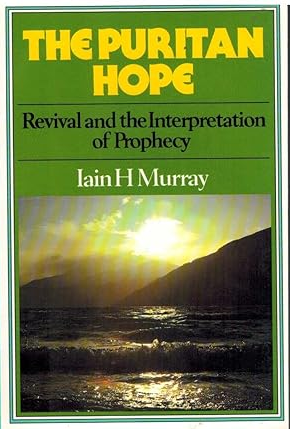
The following is an excerpt from Iain Murray’s The Puritan Hope, pp. xviii–xxii. He is explaining his conversion from premillennial thinking to a more hope-filled eschatology as found in many Puritans.

For some while after I gave up the millenarian view of future history the only truth respecting unfulfilled prophecy which I could regard as clear was this great one that Christ’s coming will be at the consummation of his kingdom. therefore all conversion-work yet to be in history must occur before the Second Advent. Of the certainty or extent of any future work I was entirely in doubt. I still retained the conviction that the testimony of Scripture on human depravity requires the expectation of an ever-darkening world and the signs of the twentieth century seemed to point me to the same conclusion.

Only very slowly did I come to believe that the Christian Church has indeed a great future in the world and this conviction came as the result of several lines of thought. For one thing all the scripture texts claimed as proof that the coming of Jesus Christ must now be close at hand have also been confidently so used in former generations. Not a few Christians in the past have been erroneously convinced that their age must witness the end. When the Teutonic barbarians overturned Rome and reduced a stable world to chaos in the fifth century A.D., many in the Church despairingly drew the wrong conclusion that the world could have no future. Even larger numbers did so at the approach of the year 1000, believing that the closing millennium would end the world. In the gloom of the fourteenth century such tracts appeared as The Last Age of the Church, and in terms very similar to that old title a great number have written since. Continue reading

REDEEMING ALL OF CREATION

PMW 2025-017 by David M. RussellWorld in God's hands

This post is excerpted from David M. Russell, The “New Heavens and New Earth,” pp. 167–173
Russell is focusing on Romans 8 and its implications for cosmic renewal in the new heavens and near earth. This world is not as it will always be: a fallen world under the curse of God. One day it will be renewed in glory and righteousness, at the coming of Jesus Christ. The following is Russell’s work.

It is apparent that Paul’s primary concern in this passage is not present suffering, although such is not to be dismissed easily as a petty distraction. His central focus is clearly the future glory. The entire section is therefore dominated by the theme expressed in the word apokaradokia, the “anxious longing” (NASB), “eager expectation” (NEB), or “eager longing” (NRSV) which is the characteristic outlook of the created order. In this term, which occurs in the NT only here and in Phil. 1.20, Paul ascribes to the creation an attribute of positive and confident anticipation. While the etymology of a word may be misleading, that Paul apparently constructed the word is instructive. The verb, from kara (“head”) and dechomai (“to take,” originally “to stretch”), gives the image of “craning the head forward,” that is, straining with outstretched head to catch the first glimpse of an object in the distance. The preposition apo may suggest “diversion from other things and concentration on a single object.” Continue reading

UNDERSTANDING COLLAPSING UNIVERSE PROPHECIES

PMW 2025-016 by Kenneth L. Gentry, Jr.Meteors

Two Errors ….

A number of prophetic passages (especially in the OT) speak of the universe collapsing. This has caused serious theological problems for two opposing eschatological schools.

Dispensationalism cannot interpret these passages in context because they approach them in a fully-literalistic sense. Thus they argue, these passages must be pointing solely to the distantly future second coming of Christ. Dispensationalists are committed to a half-truth in this interpretation, as I will show.

But then there is the hyper-preterist movement that interprets these passages as solely symbolic. They deem the falling-star passages as symbols of collapsing government. And these passages usually point to the collapse of Israel’s government under God’s wrath and judgment. Thus, they interpret these passages as picturing the coming AD 70 judgment of old covenant Israel. Hyper-preterists are committed to a half-truth also. Continue reading

THE TWO AGES, PAUL, AND JESUS

Vos Reformed EschatologyPMW 2025-015 by Geehardus Vos

Gentry note:
I have recently edited several of Geerhardus Vos’ important eschatological articles and chapters in a new book: Reformed Eschatology in the Writings of Gerhardus Vos. Bill Boney and I have brought them up to date in terms of style and layout, making them easier to read for a 21st century Christian. This is a small section touching on the important issues of the two ages, which is a concept I will be explicating in a new book later this year. This material is found in our edited book on pages 10–16.

Paul’s Distinction from the Old Testament

In distinction from the OT point of view, the structure of Paul’s eschatology appears antithetical. It places the end under the control of one principle with the sway of which an opposite principle of equally comprehensive rule and of primordial origin is contrasted. This is done so as to make the two, when taken together, yield a bisection of universal history. By giving the soteric movement this cosmical setting it claims for it the significance of a central world-process, around the core of which all happenings in the course of time group themselves. By this one stroke order is brought into the disconnected multitudinousness of events. Continue reading