IMPORTANCE OF BODILY RESURRECTION

PMW 2025-027 by Ben WitheringtonWitherington

Gentry note: As I continue daily research for my next book, I have stumbled on a helpful one titled Jesus, Paul and the End of the World by Ben Witherington (IVP 1992). Dr. Witherington is Professor of New Testament Interpretation at Asbury Theological Seminary and a widely recognized scholar who has written over sixty books on a variety of biblical issues and from leading evangelical publishers. Although I do not endorse everything he states in this work, he has many valuable, well-researched, deeply-exegetical insights that have been profitable for me. This is only an excerpt from pages 187–191 of this work. There is a lot of surrounding context that is necessary for grasping the full force of his argument. But this ought to whet your appetite. And steer you clear from the proto-Gnosticism of hyper-preterists who see the resurrection body as an ethereal, spiritual reality rather than a corporeal, material one.

That which follows is by Witherington and is cited from his book Jesus, Paul and the End of the World:

In 1 Thessalonians 1:10 Christ’s resurrection is connected with the believer’s future deliverance from God’s wrath. In fact, almost always when Paul speaks of Christ’s resurrection he does so in connection with the events that will transpire when Christ returns. He clearly does not see Christ’s resurrection as an isolated historical anomaly but as an eschatological event that is the harbinger and in some sense the trigger or at least the prerequisite of future eschatological events. Paul is surely dealing with Christians in Thessalonica who had speculated about such eschatological matters, and it may even be that the Thessalonian Christians were reflecting the characteristics of a millenarian movement. If so, then it would appear that Paul is trying to offer a certain amount of “eschatological reserve” while still affirming much of the substance of the Thessalonians’ beliefs about the future. Here Paul grounds the believer’s future status in the belief in the past Christ-event. Continue reading
PRETERIST POSTMILL SYSTEMATIC THEOLOGY

LethamPMW 2025-026 by Kenneth L. Gentry, Jr.

INTRODUCTION

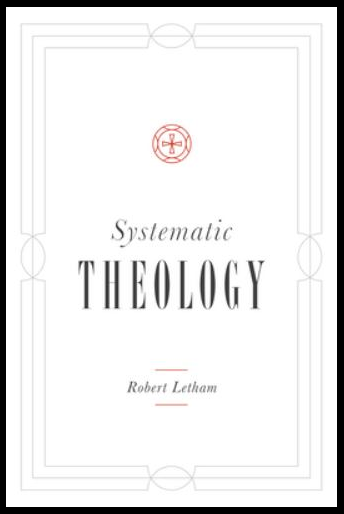
I frequently receive requests from readers seeking preterist and/or postmillennial works released by established publishers.[1] There are plenty of self-published and small-publisher releases available. I have recommended a few in the past and hope to continue doing so in the future. So, in this posting I will highly recommend an excellent systematic theology that is not only written by a prominent Reformed theologian, but is also (partial) preterist [2] and postmillennial in orientation: Robert Letham’s Systematic Theology (2019). Since this blog is fundamentally about eschatological issues, I will focus on Letham’s comments relevant to this locus of theology.

Robert Letham, Ph.D. (University of Aberdeen) is professor of systematic and historical theology at Union School of Theology. His Systematic Theology is published by Crossway, and endorsed by Joel R. Beeke, Sinclair B. Ferguson, Carl R. Trueman, Cornelis P. Venema, and Alan D. Strange — competent theologians one-and-all!
Continue reading

CORRECTING CONFUSION

Future Next ExitPMW 2025-025 by Kenneth L. Gentry, Jr.

In this article I will be briefly responding to a reader that has been confused over some lexical and interpretive issues in eschatology. Hopefully this will help not only him but my other readers who may have experienced the same types of confusion.

The reader was interacting with my article “Understanding Collapsing Universe Prophecies” (PMW 2025-016) published on February 25, 2025.

The ends of the ages

He opens with: “The idea does not hold up that 2,000 years later we are still living in the same age as Paul and the Corinthian believers. Why? Because Paul wrote that the culmination of the ages had come upon them. (1 Corinthians 10:11).” Continue reading

COMPREHENSIVE HOPE IN ESCHATOLOGY

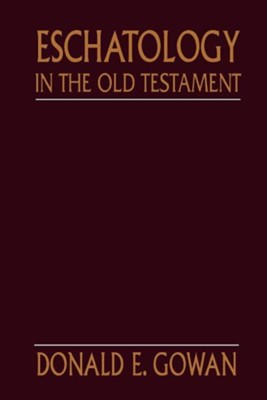
PMW 2025-024 by Donald E. GowanGowan eschatology

Gentry note:
The following is a series of thoughts selected from a very helpful book by Gowan on Eschatology on the Old Testament (pp. 122 ff.). Though he is not writing as a postmillennialist, he has many helpful observations that this article will share. His book basically argues for a holistic concept of redemption, both man (body and soul) and the broader creation (new heavens and new earth). He is not a conservative evangelical (as far as I can tell), but he is a good scholar insightful analyses of important eschatological issues.

Gowan’s Observations
The OT’s expectations and longings are distinct from those to be found in other religions and cultures. Thereby they offer a challenge for alternative forms of hope — Christian and otherwise — and insight into the nature of the eschatologies of the Western world.

1. Old Testament eschatology is a worldly hope. The OT does not scorn, ignore, or abandon the kind of life which human beings experience in this world in favor of speculation concerning some other, better place or form of existence, to be hoped for after death or achieved before death through meditation and spiritual exercises. This sets the OT in sharp contrast to Gnosticism, to the otherworldly emphases that often have appeared in Christianity, and to the concepts of salvation taught by Hinduism and Buddhism. Whether it is better and truer than those other forms of hope, or is just irredeemably “unspiritual,” remains, of course, a matter for faith to decide. But this quality of the OT hope surely ought to commend its outlook to an age that is equally worldly in its concerns. Continue reading

THE GOSPEL’S LAST DAY VERDICT

PMW 2025-024 by Dr. Ardel B. Caneday (from All Things Christian blogsite)Judgment day

Gentry note: Below is an insightful article that comports with the evangelical and Reformed understanding of the Already/Not Yet principle of biblical interpretation. An excellent read! For 28 years Dr. Caneday served as Professor of New Testament & Greek at the University of Northwestern-St. Paul. He recently retired from full-time teaching and now serves as an adjunct professor at UNW.

Dr. Caneday’s article:

In December 2021, I published four articles responding to Harrison Perkins’s criticism of my chapter, “Covenantal Life with God from Eden to Holy City” in Progressive Covenantalism: Charting a Course between Dispensational and Covenantal Theologies. R. Scott Clark published the article on The Heidelblog. There, Perkins blatantly claimed, “In the end, Caneday does promote a salvation by works.” So outrageous was his accusation that I patiently responded with four articles demonstrating that his assessment and accusation were wrong and thus slanderous. Those accusations by Perkins, Clark, and others derive from their common failure to account for the New Testament’s presentation of the salvation of the Last Day brought forward in the person of Christ Jesus, consequently the already but not-yet character of salvation, including justification and forgiveness of sins, featured in this article.

Despite being available for more than four years, neither Perkins nor Clark have ever acknowledged their error of judgment nor repented of their published defamation. Though I did not write my recently published article at Christ Over All to counter Perkins’s false accusation published by Clark, it nonetheless does just that. Thus, though I rarely repost articles I have published elsewhere on this blog, I repost this article as a capstone to the earlier four-part series to expose the slanderous accusation written by Harrison Perkins and published on The Heidelblog.
Continue reading

NEW CREATION IN 2 PETER 3 (2)

PMW 2025-023 by David RussellEarth aflame

Gentry note: This continues from my previous posting of an insightful section of David Russell’s The “New Heavens and the New Earth” published by Visionary Press. To get the context of this posting, you must read the previous one.

It is difficult, if not impossible, to determine the best reading and its interpretation in the context. While there is strong support for the translation, “will be found” in the sense that humanity’s works “will be laid bare” (NIV), this view nevertheless seems strained. It may reflect the thinking of the scribe who at an early stage introduced the reading but whether or not it represents the reading of the author’s hand is uncertain. The reading has merit since the primary focus of the passage is the judgment upon the wicked. However, this view drives a wedge between humankind and the created order. A solidarity between humanity and the creation is always a basic working assumption whether or not it is expressed. The author’s contemplation of God’s judgment on evil works naturally leads to a consideration of the effects of that judgment upon the created order. Just as the decree upon humanity affected the creation according to Genesis 3 so also will God’s judgment have cosmic consequences. Additionally, verses 10–11 imply that the earth will suffer a similar fate as the heavens. This clearly accounts for the reading of aphanisthesontai. Wolters’ interpretation does not necessarily demand the acceptance of eurethesetai. He could have arrived at the same basic conclusion from the verb katakaesetai (cf. Mal. 4.1). Wolters’ strength is the emphasis upon the OT context, and moreover Bauckham’s conjecture that an apocalyptic source lies behind 2 Peter 3, while plausible, merely affirms the use of traditional motifs. Particularly noteworthy is 1 Enoch 1.6 which as noted above by Metzger also may contain an acceptable solution for the reading. Continue reading

NEW CREATION IN 2 PETER 3 (1)

PMW 2025-022 by David RussellEarth burning

Gentry note: The following paragraphs are cited from David M. Russell, The “New Heavens and New Earth,” Philadelphia: Visionary, 1996, pp. 186–97. Though not agreeing with all of his arguments, I highly recommend this book. This will be presented in two posts.

2 Peter 3 is important for discussion not only because of the reaffirmation of Isaiah’s promise of the new heavens and new earth but as the most explicit statement in the Bible of the total destruction of the earth by fire. Conclusions regarding the teaching of the passage are far from evident and are immediately complicated due to text-critical matters and the general worldview of the author. These will be addressed in the course of the discussion of the text. Significantly, 2 Peter provides an appropriate vantage point for this study for it addresses three important aspects central to the concept of creation and cosmic hope: the creation and constancy of the created order (vv. 4-5), the world’s plight and judgment (vv. 6-7, 10-12), and the new creation (v. 13).
Continue reading