NOAH AND THE POSTMILLENNIAL HOPE

PMW 2025-041 by Kenneth L. Gentry, Jr.

Noahic covenant In this article I will be looking at the Noahic Covenant. As we might expect, Noah was a postmillennialist. And probably Mrs. Noah (since they seem to have gotten along well in cramped quarters. Her name, by the way, was Joan of Ark).

In the Noahic Covenant appear various features which undergird the postmillennial hope of victory in history. We find this particularly in Genesis 6:17–22 and 8:20–9:17. Here God reaffirms the Cultural Mandate, which is fundamental to the outworking of his eschatological purpose through his highest creature, man.  Thus, we are witnessing God’s continuing gracious redemptive relation to man as the ongoing basis of the Cultural Mandate. We see this also in the references to the birds, cattle, etc. (cp. Gen 6:20; 8:17 with Gen 1:24, 25), the command to “be fruitful and multiply” (Gen 9:1, 7 with Gen 1:28), and the dominion concept (cf. Gen 9:2 with Gen 1:28). This is necessary to the redemptive-historical character of eschatology. Continue reading

POSTMILLENNIAL RESOURCES

PMW 2025-040 by Thaddeus Majaraj

Gentry note:
Postmillennialism is blessed today to have many resources available and easily accessible through the Internet. This list of books and other resources published by Thaddeus Majaraj is a valuable resource itself!

Postmillennialism: A List of the Best Books and Resources

Here is a list of my top books and resources on Postmillennialism for those who are curious or new to it, learning more about it, or just seeking some more content.

In recent years, there has been a resurgence of the Optimistic Eschatology otherwise known as Postmillennialism. I’ve written elsewhere on the importance of Eschatology to our daily Christian lives. So, for me this is an encouraging trend that I pray continues to bear fruit and grow.

The past few decades in popular Evangelicalism have been largely dominated by (what may be called) Pessimistic views of the End Times—the most popular being Premillennial Dispensationalism. For many, belief in a Rapture, coming Tribulation and the rise of an Antichrist are taken for granted as what every Christian believes about the End Times. Many within Dispensational circles are not even aware that there are other positions (other than variations on where to place the Rapture: Pre-Trib, Mid-Trib, Post-Trib, etc). I know, since I was once part of those circles.


House Divided: The Break-up of Dispensational Theology
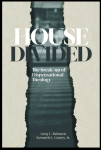
House Divided 2022By Greg Bahnsen and Ken Gentry

This book presents and defends Christian Reconstruction theology, particularly theonomic ethics and postmillennial eschatology. It does to by responding to dispensationalism’s social and exegetical theology.

For more educational materials: www. KennethGentry.com


However, there is a whole world of other more historic eschatological positions which are firmly rooted in a serious desire to properly interpret God’s Word. For this reason, I hope that this brief list of books and resources will help you in your eschatological journey. May the LORD bless and guide you.1

As with all resources, be a good Berean and search the Scriptures for yourself to see if these things are so.

To read full article with whole list, go to: https://www.theotivity.com/post/best-books-resources-postmillennialism/


POSTMILLENNIALISM FOR DUMMIES

PMW 2025-039 by Uri Brito

Gentry note:
This posting was written by my friend, Uri Brito, about three years ago. I would like to promote its wider reading, especially to my PostmillennialWorldview readers. It is an excellent, brief presentation of the importance of serious postmillennialism.

Postmillennialism for Dummies

One of the joys of speaking loudly around here is that I get to see some fine china broken in real-time. That’s a metaphor for views being shattered and replaced by something else, for those of you just tuning in.

The thing broken is a variation of pessimistic eschatology and it is being replaced with some happy, hopeful, and hosannah postmillennialism. Mind you, I am not so much concerned about the loyalty to the systematic category, but to the heart of the matter. Because es-cha-to-lo-gy has consequences for casuistry. Say that three times.
Continue reading

STAND FIRM IN THE RESURRECTION HOPE (6)

PMW 2025-038 by Kenneth L. Gentry, Jr.

I am concluding a series on the resurrection body as found in 1 Corinthians 15. I am arguing for the position of historic Christianity that the resurrection body is a qualitatively transformed physical body rather than an altogether new spiritual body, as per Gnosticism.

The “problem” we face
In this article I will focus on 1 Cor. 15:44, which is an important verse that can easily mislead the incautious reader. This verse states of the physical body that dies and is resurrected that:

“it is sown a natural body, it is raised a spiritual body. If there is a natural body, there is also a spiritual body.”
Continue reading

STAND FIRM IN THE RESURRECTION HOPE (5)

PMW 2025-037 by Kenneth L. Gentry, Jr.

Introduction
I am now presenting my fifth in a series of studies on the nature of the resurrection body as found in 1 Corinthians 15. I am declaring, along with historic Christianity, that our physical bodies die in history but that those very bodies arise at the end of history in the resurrection of the dead. This is far from the proto-Gnostic views of ancient heretics, modern liberals, and contemporary hyper-preterists, including Paul’s opponents at Corinth.[1]

So, now let us move on to reflect on:

The language of “change” in Paul’s argument
Having briefly considered the rhetorical structure of Paul’s argument in 1 Corinthians 15:36–54, we should now note how Paul speaks of the resurrection body in terms of “change” (allasso). After charging his opponents with being “fools” (v. 36) regarding their resurrection-body error, he answers their foolishness in the immediately following verses. Then in verses 51–52 he speaks of the “change” which defines the resurrection:
Continue reading

STAND FIRM IN THE RESURRECTION HOPE (4)

PMW 2025-036 by Kenneth L. Gentry, Jr.

Introduction
This is my fourth article in a series of studies affirming, explaining, and defending historic Christianity’s view of the physical resurrection of the dead. I would encourage my current reader to look back at the preceding three installments of this series (and if you have a good Ouija board, you might want to look ahead to my future installments). I am demonstrating that 1 Corinthians 15 does not support the “spiritual-only body” view of ancient Gnosticism, modern liberalism, or contemporary semi-cultic hyper-preterism. These views hold that the resurrection body is a spiritual, ethereal entity rather than a fleshly, material one.

And without embarrassment I am declaring this alongside of centuries of sound Christian exegesis. Centuries of exegesis which continues on today despite the fact that Paul mentions a “spiritual body [Gk. soma pneumatikon]” in 1 Corinthians 15:44a. Continue reading

STAND FIRM IN THE RESURRECTION HOPE (3)

PMW 2025-035 by Kenneth L. Gentry, Jr.

This is my third study in a series on  relevant portions of 1 Corinthians 15, which ancient Gnostics, modern liberals, and contemporary hyper-preterists believe support their attack on historic Christianity. They believe certain verses in this chapter undermine the historic doctrine of a future, physical, fleshly resurrection of the dead. And admittedly, upon a surface reading we can see how they could be confused by a few of Paul’s statements herein.

However, despite the surface appearance of some of Paul’s language (e.g., “spiritual body,” Christ as “life-giving spirit,” “flesh and blood cannot inherit the kingdom of God,” etc.), Christian orthodoxy has long held to the physical resurrection of the dead as a future, corporate eschatological event occurring at the end of history at the final judgment. And orthodox Christians have long been aware that Paul’s First Epistle to the Corinthians has been in the New Testament from very early in Christian history. Paul wrote it around AD 54, just 20+ years after Jesus’ death (it is one of the earliest New Testament canonical writings). And yet historic Christianity has still maintained the physical nature of our future resurrection.
Continue reading