
INTRODUCING GENESIS (1)

PMW 2025-050 by Kenneth L. Gentry, Jr.
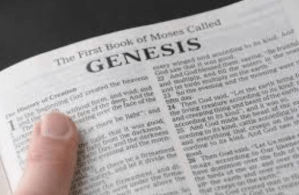
Title
Genesis is the first of the five books of Moses (the Pentateuch). The titles to the first five books of the Bible are actually the first words of the Hebrew text in each book. Thus, the Jews called the first book Bereshith, which is the first word in the Hebrew of Genesis 1:1. It means “by way of beginning, or in beginning.”

The title by which we today call this book is derived not from the first words of the Hebrew, but from its Septuagint title. The Septuagint title is directly transliterated as: Genesis. Each of the Greek titles of the Pentateuch summarize the subjects of the books, rather than presenting their first words. Had the ancient Greek translators used Genesis’s first words, it would have been called: En archē (“in beginning”). They apparently derived the title we use from Genesis 2:4a which reads: “This is the book of the generation [geneseos] of heaven and earth.” The Greek word means “origin, source, or generation.”
Continue reading


ISRAEL’S LAND FOREVER?

PMW 2025-049 by Kenneth L. Gentry, Jr.

In Genesis 3:14–15 we read: The LORD said to Abram, after Lot had separated from him, “Now lift up your eyes and look from the place where you are, northward and southward and eastward and westward; for all the land which you see, I will give it to you and to your descendants forever.”

In this context God promises that he will give the land to Abraham’s descendants “forever” (cp. 12:7). This will soon be confirmed by solemn covenant (cp. 15:7, 18) and is noted elsewhere in Scripture (Exo. 32:13; Josh. 14:9; 2 Chron. 20:7; Isa. 60:21).

Since “the earth is the LORD’s, and all it contains, / The world, and those who dwell in it” (Psa. 24:1), as Moses well knows (Exo. 9:29; Deut. 10:14), the land is God’s to give to whomever he pleases. Besides this, the evil Canaanite culture would eventually (15:16) justify God’s expelling them from the land (Lev. 18:2–3, 24–28). Continue reading

HIS LIGHTNING COMING

PMW 2025-047 by Kenneth L. Gentry, Jr.

I am an orthodox preterist. I believer that Matt 24:1–34 presents Christ’s great prophecy against the first century Jewish temple in Jerusalem. In that prophecy, known as the Olivet Discourse (or more technically: The Eschatological Discourse”), Jesus denounces the temple and warns of its soon-coming destruction (Matt. 24:2). I have argued in numerous writings that the Discourse as a whole deals with AD 70, as well as the end of history. I see the line of demarcation between AD 70 teaching and Second Advent teaching being drawn at Matt 24:34–36.

Nevertheless, a Second Advent intrusion appears in the near-term prophecy. Though I previously held that Matt 24:27 spoke of his judgment-coming in AD 70, I have come to realize I was mistaken. Read carefully in its context, it refers to the Second Advent. That statement reads:

“For just as the lightning comes from the east and flashes even to the west, so will the coming of the Son of Man be.”

How can this be? Continue reading

WAS EVIL KING MANASSEH SAVED?

PMW 2025-041 by Kenneth L. Gentry, Jr.

On this blog site I define postmillennialism as follows:

Postmillennialism holds that the Lord Jesus Christ established his kingdom on earth in the first century through his preaching and redemptive work. Since then he has continued to equip his Church with the gospel, empower her by his Spirit, and charge her with the Great Commission to disciple all nations. Postmillennialism expects that eventually the vast majority of men living will be saved. Increasing gospel success will gradually produce a time in history prior to Christ’s return in which faith, righteousness, peace, and prosperity will prevail in the affairs of men and of nations. After an extensive era of such conditions, the Lord will return visibly, bodily, and gloriously, to end history. Associated with his return will be the general resurrection and the final judgment after which the eternal order follows. Because of its worldwide historical implications, postmillennialism generates an holistic worldview touching on all areas of life.

That being the case, we must be alert to an important distinction between true and false conversions. Postmillennialists are glad for the general influence of Christianity on the world. But what we labor for and ultimately expect is a dramatic impact on the world that is rooted in true conversions by the gospel which is the power of God unto salvation (Rom. 1:16). We are all aware that much of Christianity is today made up of falsely-professing “believers.” These people should be targets of our evangelistic outreach, for being “almost persuaded” is not enough. Continue reading

ISRAEL DESERVED GOD’S WRATH

.PMW 2025-044 by Kenneth L. Gentry, Jr.

Preterists believe that Jesus called down judgment upon Israel, and that this judgment was deserved by the people of Israel. Because of our modern historical situation — post-Holocaust — this view is deemed by some to be an immoral position because of its latent anti-Semitism. But is the charge legitimately brought against the preterist?

This is the second in a series on the question. More will follow. But now let us consider: Continue reading

THE APOCALYPSE AND THE OLD TESTAMENT

PMW 2025-042 by Kenneth L. Gentry, Jr.

Revelation is a difficult book to interpret. We must read it carefully to detect clues as to John’s meaning. One important issue regarding Revelation’s interpretation regards it extremely Hebraic style. In this brief series I will be highlighting several elements of its Hebraic character.

As a Redemptive-historical Preterist I believe that John is writing about the soon-coming destruction of the Jewish temple in AD 70. When we read Rev we are immediately struck by John’s strongly Jewish presentation. No competent commentator fails to mention this. Fiorenza notes that “it is often judged to be more Jewish than Christian.” Charles argues on the basis of its style that it is obvious that John was a “Palestinian Jew.” Buchanan agrees with J. F. Whealon who “observed that Rev 4:1–22:7 was a Jewish document that was later Christianized by the introduction, conclusion, and a few editorial additions.” Continue reading

SOME ANCIENT PRETERISTS

PMW 2025-042 by Kenneth L. Gentry, Jr.

Jerome writingSince the 1990s the preterist perspective has been making its presence felt in contemporary prophecy discussions. Unfortunately, dispensational eschatology, which arose in the 1830s and is built on the futurist system, thoroughly dominates evangelical preaching, education, publishing, and broadcasting today. Consequently, evangelical Christians are largely unfamiliar with preterism, making it seem to be the “new kid on the block.” Preterism, however, is as hoary with age as is futurism. And despite its overshadowing in this century, it has been well represented by leading Bible-believing scholars through the centuries into our current day. Continue reading