Category Archives: Temple

ISRAEL’S FAILURE & THE NT

PMW 2026-001 by Kenneth L. Gentry, Jr.

As John writes the Book of Revelation, Israel has been a part of the Roman regime for almost a century. As such she enjoyed special leagues of “friendship and mutual alliance” which began with Julius Caesar (Jos. Ant. 14:10:1 §185). Her love for Caesar was so great that after he was murdered, Jews wept for many nights at the site of his cremation (Suetonius, Jul. 84:5). Josephus, a priestly member of the Jewish aristocracy, praises Julius and records many of the treaties with the Jews which were established by Caesar and later Roman authorities (Ant. 14:10:2-25 §190-267). He then declares: “there are many such decrees of the senate and imperators of the Romans and those different from these before us” (Ant. 14:10:26).

Israel engages these alignments despite her OT prophets condemning unholy alliances as harlotry (e.g., Hos 7:11). As we read in Rev 13, the exercise of the Land beast’s authority is “in his [the Roman emperor’s] presence” (13:1a). Later in Rev 17 we see Israel’s alliance symbolized by a harlot engaged in a drunken sexual orgy with the sea beast. Continue reading

WHY DID JOHN MEASURE THE TEMPLE?

PMW 2025-074 by Kenneth L. Gentry, Jr.

The measuring of the temple in Rev. 11:1–2 is an important episode in Revelation. Here we clearly see Revelation’s focus on Israel: this “holy city” with a “temple” must be Jerusalem (Neh. 11:1; Isa. 48:2; 52:1; 64:10; Matt. 4:5; 27:53). In verse 8 John unmasks this “holy city” for what she becomes: an Egypt, a Sodom, the slayer of Christ: “Their bodies will lie in the street of the great city, which is figuratively called Sodom and Egypt, where also their Lord was crucified.” Indeed, second century Christians call Jews “Christ-killers” and “murderers of the Lord” (e.g., Ignatius, Magnesians 11; Justin Martyr, First Apology 35; Irenaeus, i 3:12:2)

Significantly this passage strongly reflects Jesus’s prophecy in the Olivet Discourse (compare the italicized words):

Luke 21:24b: “Jerusalem will be trampled on by the Gentiles until the times of the Gentiles are fulfilled.”

Revelation 11:2: “But exclude the outer court; do not measure it, because it has been given to the Gentiles. They will trample on the holy city for 42 months.”

Continue reading

NOT ONE STONE?

wailing wallPMW 2024-029 by Kenneth L. Gentry, Jr., Th.D.
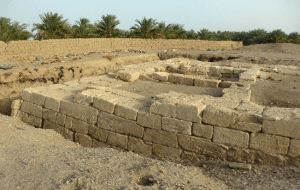
From time-to-time when I speak at conferences on the Olivet Discourse, I will have dispensationalists raise a question that they believe presents a problem for the preterist interpretation. I have even seen this in some published articles and books. Perhaps you have heard it yourselves. In fact, I know at least one of you have because you wrote me to ask me about it!

Now what is this challenge that some raise against the AD 70 fulfillment of the first portion of the Olivet Discourse? The challenge is:

How can you teach that AD 70 fulfills Jesus’ prophecy in Matthew 24:3? After all, that verse says “not one stone here shall be left upon another, which will not be torn down.” But we all know that the huge Wailing Wall that exists today was a part of the temple.
Continue reading

SPEAKING IDOL AND JEWISH TEMPLE

PMT 2024-003 by Kenneth L. Gentry, Jr.Priest ministering

Here in Rev the temple speaks as an image of the emperor-god. When the Pharisees rebuke Christ for not stopping those who praise him at the triumphal entry, “He answered and said, ‘I tell you, if these become silent, the stones will cry out!’” (Lk 19:40). This probably signifies that the stones of the temple will declare him when not one is left on another in AD 70 (cp. Lk 21:5-6) (See: R. C. H. Lenski, Luke, 966; E. E. Ellis, Luke [NCBC], 226). Prosopopoiia clearly appears as a major feature in the later chapters in Rev where two cities are presented as women, one an evil harlot, the other a righteous bride (Rev 17; 21). Continue reading

TEMPLE MEASURING AND EZEKIEL

PMW 2024-002 by Kenneth L. Gentry, Jr.

I appreciate the questions readers send to me. I regret that I am not able to answer them quickly, due to my schedule. However, here is one that is a favorite among dispensationalists. And it is an intriguing one.

Reader’s question:

You argue that John must be measuring an actual, historical temple in Rev 11:1-2. Yet Ezekiel measures a temple, even though it does not exist in history. This suggests that the temple does not need to exist for John to measure it. How do you explain this problem for your view?

My response:

Thanks for your perceptive question. Please consider the following response. Continue reading

THE TEMPLE IN REVELATION 11

Temple 2PMW 2024-001 by Kenneth L. Gentry, Jr.
Revelation is an important book in eschatological discussions. The most vigorous Revelation debate in ecclesiastical circles today revolves around the dispute between preterism and futurism. Preterism holds that Revelation was largely fulfilled not long after John wrote it. Futurism holds that it deals largely with events yet to come.

Because of this debate, the identity of the temple in Rev 11 arises as a serious matter. In Revelation 11:1, 2 we read:

And there was given me a reed like unto a rod: and the angel stood, saying, Rise, and measure the temple of God, and the altar, and them that worship therein. But the court which is without the temple leave out, and measure it not; for it is given unto the Gentiles: and the holy city shall they tread under foot forty and two months.

Here we find a Temple standing in a city called “the holy city.” Continue reading

AD 70 & THE TEMPLE’S FAILURE (2)

PMW 2022-062 by Kenneth L. Gentry, Jr.

I am completing a brief study on the Jewish temple’s failure through abuse, showing the necessity of its destruction under God’s wrath in AD 70. My previous article should be consulted for context.

Interestingly, on several occasions before Christ’s coming, the temple undergoes cleansings because of profanations by Ahaz (2Ch 29:12ff), Mannaseh (2Ch 34:3ff), Tobiah (New 13:4-19), and Antiochus (1Mac 4:36ff; 2Mac 10:1ff). The temple of Christ’s day is also corrupt, for Christ himself symbolically cleanses it when he opens his ministry (Jo 2:13-17) and as he closes it (Mt 21:12-13) — even though it is under the direct, daily, fully-functioning administration of the high priesthood. Continue reading