Category Archives: Revelation

NEARNESS IN REVELATION 1:3

PMW 2022-091 by Kenneth L. Gentry, Jr.
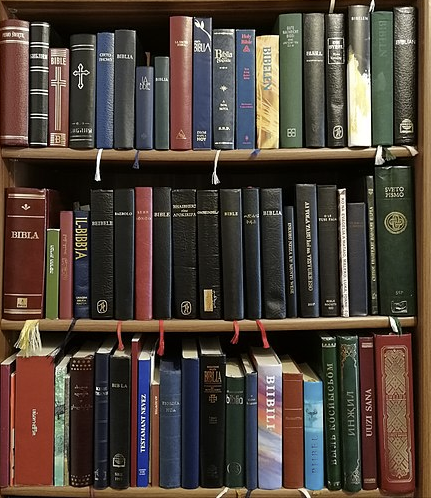
In the preceding article I began simply listing the Bible translations of Revelation 1:1 and 1:3 to show that all versions of these verses clearly speak of the nearness of its fulfillment. Then following these two articles, I will present three articles answering the leading objections to the nearness of the Revelation events. When I speak at conferences on Revelation, I always challenge the attendees to look up these verses in any reputable version and note the clear near-term implications.

So, in this article we are now ready to list the versions and how they translate Revelation 1:3

Rev 1:3 in the Versions
(see below for identity of these abbreviated translation names):

KJ21
Blessed is he that readeth, and they that hear the words of this prophecy, and keep those things which are written therein; for the time is at hand.

ASV
Blessed is he that readeth, and they that hear the words of the prophecy, and keep the things that are written therein: for the time is at hand.

AMP
Blessed (happy, prosperous, to be admired) is he who reads and those who hear the words of the prophecy, and who keep the things which are written in it [heeding them and taking them to heart]; for the time [of fulfillment] is near.

AMPC
Blessed (happy, to be envied) is the man who reads aloud [in the assemblies] the word of this prophecy; and blessed (happy, to be envied) are those who hear [it read] and who keep themselves true to the things which are written in it [heeding them and laying them to heart], for the time [for them to be fulfilled] is near.

Continue reading

THE KEY TO OPENING REVELATION

PMW 2022-079 by Kenneth L. Gentry, Jr.

There are several keys to interpreting the Book of Revelation. But the key key is that of John’s statement regarding the prophetic events being near. When I discuss Revelation with folks I begin by urging them to read the first three verses. Once the shock wears off their faces, the gears in their head will often begin to turn.

Thus, the leading preterist evidence derives from John’s temporal delimitations, which he emphasizes by strategic placement, didactic assertion, frequent repetition, and careful variation. Continue reading

THE LAND BEAST & GREAT SIGNS (2)

High priestPMW 2022-074 by Kenneth L. Gentry, Jr.

This is the second in a two-part study of the heavenly fire by the beast from the earth in Revelation 13. In the previous study I showed that the beast is from the “Land,” and not just the “earth.” That is, he is the beast from Israel. I see the Land beast as picturing the high priestly aristocracy. And in the last article I noted how this fire from heaven reflected several OT episodes in which God himself lit altar fires miraculously. John’s imagery here is echoing those events. Continue reading

THE LAND BEAST & GREAT SIGNS (1)

FirePMW 2022-073 by Kenneth L. Gentry, Jr.

In Rev 13:11 we see a beast “coming up out of the earth” in order to serve the beast from the sea (which is Rome). I argue that we might better translate the beast from “the earth” as the beast from “the Land,” i.e., the Promised Land, Israel. Specifically I hold that this Land Beast refers to the high-priestly aristocracy of Israel (as I have argued elsewhere).

But in Rev 13:13 we read of a remarkable action of the Land Beast: “He performs great signs, so that he even makes fire come down out of heaven to the earth in the presence of men” (Rev 13:13). What is going on here? How is this relevant to the first century high-priesthood? Continue reading

REVELATION & THE EARTH DWELLERS (4)

ancient-jews-jerusalemPMW 2022-068 by Kenneth L. Gentry, Jr.

This is the fourth and final article in a series exploring the meaning of “those who dwell on the earth” in Revelation. I am arguing that “earth” should be translated “Land” (i.e., of Israel), and that the phrase refers to the Jews in Israel. So let’s continue!

We find the second clear reference in our text in 6:10. Here we read: “They cried out with a loud voice, saying, ‘How long, O Lord, holy and true, will You refrain from judging and avenging our blood on those who dwell on the earth [tōn katoikountōn epi tēs gēs]?’” (6:10). That the Land-dweller phrase clearly applies to Jews in Israel appears on the following evidence. Continue reading

REVELATION & THE EARTH DWELLERS (3)

key-of-davidPMW 2022-067 by Kenneth L. Gentry, Jr.

In Revelation we have an interesting phrase that occurs time and again, and which plays an important role in John’s apocalyptic drama. This is the third in a four-part series analyzing the phrase and its significance for the redemptive-historical preterist view of Revelation that I hold.

So, now let’s continue by considering the issue in Revelation itself, as we look at:

The “Land-dwellers” in Revelation

Of the twelve appearances of linked with katoikia, four of them quite clearly refer to the Jews in the Land of Israel (3:10; 6:10; 11:10 [2x]), two of them (13:7–8 and 14:6) seem strongly to refer to Israel, and two (17:2, 8) could very well do so. The remaining four references could go either way, but in light of the clearer allusions and John’s using the phrase as a recurring technical designation, they surely designate the same people. Continue reading

REVELATION & THE EARTH DWELLERS (2)

dead-seaPMW 2022-066 by Kenneth L. Gentry, Jr.

This is the second article in a four-part series on an important recurring phrase in Revelation, generally translated “those who dwell on the earth.” I am arguing that it should be translated “those who dwell in the Land,” i.e., of Israel. For brevity I translate the whole phrase as “Land-dwellers.” In this article I will begin with:

“The Land” in Revelation

Before discussing the Land in Rev I would remind the reader of Rev’s strongly Judaic character. As I argue in the Introduction (as per most commentators) Rev is wholly saturated with OT allusions, strongly expressed in terms of Hebraic syntactical peculiarities, and brightly colored by Judaic images. John also presents his work as a forensic drama wherein he is presenting a covenant lawsuit from God. All of this prepares us for recognizing the possible use of the Land as an important image in this remarkable work and the Land-dwellers as the recipients of most of its judgments. Continue reading