Category Archives: Revelation

THE TEMPLE IN REVELATION 11

Temple 2PMW 2024-001 by Kenneth L. Gentry, Jr.
Revelation is an important book in eschatological discussions. The most vigorous Revelation debate in ecclesiastical circles today revolves around the dispute between preterism and futurism. Preterism holds that Revelation was largely fulfilled not long after John wrote it. Futurism holds that it deals largely with events yet to come.

Because of this debate, the identity of the temple in Rev 11 arises as a serious matter. In Revelation 11:1, 2 we read:

And there was given me a reed like unto a rod: and the angel stood, saying, Rise, and measure the temple of God, and the altar, and them that worship therein. But the court which is without the temple leave out, and measure it not; for it is given unto the Gentiles: and the holy city shall they tread under foot forty and two months.

Here we find a Temple standing in a city called “the holy city.” Continue reading
THE TWO WITNESSES OF REVELATION (1)

PMW 2023-092 by Kenneth L. Gentry, Jr.

The two witnesses in Rev. 11 have generated much discussion among Revelation enthusiasts. Though they only appear here in John’s forensic drama, they play an important role regarding the temple’s destruction. But debate continues over their identity. In this and my next blog posting, I will present the three leading options on their identity. Continue reading

THE WOMAN IN HEAVEN (3)

PMW 2023-078 by Kenneth L. Gentry, Jr.Woman with 12 stars

This is the third and final installment studying the woman in Revelation 12. So, let us now continue and conclude our study.

THE CROWN OF TWELVE STARS

The “crown of twelve stars” (12:1c) is a stephanos, a victor’s wreath (cp. 2:10; cf. 6:2; cp. 1Pe 5:4), rather than a diadēma, a crown representing political rule (L-N 1:76, 77). Ideal Israel embodied in the faithful remnant is deemed victorious, despite her diminished count and difficult circumstances. Unfortunately, the historical manifestation of the ideal community — Israel after the flesh — ultimately fails in that she does not recognize the true light that she should have accepted (Jn 1:4–5, 9–11; 3:19–20; 5:33–40). As a result we learn that “it is not the children of the flesh who are children of God, but the children of the promise are regarded as descendants” (Ro 9:8; cp. Ro 8:14; Gal 4:28). Consequently, earthly, corporate Israel’s failed light-bearing function is taken over by the new covenant church (Mt 5:14–16 //; Ac 13:46–47; 26:18, 23; 2Co 4:6; cp. Col 1:12; 1Th 5:5) which is the “Israel of God” (Gal 6:16), the “true circumcision” (Php 3:3). Therefore, in Revelation God’s judgments against earthly Israel darken her lights (8:12; cp. 6:12; 9:2) and cause her shining stars to fall (6:13). Continue reading

THE WOMAN IN HEAVEN (2)

PMW 2023-077 by Kenneth L. Gentry, Jr.Woman in heaven 2

This my second study looking into the woman in Revelation 12. Please read the previous posting for context. But now, let us return to the study.

THE WOMAN AS PREGNANT

Before we can specifically identify this glorious woman and explain the significance of her clothing, we must consider the further important descriptive information found in the next verse: she was with child; and she cried out, being in labor and in pain to give birth (12:2). Many scholars note that here we discover another OT backdrop from which John primarily draws for both 12:2 and 5, that is, Isa 66:7–8 (e.g., Russell 450; Kiddle 222; Caird 149; Ford 189; Aune 682; M. Wilson 318; Witherington 167; Osborne 458). In that Isaianic reference we find the pregnant-mother and birth-son symbolism: “Before she travailed, she brought forth; / Before her pain came, she gave birth to a boy. / Who has heard such a thing? Who has seen such things? / Can a land be born in one day? / Can a nation be brought forth all at once? / As soon as Zion travailed, she also brought forth her sons. / ‘Shall I bring to the point of birth and not give delivery?’ says the LORD. / ‘Or shall I who gives delivery shut the womb?’ says your God.” Other texts present Israel as a woman enduring birth pains: Isa 21:3; 26:17–18; 37:3; Jer 4:31; 6:24; 13:21; 22:23; 30:6; Mic 4:9. Continue reading

THE WOMAN IN HEAVEN (1)

Woman in heaven 1PMW 2023-076 by Kenneth L. Gentry, Jr.

In Revelation 12 we see John’s vision of a pregnant woman in heaven. His introductory text reads:

“A great sign appeared in heaven: a woman clothed with the sun, and the moon under her feet, and on her head a crown of twelve stars; and she was with child; and she cried out, being in labor and in pain to give birth.” (Rev. 12:1–2).

Our first task in interpreting this vision and that which follows is to determine the identity of the woman.

A GREAT SIGN APPEARED IN HEAVEN
This is the first time that we find the word sēmeion (“sign”) in Rev. Beginning here it appears seven times in the book, three times in the singular (12:1, 3; 15:1) and four in the plural (13:13, 14; 16:14; 19:20). A sign is something quite remarkable and extraordinary that captures one’s attention, and is oftentimes a miracle. John uses “sign” frequently in his Gospel (e.g., Jn 2:11, 18, 23; 4:48; 6:2, 14; 7:31). Robertson (387) explains that “this ‘sign’ is really a teras (wonder), as it is so by association” in Mt 24:24; Jn 4:48; Ac 2:22; 5:12. He adds that “the element of wonder is not in the word sēmeion as in teras, but often in the thing itself,” as in Lk 21:11; Jn 9:16; Rev 13:13ff; 15:1; 16:14; 19:20. John especially emphasizes this sign by the adj. megas (“great”). Continue reading

THE MERCHANTS IN REVELATION

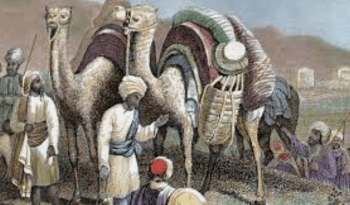
PMW 2023-061 by Kenneth L. Gentry, Jr.ancient merchants

In that I believe Revelation is dealing primarily with God’s judgment of Israel and her temple, I must explain certain images that seem to contradict this view. The “merchants of the earth” in Revelation 18 is just one such passage.

Rome or Jerusalem?

In Revelation 18:3 we read: the merchants of the earth have become rich by the wealth of her sensuality. Beale and others see this as referring to Rome’s extravagant luxury through trade, and the temptations that flow from it throughout the empire (Beale 895-96; Mounce 326; Royalty passim; Witherington 226; Smalley 445).

Continue reading

REVELATION AS A DIVORCE COURT DRAMA

Divorce decree 5PMW 2023-060 by Kenneth L. Gentry, Jr.

In my last two postings I engaged a brief series on John’s method of presenting his material in Revelation. I have noted thus that John is presenting his material as a drama. Though it is not intended as an acted drama, it is designed as a oral one — as I noted in my first article. But it is also cast as a forensic drama, which is set in a court. In this my final article, I will focus on the nature of the court in view.

We must remember that in the OT Israel is the covenantal wife of Jehovah God and he is her “husband” (Jer 31:32). Oftentimes the prophets mention the marital relation between God and Israel. Thus, when Israel chases after foreign gods she is committing spiritual “adultery” against her husband (Isa. 50:1b; Jer 3:20; Eze 16:31–32; Hos 1:2; 9:1, 10; Mal 2:11). The prophets then act as God’s lawyers, bringing a covenantal lawsuit against her with the hope of calling her back to her husband. When God chastens her with destruction or exile, the lawsuit pattern serves to demonstrate that “Yahweh’s punishment is righteous, and not an expression of arbitrary wrath” (Nielsen 33).
Continue reading