Category Archives: Revelation

REV 1:10 AS THE LORD’S DAY (3)

PMW 2018-041 by Kenneth L. Gentry, Jr.

This is my third and final installment of a brief study on Rev 1:10. In this series I have been arguing that John’s “Lord’s day” is a reference to the eschatological “Day of the Lord” which crashes down on Jerusalem in AD 70. For context see the two preceding articles.

Third, John’s phrase is functionally equivalent to the more common one. Though Bauckham rejects this interpretation, according to Aune he “concludes that kuriakos is virtually synonymous with (tou) kuriou.” Thus, kuriakos can, in fact, be a synonym for the more common expression of the day of the Lord. Conceivably, John could simply be rephrasing the eschatological designate by using an adjective instead of noun in the genitive. Continue reading
GENTRY COMMENTARIES

PMW 2018-033 by Kenneth L. Gentry, Jr.

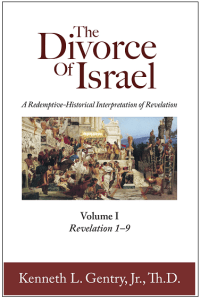
Gentry Commentary on Revelation

I have just received notice from the publisher that my commentary on Revelation will be released this Summer. It’s title is: The Divorce of Israel: A Redemptive-Historical Interpretation of Revelation. It will be around 1800 pages in two volumes.

I am excited that the long wait for it may be over. A day waiting for one’s book to be published is like a 1000 years. Only more so. I never thought I would interpret a 1000 years so literally!

But what does a used Revelation commentator do in his spare time, such as it is? He gets started on Revelation’s best friend, the Olivet Discourse. After all, Revelation opens with “the Revelation of Jesus Christ” (Rev. 1:1), and has four key passages from Christ that greatly impact its drama, each one taken from the Olivet Discourse. Continue reading

LINKING REV 20 AND REV 21

PMW 2018-030 by Kenneth L. Gentry, Jr.

The Problem before Us

Many Revelation commentators argue that the new creation of Rev. 21–22 follows after the final judgment of Rev. 20:11–15. And it certainly is not unreasonable to hold that John’s statement that “the first heaven and the first earth passed away” (21:1) chronologically “follows on the heels of 20:11, where it is said that ‘heaven and earth fled away from the presence [of God], and no place was found for them’” (Beale 1039). This would suggest that ch 21 follows after the final judgment in 20:11–15. Continue reading

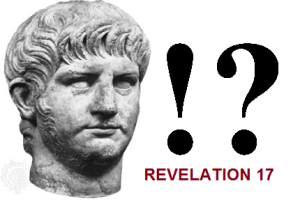
REV 17 AND THE BEAST AS “AN EIGHTH” (2)

PMW 2018-009 by Kenneth L. Gentry, Jr.

In my previous article I began focusing on Rev. 17:11 which reads:

“The beast which was and is not, is himself also an eighth and is one of the seven, and he goes to destruction.”

I pointed out that the idea of the “eighth” pictures a resurrection, a new beginning. But now we must ask: Who is this “eighth,” this resurrection of the beast?

In Rev. 17:9–10 we read:

“Here is the mind which has wisdom. The seven heads are seven mountains on which the woman sits, and they are seven kings; five have fallen, one is, the other has not yet come; and when he comes, he must remain a little while.”

Continue reading

REV 17 AND THE BEAST AS AN EIGHTH (1)

PMW 2017-008 by Kenneth L. Gentry, Jr.

This is the second in a three-part study of the confusing verses in Revelation 17. I now move on to consider Rev. 17:11 and:

The eighth among seven?

In previous studies I argued that Nero is the personification of the beast. The evidence is quite clear and most compelling. But in Revelation 17:11 we read a statement which causes some difficulties with this interpretation. In fact, it “presents all interpreters with a real difficulty.” [1]

And the beast which was and is not, is himself also an eighth, and is one of the seven, and he goes to destruction. (Rev 17:11)

Of course, the main difficulties have been solved for I show above what he means by “the beast which was and is not” (cf. Rev 17:8). But now who is this “eighth”? How can there be an eighth in a series of seven? And how is he “one of the seven”? Continue reading

REV 17 AND THE BEAST THAT “WAS, IS, AND IS NOT”

PMW 2018-007 Kenneth L. Gentry, Jr.

In previous studies I presented evidence that the sixth head of the seven-headed beast of Revelation was Nero Caesar, the sixth emperor of Rome. Thus, in Revelation the sixth head of the beast represents the then reigning sixth head/king of Rome. But now we must deal with a passage that seems to contradict this identification. In Revelation 17 the interpreting angel states that:

“The beast that you saw was, and is not, and is about to come up out of the abyss and go to destruction. . . . The beast which was and is not, is himself also an eighth and is one of the seven, and he goes to destruction.” (Rev. 17:8, 11)

As we focus on these statements, two important questions arise: (1) What is the significance of the beast being the one who “was and is not, and is about to come”? Is this one of the many instances of the beast’s divine pretensions, wherein he parodies divine eternality, which is the view of most commentators? And (2) does this description undercut the early-date position and preterist approach by declaring the beast (Nero) is already dead when John writes? After all, the angel states that he “was and is not [ouk estin].” Continue reading

PRINCIPLES FOR RECOGNIZING THE BEAST

PMW 2018-005 by Kenneth L. Gentry, Jr.

The beast of Revelation is a favorite theme of “prophecy experts.” Unfortunately, they generally do not allow John to establish the principles for the beast’s interpretation in Revelation, preferring instead the news media and radio evangelists. In this article I will mention four key principles that must be kept in mind to reduce the field to biblical proportions, you might say. As is evident from the history of the interpretation of 666, we certainly need something to confine our thinking to the realm of the reasonable.

The necessary limiting principles for analyzing the identity of John’s beast are: Continue reading