 PMW 2024-066 by Ken Gentry
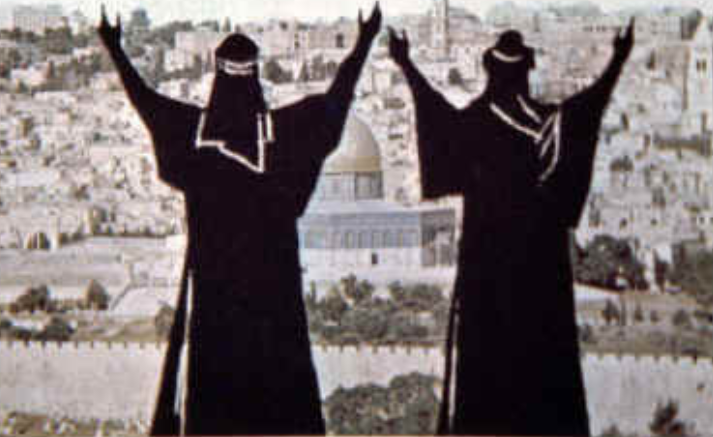
The two witnesses of Revelation are a constant source of intrigue for readers of Revelation. Despite their brief appearance in John’s drama, I constantly receive questions about them by email and in conferences. This intrigue is largely due to John’s rather abruptly introducing them, despite not previously alluding to them: “I will grant authority to my two witnesses, and they will prophesy for twelve hundred and sixty days” (Rev. 11:3). We must understand the two witnesses’ redemptive-historical significance in pre-70 Jerusalem and their narrative function in John’s forensic drama.
The sudden appearance of these two as “witnesses” in Revelation should not be altogether surprising. After all, Revelation’s main movement begins with a vision of God on his judicial throne (4:1ff) which quickly focuses on a sealed document (Rev. 5), the opening of which initiates the dramatic judgments to follow (Rev. 6). Revelation is a court drama.
Furthermore, in the first vision that opens the current interlude and vision set (10:1–11:14), Christ formally and dramatically swears an oath to God (10:5–6). In fact, Revelation is a book in which John himself “bore witness” (1:2, cp. 1:9) and in which witnesses frequently appear (2:13; 6:9; 12:11, 17; 17:6; 19:10; 20:4), including the chief witness, “the faithful witness” Jesus Christ (1:5; 3:14). The two witnesses here (11:3, 7a) are also “prophets” (11:3, 6, 10), just as John’s entire book is a “prophecy” (1:3; cp. 10:11; 22:10, 18-19). Whether or not we can identify these two witnesses in history (see discussion below), we must at least understand their prophetic witness in a “juridicial and religious” sense. Continue reading →

 PMW 2025-072 by Kenneth L. Gentry, Jr.
 PMW 2024-070 by Kenneth L. Gentry, Jr.
 PMW 2024-069 by Kenneth L. Gentry, Jr.
 PMW 2024-067 by Kenneth L. Gentry, Jr.
 PMW 2024-065 by Kenneth L. Gentry, Jr.
 Postmillennial Worldview
Recent comments