
Category Archives: Preterism

THE RESURRECTION OF THE BODY

PMW 2022-089 by Philosophical InvestigationsWhat will our resurrected bodies look like?
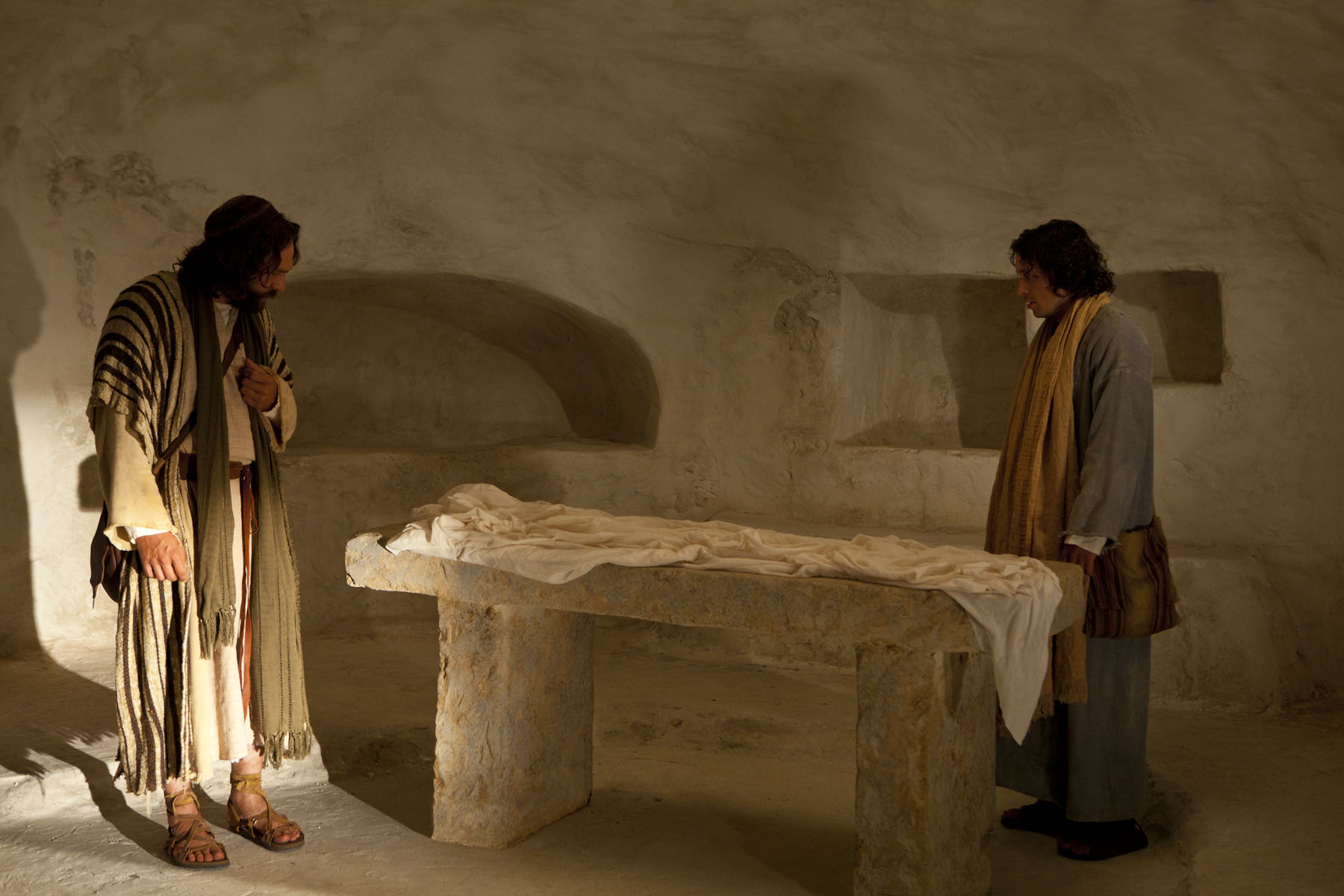
Resurrection Is Central to Christianity

The resurrection of Christ is a vital foundation for the faith. Paul writes to the Corinthian church:

“If Christ has not been raised, our preaching is useless and so is your faith. More than that, we are then found to be false witnesses about God, for we have testified about God that he raised Christ from the dead. But he did not raise him if in fact the dead are not raised. For if the dead are not raised, then Christ has not been raised either. And if Christ has not been raised, your faith is futile; you are still in your sins. Then those also who have fallen asleep in Christ are lost. If only for this life we have hope in Christ, we are of all people most to be pitied” (1 Cor 15:14-19).

However, Paul is equally definite about the importance of the resurrection of believers too: “If there is no resurrection of the dead, then not even Christ has been raised” (1 Cor 15:13). He goes on to affirm: “Listen, I tell you a mystery: we will not all sleep, but we will all be changed –in a flash, in the twinkling of an eye, at the last trumpet. For the trumpet will sound, the dead will be raised imperishable, and we will be changed” (1 Cor 15:51-52). Continue reading

THE KEY TO OPENING REVELATION

PMW 2022-079 by Kenneth L. Gentry, Jr.

There are several keys to interpreting the Book of Revelation. But the key key is that of John’s statement regarding the prophetic events being near. When I discuss Revelation with folks I begin by urging them to read the first three verses. Once the shock wears off their faces, the gears in their head will often begin to turn.

Thus, the leading preterist evidence derives from John’s temporal delimitations, which he emphasizes by strategic placement, didactic assertion, frequent repetition, and careful variation. Continue reading

KEY PRETERIST PRINCIPLES

PMW 2022-072 by Kenneth L. Gentry, Jr.

Modern postmillennialism is largely, though not solely, committed to a particular interpretive tool known as “preterism.” This tool is helpful for explaining many of the catastrophic judgment passages as features of the founding of Christianity in the first century rather than evidence for the decline of Christianity in the final century.

However, postmillennialists do not adopt this interpretive approach in order to avoid a negative impact on their eschatological system. Rather, preterism arises naturally from a careful reading of the biblical text. Continue reading

IS THE “END OF THE AGE” AD 70?

PMW 2022-038 by Kenneth L. Gentry, Jr.

I am not always able to engage in theological discussion by email, due to my time constraints and the number of requests for such that I receive. But occasionally I will engage a discussion briefly. Here is one I just had with a PostmillennialWorldview reader. It regards the two-age structure of history.

PMW reader wrote:

I have a question to throw in the works if I may: Matthew 24:3 says ” What will be the sign of your coming and of the end of the age?”

This could mean the end of the Old Testament age. I back this up with Jesus comments on the blasphemy against the Holy Spirit, which will not be forgiven “in this age or the age to come” (Matthew 12:32.) Continue reading

REVELATION’S 42 MONTH TREADING

Roman soldiersPMW 2022-027 by Kenneth L. Gentry, Jr.

Revelation must be understood preteristically. That is, we must recognize that John was primarily writing about the Jewish War which led to the September AD 70 destruction of the Jewish temple and the conclusion of biblical (Torah-based) Judaism.

In Rev 11:1–2 we read a much debated passage: “There was given me a measuring rod like a staff; and someone said, ‘Get up and measure the temple of God and the altar, and those who worship in it. Leave out the court which is outside the temple and do not measure it, for it has been given to the nations; and they will tread under foot the holy city for forty-two months.’” Continue reading

RESURRECTION, PAUL, & ACTS 24:15 (2)

PMW 2022-15 by Kenneth L. Gentry, Jr.

In my previous article, I began a brief consideration of Acts 24:14–15. This passage is often used by Hyper-preterists in an attempt to demonstrate that the corporate, public, universal, systematic Christian faith has not been mistaken on one of its foundational doctrines for 2000 years. They mistakenly hold that this passage points to the expectation of a first-century resurrection of the dead.

In my opening article I focused on the lexical issues involved in the key term mellein in this passage. They believe it means “about to,” which it does not. Please read that article to orient yourself to the argument. In this article I will conclude by noting their syntactical and contextual error. Continue reading

RESURRECTION, PAUL, & ACTS 24:15 (1)

binocularsPMW 2022-014 by Kenneth L. Gentry, Jr.

Hyper-preterism may be a small movement, but it is a vociferous one. Hyper-preterists believe that the eschatological expectations in Scripture were all fulfilled in the destruction of the temple in AD 70 which closed the old covenant era. Though they are correct in noting the overlooked significance of AD 70, they are incorrect in applying all eschatology to that event.

One of their favorite passages is Acts 24:14–15. In this passage we come upon passage that is significant to the debate. Continue reading