Category Archives: Optimism

COMPREHENSIVE HOPE IN ESCHATOLOGY

PMW 2025-024 by Donald E. GowanGowan eschatology
Gentry note:
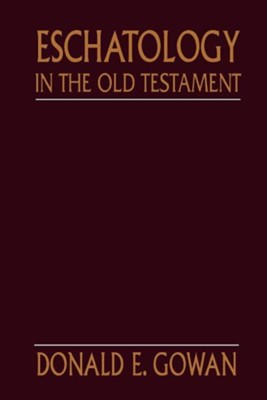
The following is a series of thoughts selected from a very helpful book by Gowan on Eschatology on the Old Testament (pp. 122 ff.). Though he is not writing as a postmillennialist, he has many helpful observations that this article will share. His book basically argues for a holistic concept of redemption, both man (body and soul) and the broader creation (new heavens and new earth). He is not a conservative evangelical (as far as I can tell), but he is a good scholar insightful analyses of important eschatological issues.

Gowan’s Observations
The OT’s expectations and longings are distinct from those to be found in other religions and cultures. Thereby they offer a challenge for alternative forms of hope — Christian and otherwise — and insight into the nature of the eschatologies of the Western world.

1. Old Testament eschatology is a worldly hope. The OT does not scorn, ignore, or abandon the kind of life which human beings experience in this world in favor of speculation concerning some other, better place or form of existence, to be hoped for after death or achieved before death through meditation and spiritual exercises. This sets the OT in sharp contrast to Gnosticism, to the otherworldly emphases that often have appeared in Christianity, and to the concepts of salvation taught by Hinduism and Buddhism. Whether it is better and truer than those other forms of hope, or is just irredeemably “unspiritual,” remains, of course, a matter for faith to decide. But this quality of the OT hope surely ought to commend its outlook to an age that is equally worldly in its concerns. Continue reading

CHRISTIANITY AND FUTURE REVIVAL

PMW 2025-019 by O. T. AllisAllis

Gentry note:
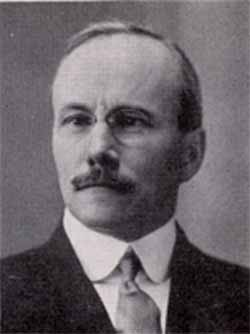
O. T. Allis (1880-1973) was an internationally recognized philologist and Reformed theologian who helped found Westminster Theological Seminary, along with J. Gresham Machen, Robert Dick Wilson, and others. He is noted especially for his work in the Old Testament. Allis was a postmillennialist, as we can see from his Foreword in Roderick Campbell’s Israel and the New Covenant, a powerful postmillennial book. The following is his Foreword in full.

The author of this valuable contribution to Biblical Interpretation belongs to a class of writers which is not as numerous today as has sometimes been the case, the lay theologian. Being both an earnest and active Christian and a successful man of business, Mr. Campbell very naturally became, as he tells us in his Preface, deeply concerned over the economic depression and the moral degeneracy which followed in the wake of the first World War. Being a Christian he turned to the Bible for the answer; and he also consulted many of the ablest interpreters of the Bible, in the hope of solving this pressing problem. The answer which he found is the thesis of the present volume. It can be stated briefly and in a single sentence: The Christian church has for centuries failed to take seriously and carry out fully the Great Commission. Continue reading

IAIN MURRAY AND HISTORICAL HOPE

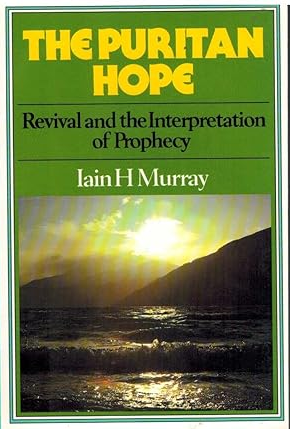
PMW 2025-018 by Iain MurrayPuritan hope

Note from Ken Gentry:
The following is an excerpt from Iain Murray’s The Puritan Hope, pp. xviii–xxii. He is explaining his conversion from premillennial thinking to a more hope-filled eschatology as found in many Puritans.

For some while after I gave up the millenarian view of future history the only truth respecting unfulfilled prophecy which I could regard as clear was this great one that Christ’s coming will be at the consummation of his kingdom. therefore all conversion-work yet to be in history must occur before the Second Advent. Of the certainty or extent of any future work I was entirely in doubt. I still retained the conviction that the testimony of Scripture on human depravity requires the expectation of an ever-darkening world and the signs of the twentieth century seemed to point me to the same conclusion.

Only very slowly did I come to believe that the Christian Church has indeed a great future in the world and this conviction came as the result of several lines of thought. For one thing all the scripture texts claimed as proof that the coming of Jesus Christ must now be close at hand have also been confidently so used in former generations. Not a few Christians in the past have been erroneously convinced that their age must witness the end. When the Teutonic barbarians overturned Rome and reduced a stable world to chaos in the fifth century A.D., many in the Church despairingly drew the wrong conclusion that the world could have no future. Even larger numbers did so at the approach of the year 1000, believing that the closing millennium would end the world. In the gloom of the fourteenth century such tracts appeared as The Last Age of the Church, and in terms very similar to that old title a great number have written since. Continue reading

GENESIS PROVES POSTMILLENNIALISM

How Genesis and PostmillPMW 2024-032 by Kendall Lankford

[Gentry note:

This nicely presented, insightful article appears on The Shepherd’s Church website (The Shepherd’s Church is located at: 10 Jean Ave. Suite 12, Chelmsford, Mass.).]

INTRODUCTION

If you have been with us over the last 8 weeks, we have been attempting to summarize what a failed eschatology looks like. From the hyper-defeatism of dispensationalism and premillennialism to the subtle apathy for cultural engagement that seeps in through amillennialism and the Radical Two Kingdoms, we have been attempting to show that a wrong view of eschatology will have an impact on how you live in the world. Because let’s face it, if you believe that we lose down here (As John MacArthur famously said), we will not work down here. If we believe the rapture is always moments away, then why waste your time doing the long work of making disciples and transforming culture? If we believe that all of our energy and effort should go into spiritual activities (the Kingdom of God) and that this work does not overlap with the physical world (The Kingdom of Man), then why engage at all? Why obey Jesus’ command to be salt and light in the world if the only aspect we will ever see redeemed is spiritual? Better to spend your time converting souls for a Gnostic utopia than Biblically discipling nations to live with Jesus in the New Heavens and New Earth. Continue reading

POSTMILLENNIAL UTOPIA?

PMW 2023-057 by Kenneth L. Gentry, Jr.

One PostmillenialWorldview read asks: “What is your response to the ‘Utopia’ charge leveled by (especially) Premills? This is a common charge levied against the postmillennialist. And the erstwhile postmil would do well to consider the matter.

Unfortunately, in the eschatological debate, postmillennialism is the easiest eschatological option to misconstrue. This is due to its going against the prevailing pessimistic expectations of the other millennial views. Hope for our historical future seems like Utopia to these folks. And as we know “Utopia” comes from the Greek: ou (“not”) and topos (“place”) and means “no-place.” So if postmillennialism is utopic, it is going no place. Continue reading

POSTMILLENNIALISM AND THE MILLENNIUM (2)

Glorious sunrisePMW 2023-045 by Kenneth L. Gentry, Jr.

This is part 2 in a three-part series on Postmillennialism and the Millennium. We are now at the place where we must define what we mean by “postmillennialism.”

So now: What is the postmillennial outlook? Why is it called post-millennial? And what are its expectations?

Postmillennialism teaches that Christ will return to earth after a long era of gospel progress and worldwide righteousness. As the gospel wins greater influence the world will witness a long era of social stability, economic development, and international peace. The basic structure of the postmillennial hope is as follows:

First, Christ came into the world in the first century and established his kingdom, the Messianic kingdom prophesied in the Old Testament. We are in that kingdom now (the “millennium,” if you will) (Luke 17:20–21; Col 1:13).

Second, he confronted and defeated Satan while on earth, through his ministry, death, burial, resurrection, and ascension. Satan is bound from deceiving the nations, so that they are open to the power of the gospel (Matt 12:28–29; Rev 20:3).

Third, he gave the marching orders for his kingdom in the “Great Commission.” This commission is great because it is established on his grant of “all authority,” he command to “make disciples of all the nations,” his directive for us to teach the nations “all that I commanded you,” and his promise that “I am with you always, even to the end of the age” to get it done (Matt 28:18–20).

Fourth, he promised to bless his kingdom with growth, likening it to a mustard seed that begins incredibly small but results in a tree that dominates the garden; and comparing it to leaven that leavens the entire bushel (Matt 13:31–33).
Continue reading

THE IMPOSSIBILITY OF POSTMILLENNIALISM?

PMW 2023-025 by Kenneth L. Gentry, Jr.

Our Lord Jesus Christ ministered for over three years proclaiming the coming of the kingdom of God. But after initially drawing a “great multitude” of followers (Jn 6:2), John records with disappointment that “many of His disciples went back and walked with Him no more” (Jn 6:66). In fact, toward the end of his ministry one of his own twelve disciples turned against him, literally selling him out to the authorities (Jn 13:18; Ac 1:18-19). And even his remaining faithful disciples forsook him in cowardly fear as he was on trial for his life (Mt 26:31, 56; Lk 22:31-34), locking themselves away from opponents (Jn 20:19).

With such a shaky start, what might we expect to become of the kingdom of God, which Christ initially proclaimed as near (Mk 1:15; Mt 4:17) and eventually established as present (Mt 12:28; Lk 17:20-21)? In other words, what is the outlook for the Christian faith in the historical long run? How should we answer a query such as Christ poses: “When the Son of Man comes, will he really find faith on the earth” (Lk 18:8)? Continue reading