Category Archives: hyperpreterism

STAND FIRM IN THE RESURRECTION HOPE (6)

PMW 2025-038 by Kenneth L. Gentry, Jr.

I am concluding a series on the resurrection body as found in 1 Corinthians 15. I am arguing for the position of historic Christianity that the resurrection body is a qualitatively transformed physical body rather than an altogether new spiritual body, as per Gnosticism.

The “problem” we face
In this article I will focus on 1 Cor. 15:44, which is an important verse that can easily mislead the incautious reader. This verse states of the physical body that dies and is resurrected that:

“it is sown a natural body, it is raised a spiritual body. If there is a natural body, there is also a spiritual body.”
Continue reading

STAND FIRM IN THE RESURRECTION HOPE (5)

PMW 2025-037 by Kenneth L. Gentry, Jr.

Introduction
I am now presenting my fifth in a series of studies on the nature of the resurrection body as found in 1 Corinthians 15. I am declaring, along with historic Christianity, that our physical bodies die in history but that those very bodies arise at the end of history in the resurrection of the dead. This is far from the proto-Gnostic views of ancient heretics, modern liberals, and contemporary hyper-preterists, including Paul’s opponents at Corinth.[1]

So, now let us move on to reflect on:

The language of “change” in Paul’s argument
Having briefly considered the rhetorical structure of Paul’s argument in 1 Corinthians 15:36–54, we should now note how Paul speaks of the resurrection body in terms of “change” (allasso). After charging his opponents with being “fools” (v. 36) regarding their resurrection-body error, he answers their foolishness in the immediately following verses. Then in verses 51–52 he speaks of the “change” which defines the resurrection:
Continue reading

STAND FIRM IN THE RESURRECTION HOPE (4)

PMW 2025-036 by Kenneth L. Gentry, Jr.

Introduction
This is my fourth article in a series of studies affirming, explaining, and defending historic Christianity’s view of the physical resurrection of the dead. I would encourage my current reader to look back at the preceding three installments of this series (and if you have a good Ouija board, you might want to look ahead to my future installments). I am demonstrating that 1 Corinthians 15 does not support the “spiritual-only body” view of ancient Gnosticism, modern liberalism, or contemporary semi-cultic hyper-preterism. These views hold that the resurrection body is a spiritual, ethereal entity rather than a fleshly, material one.

And without embarrassment I am declaring this alongside of centuries of sound Christian exegesis. Centuries of exegesis which continues on today despite the fact that Paul mentions a “spiritual body [Gk. soma pneumatikon]” in 1 Corinthians 15:44a. Continue reading

STAND FIRM IN THE RESURRECTION HOPE (3)

PMW 2025-035 by Kenneth L. Gentry, Jr.

This is my third study in a series on  relevant portions of 1 Corinthians 15, which ancient Gnostics, modern liberals, and contemporary hyper-preterists believe support their attack on historic Christianity. They believe certain verses in this chapter undermine the historic doctrine of a future, physical, fleshly resurrection of the dead. And admittedly, upon a surface reading we can see how they could be confused by a few of Paul’s statements herein.

However, despite the surface appearance of some of Paul’s language (e.g., “spiritual body,” Christ as “life-giving spirit,” “flesh and blood cannot inherit the kingdom of God,” etc.), Christian orthodoxy has long held to the physical resurrection of the dead as a future, corporate eschatological event occurring at the end of history at the final judgment. And orthodox Christians have long been aware that Paul’s First Epistle to the Corinthians has been in the New Testament from very early in Christian history. Paul wrote it around AD 54, just 20+ years after Jesus’ death (it is one of the earliest New Testament canonical writings). And yet historic Christianity has still maintained the physical nature of our future resurrection.
Continue reading

STAND FIRM IN THE RESURRECTION HOPE (2)

PMW 2025-034 by Kenneth L. Gentry, Jr.

This is the second in my series discussing 1 Corinthians 15 as it regards the resurrection of the dead. Having thoroughly rebuked the heretical party at Corinth, Paul urges them (and all Christians) to “stand firm. Let nothing move you” (1 Cor. 15:58) from this resurrection hope, as he comes to the grand finale of his letter. This chapter happens to be the Achilles Heel (one among many!) of hyper-preterism and its assault on historic Christianity.

I will be focusing on key verses in Paul’s great “Resurrection Chapter,” though not exegeting the entirety of this lengthy chapter. And I will be concerned (as Paul was) with the believer’s resurrection rather than the unbeliever’s, though Paul held to the resurrection of both (Acts 23:6; 24:15), as did his Lord (John 5:25–29).

An Important Opening Issue

One area of the hyper-preterist’s debate with historic Christian theology has to do with the nature or composition of the resurrection body. That is, whether it will be material or spiritual, whether tangible or ethereal. And I will get to that issue at the appropriate time (right now it is 11:27 am on the day I am writing this, and I am hungry for lunch, but I digress). Continue reading

PRETERIST POSTMILL SYSTEMATIC THEOLOGY

LethamPMW 2025-026 by Kenneth L. Gentry, Jr.

INTRODUCTION

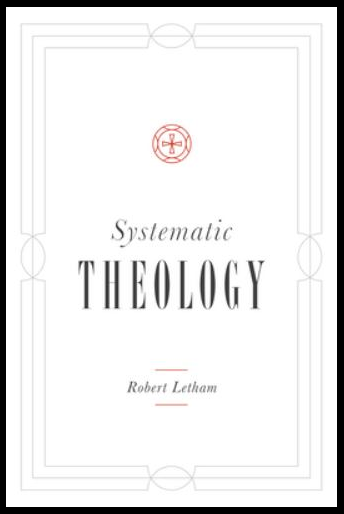
I frequently receive requests from readers seeking preterist and/or postmillennial works released by established publishers.[1] There are plenty of self-published and small-publisher releases available. I have recommended a few in the past and hope to continue doing so in the future. So, in this posting I will highly recommend an excellent systematic theology that is not only written by a prominent Reformed theologian, but is also (partial) preterist [2] and postmillennial in orientation: Robert Letham’s Systematic Theology (2019). Since this blog is fundamentally about eschatological issues, I will focus on Letham’s comments relevant to this locus of theology.

Robert Letham, Ph.D. (University of Aberdeen) is professor of systematic and historical theology at Union School of Theology. His Systematic Theology is published by Crossway, and endorsed by Joel R. Beeke, Sinclair B. Ferguson, Carl R. Trueman, Cornelis P. Venema, and Alan D. Strange — competent theologians one-and-all!
Continue reading

UNDERSTANDING COLLAPSING UNIVERSE PROPHECIES

PMW 2025-016 by Kenneth L. Gentry, Jr.Meteors

Two Errors ….

A number of prophetic passages (especially in the OT) speak of the universe collapsing. This has caused serious theological problems for two opposing eschatological schools.

Dispensationalism cannot interpret these passages in context because they approach them in a fully-literalistic sense. Thus they argue, these passages must be pointing solely to the distantly future second coming of Christ. Dispensationalists are committed to a half-truth in this interpretation, as I will show.

But then there is the hyper-preterist movement that interprets these passages as solely symbolic. They deem the falling-star passages as symbols of collapsing government. And these passages usually point to the collapse of Israel’s government under God’s wrath and judgment. Thus, they interpret these passages as picturing the coming AD 70 judgment of old covenant Israel. Hyper-preterists are committed to a half-truth also. Continue reading