
PMW 2025-097 by Kenneth L. Gentry, Jr.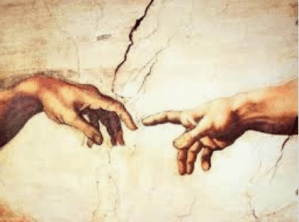
This is my second article in a three-part series on God’s goodness as our Creator. Postmillennialists should emphasize God’s goodness in creation because his goodness guides creation to its good end. We believe that even though the world will never be perfect before Christ returns, we will make dramatic advances toward perfection as the gospel progresses in history.
Now I will consider the fact that:
God Creates Man
The Bible opens in its first chapter with the majestic march of six days. In Genesis 1 we read the record of God’s unfolding creative process as it leads to its climax in the creation of man (Gen 1:26–28). Man is the very goal of creation, and its high point. In fact, though it necessarily mentions the creation of the starry heavens (Gen 1:1, 14–16), the creation record intentionally focuses on a small part of the universe: the earth, its flora and fauna . . . and man (Gen 1:2–13, 17–30). And even the creation of the sun, moon, and stars is for the purpose of giving light on earth the special arena of God’s creative work (Gen 1:14–16).
What is more, man is not only the very goal and purpose of the whole creational process, but he is also God’s highest creature. He alone of all creation is made in the image and likeness of God (Gen 1:26). And this marvelous truth is emphasized in a double statement: “God created man in His own image, in the image of God He created him” (Gen 1:27a).
Not only so, but man’s creation is presented as the result of a careful, deliberative process within God’s Triune being: “Then God said, ‘Let Us make man in Our image, according to Our likeness; and let them rule over the fish of the sea and over the birds of the sky and over the cattle and over all the earth, and over every creeping thing that creeps on the earth’” (Gen 1:26). Genesis emphasizes that man’s creation is the most special act among God’s works.
 Creation according to the Scriptures
Ed. by P. Andrew Sandlin
This book is sub-titled: A Presuppositional Defense of Literal , Six-day Creation. It has chapters by R. J. Rushdoony, Andrew Sandlin, Kenneth Gentry, Cornelius Van Til, and others. It touches on historical, exegetical, theological, and philosophical implications of Six-day Creation.
See more study materials at: www.KennethGentry.com
Why Create in Six Days?
God is of such great power that we might wonder: Why did he take six days to create the world? Does he not have the power to create it all at once? After all, when the Psalmist summarizes God’s creative activity he presents it as requiring no more of God’s energy than a mere breath: “By the word of the LORD the heavens were made, / And by the breath of His mouth all their host” (Psa 33:6; cp. Psa 148:5; Heb 11:3; 2 Pet 3:5). This, of course, matches the Genesis record which repeatedly and simply states: “God said” (Gen 1:3, 6, 11, 14, 20, 22, 24). And this is frequently followed by the declaration: “and it was so” (Gen 1:7, 9, 11, 15, 24).
Indeed, elsewhere David poetically pictures the creation as performed by the snapping of God’s fingers, as it were. In Psalm 8 we read: “when I consider Your heavens, the work of Your fingers” (Psa 8:3a). David portrays the creation of the stellar universe as a very small thing for God: it does not require his back and arms, but merely his fingers.
So then, why does God take six days to create the world? We discover elsewhere that he did so as a model for man, his special image. The Fourth Commandment states:
“Six days you shall labor and do all your work, but the seventh day is a sabbath of the LORD your God; in it you shall not do any work, you or your son or your daughter, your male or your female servant or your cattle or your sojourner who stays with you. For in six days the LORD made the heavens and the earth, the sea and all that is in them, and rested on the seventh day; therefore the LORD blessed the sabbath day and made it holy.” (Exo 20:9–11)
Thus, God set the pattern for man: he worked six days and rested one, so his image should reflect him and labor for six days and rest one. As God’s image man is to exercise dominion over all the creatures of the earth, thereby reflecting God’s superior, ultimate dominion over them (Gen 1:26–30).

As It Is Written: The Genesis Account Literal or Literary?
Book by Ken Gentry
Presents the exegetical evidence for Six-day Creation and against the Framework Hypothesis. Strong presentation and rebuttal to the Framework Hypothesis, while demonstrating and defending the Six-day Creation interpretation.
See more study materials at: www.KennethGentry.com
God Is Good to Man
In the original creation record we discover not only that God creates a good world and man to populate it (Gen 1:31), but that he is especially good to man.
In the very historical context of creating Adam and Eve we read: “God blessed them” (Gen 1:28a). And though he also blesses the animals (Gen 1:22), he goes further with man by giving him dominion over all other creatures: “Let them rule over the fish of the sea and over the birds of the sky and over the cattle and over all the earth, and over every creeping thing that creeps on the earth” (Gen 1:26b, 28b).
David marvels at this glorious fact in Psalm 8:4–6: “What is man that You take thought of him, / And the son of man that You care for him? / Yet You have made him a little lower than God, / And You crown him with glory and majesty! / You make him to rule over the works of Your hands; / You have put all things under his feet.” When he views the smallness of man in relation to the largeness of the stellar sky (Psa 8:2), he is amazed at all that God has granted to man.
In Genesis 2 Moses presents us with a more detailed focus on God’s creating Adam and Eve, a focus providing us significant details that we do not see in the terse statement in Genesis 1:26–28. Here we discover that God creates man by a different means from his creating the animals.
When God creates the animals he merely commands “let there be,” and this is followed by the instant result “and it was so” (Gen 1:24). In man’s creation, however, we find God’s special care and deeply personal involvement: “Then the LORD God formed man of dust from the ground, and breathed into his nostrils the breath of life; and man became a living being” (Gen 2:7). This is very personal and affectionate.
Not only so, but the Lord specially places man in a beautiful garden to begin his task of world dominion: “The LORD God planted a garden toward the east, in Eden; and there He placed the man whom He had formed. Out of the ground the LORD God caused to grow every tree that is pleasing to the sight and good for food; the tree of life also in the midst of the garden, and the tree of the knowledge of good and evil” (Gen 2:8–9).
The Scriptures repeatedly emphasize God’s goodness to man — even after the Fall in Eden. After God’s judgment on sin in the Flood, we read: “While the earth remains, / Seedtime and harvest, / And cold and heat, / And summer and winter, / And day and night / Shall not cease” (Gen 8:22). Jesus declares of God’s providence in the world that “He causes His sun to rise on the evil and the good, and sends rain on the righteous and the unrighteous” (Matt 5:45). Paul preaches in Lystra: “He did not leave Himself without witness, in that He did good and gave you rains from heaven and fruitful seasons, satisfying your hearts with food and gladness” (Acts 14:17). See also Job 5:10; Psalm 65:9–13; 104:13; 147:8; Jeremiah 5:24.
 Understanding the Creation Account
DVD set by Ken Gentry
Formal conference lectures presenting important information for properly approaching the Creation Account in Genesis. Presents and defends Six-day Creation exegesis, while presenting and rebutting the Framework Hypothesis.
See more study materials at: www.KennethGentry.com
This agrees with the psalmist who praises God because “the earth is full of the lovingkindness of the LORD” (Psa 33:5b; cp. Psa 119:64). In Psalm 36:6 David praises God: “you preserve man and beast.” Psalms 104 declares God’s goodness to all of creation. For instance, in Psalm 104: 14–15 we read: “He causes the grass to grow for the cattle, / And vegetation for the labor of man, / So that he may bring forth food from the earth, / And wine which makes man’s heart glad, / So that he may make his face glisten with oil, / And food which sustains man’s heart.”
As his highest creature, man must recognize that “every good thing given and every perfect gift is from above, coming down from the Father of lights, with whom there is no variation or shifting shadow” (Jms 1:17). He must understand that it is “God who richly supplies us with all things to enjoy” (1 Tim 6:17). Because of this “there is nothing better for a man than to eat and drink and tell himself that his labor is good. This also I have seen that it is from the hand of God” (Eccl 2:25).
In fact, God does good to fallen man with a view to saving him. Paul states in Romans 2:4: “Do you think lightly of the riches of His kindness and tolerance and patience, not knowing that the kindness of God leads you to repentance?” At Athens he preaches this same theme: “He Himself gives to all people life and breath and all things. . . . Therefore having overlooked the times of ignorance, God is now declaring to men that all people everywhere should repent” (Acts 17:25, 30).
Unlike God’s creation work, this article will be continued!
Click on the following images for more information on these studies:
 |
 |
 |



 Postmillennial Worldview
Leave a comment