
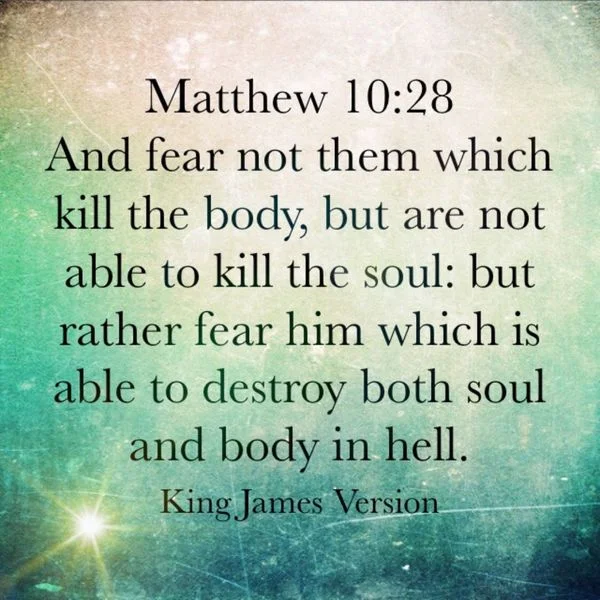
 PMW 20250-12 by Gregg Allison
Theological anthropology focuses on the doctrine of humanity and explores such topics as the nature and origin of human beings and the image of God. Historically, much discussion has been dedicated to the soul, or immaterial aspect of human nature, with little or no attention given to the body, or material aspect.[1] This essay proposes that the proper state of human beings is embodiment and seeks to rectify some of the historical and (even) contemporary oversight of embodiment. It will pursue this thesis—which I will call the “embodied person” view—by some close interaction with a contemporary theologian, Joshua Farris, and his fine work An Introduction to Theological Anthropology.[2] Both of us hold that humans are composed of soul and body but we emphasize different aspects of that dualist human constitution: Farris, the immaterial; I, the material.
Farris’ View: The Soul Has Priority over the Body
For various reasons, Farris holds to a form of dualism that prioritizes the soul.[3] As he discusses the question “What am I?” Farris articulates a view of human nature that at its core is an immaterial substance.[4] In support, he cites Solomon’s description of death—“the dust returns to the ground it came from, and the spirit [ruah] returns to God who gave it” (Eccl. 12:7)—and notes that the description “presupposes this understanding that humans are soul body compounds.” He understands the “dust” to refer to the body, he takes the “spirit” or “breath” [ruah] to refer to “the life that is given . . . to the body to make it alive,” and he identifies the “breath” with the soul.[5]
Reformed Eschatology in the Writings of Geerhardus Vos
Ed. by Ken Gentry and Bill Boney
This is a collection of several key eschatological studies by the renowned Reformed theologian Geehardus Vos. We have modernized Vos’ grammar and syntax and updated his layout style according to modern publishing conventions (shorter sentences and paragraphs). We did this without changing any of Vos’ arguments.
For more information on this new Vos work or to order it, see:
https://www.kennethgentry.com/reformed-eschatology-in-the-writings-of-geerhardus-vos/
Farris continues with other biblical support for the priority of the soul in his version of dualism. He appeals to biblical passages in which a soul or a spirit is said to do some action, which leads him to draw the conclusion that the soul or spirit, which is distinct in some way from the body, is the essential aspect of human existence. For example:
Luke 1:46: Mary said, “My soul magnifies the Lord, and my spirit rejoices in God my Savior.” Farris explains that Mary “is referring “to the whole self (in the sense of a merism: by referring to the whole self through its parts), yet she seems to be referring to the subject of her own actions not reducible to the parts therein and not captured by the whole of the parts that she has. Instead, she is referring to some subject that has desires, emotions, thoughts, inclinations, volitional states, and the like. She is neither her body nor the parts of her body. She is, arguably, something other than her body, or at least something higher than the body she inhabits.”[6]
Psalm 42:11: Why are you cast down, O my soul, and why are you in turmoil within me? Hope in God; for I shall again praise him, my salvation and my God.” Farris comments, “The psalmist is assuming some distinction between self or soul and body. The psalmist does not reflect on or speak directly to the body or the parts of the body, as if they can respond. Rather, he communicates with his soul or self in an attempt to bring about some causal change in the emotional states he is experiencing.”[7]
He adds two other biblical passages that use the word “spirit” (pneuma):
➡Luke 23:46 (Jesus crying out and citing Psalm 31:5): “Father, into your hands I commit my spirit.”
➡Acts 7:59 (Stephen crying out): “Lord Jesus, receive my spirit.”
Farris concludes: “Conceptually, these and other NT passages point us in the direction of personal persistence after somatic [i.e., bodily] death.”[8]
Problems with Farris’ View
The passages Farris cites, however, can readily be rendered from the first-person perspective, such that these verses would not support the priority of the soul over the body. In fact, if the soul/spirit in these texts is understood as the acting subject, then these passages fit better with an embodied person view:
➡Luke 1:46-47: Mary said, “I magnify the Lord and rejoice in God my Savior.” This rendition is certainly less poetic, but it is metaphysically true if Mary is the acting subject in all her offerings of praise to God (see later discussion).
➡Luke 23:46 (Jesus crying out): “Father, I yield my life into your hands.” This rendition is clearly not a citation from Psalm 31:5, but it is metaphysically true if Jesus is the acting subject in all his obedient actions directed toward the Father (see later discussion).
Have We Missed the Second Coming:
A Critique of the Hyper-preterist Error
by Ken Gentry
This book offers a brief introduction, summary, and critique of Hyper-preterism. Don’t let your church and Christian friends be blindfolded to this new error. To be forewarned is to be forearmed.
For more Christian educational materials: www.KennethGentry.com
As for Farris’ interpretation that these passages “point us in the direction of personal persistence after somatic death,” indeed they express hope in post-mortem existence.[9] But is this existence that of a soul or spirit or is it the existence of a disembodied person? I will return to this question.
Specifically, if one marshals biblical passages in this fashion, making much of the word “soul” or “spirit” as that which continues after death, what should one make of the following affirmations?
Philippians 1:21–24: “For to me to live is Christ, and to die is gain. If I am to live in the flesh, that means fruitful labor for me. Yet which I shall choose I cannot tell. I am hard pressed between the two. My desire is to depart and be with Christ, for that is far better. But to remain in the flesh is more necessary on your account.” For the Christian to die and be with Christ is gain and is far better than continuing in this earthly existence, but Paul uses the first-person singular (“I”) and not the words “soul” (“to die is gain for my soul”) or “spirit” (“my desire is for my spirit to depart and be with Christ”).
2 Corinthians 5:6–8: “So we are always of good courage. We know that while we are at home in the body we are away from the Lord, for we walk by faith, not by sight. Yes, we are of good courage, and we would rather be away from the body and at home with the Lord.” The Christian prefers being absent from the body and being with the Lord, but Paul uses the first-person plural (“we”) and not the words “soul” or “spirit” (“our soul/spirit would rather be away from the body and at home with the Lord”).
 The Truth about Salvation By Ken Gentry
A study guide for personal or small group Bible study. Deals with the Christian doctrine of salvation from a Reformed theological perspective. It opens with a study of God as loving Creator, the shows how the first man fell into sin. Shows God’s righteousness requires that sin be dealt with. Presents Jesus as both God and man so that he can be man’s Savior. Includes review questions and questions for further study.Twelve chapters are ideal for one quarter of Sunday School.
See more study materials at: www.KennethGentry.com
Accordingly, Farris’ variety of dualism gives priority to the human soul as the primary constituent of human nature, but it is not an airtight position.
My View: Human Beings as “Embodied Persons”
Contrary to Farris, I propose an “embodied person” view grounded on the thesis that the proper state of human existence is embodiment. I can say that “I am my body,” because I rely on my bodily composition for my very existence between my conception and my death. I cannot say “I am only my body” or “I am identical with my body.”[10] Moreover, my “embodied person” view maintains that during this earthly existence, I have a basic and direct experience of myself as an embodied person. I believe that “I am my body” in the following way:
The affirmation is not “I am only my body” (I hope we all would disagree with that statement), nor is the affirmation “I am identical with my body” (which the constitutional view of human nature rightly denies). I do not affirm (reductive, or non-reductive) physicalism, nor do I affirm the identity thesis of I and my body. Both views have their problems.
The way I feel about my embodiedness significantly conditions the way I feel about the world.[11]
I am who I am principally in virtue of the fact that I have the body I have[12]
If I had a different body— say, that of my spouse or that of my best friend— I would be a different person altogether.
Without this body I do not exist, and I am myself as my body.[13]
 Why I Left Full-Preterism (by Samuel M. Frost)
Former leader in Full Preterist movement, Samuel M. Frost, gives his testimony and theological reasoning as to why he left the heretical movement. Good warning to others tempted to leave orthodox Christianity.
See more study materials at: KennethGentry.com
Furthermore, I intuit that every other person who has ever existed, exists now, and will ever exist is an embodied person, perceives him/herself as an embodied person, and can reflect on what it means to be an embodied person. Finally, and foundationally, I believe that persons, not natures, act, make decisions, believe, rebel, and more. Souls do not worship; persons do (Luke 1:46: Mary is the acting subject in all her offerings of praise to God). Spirits do not exercise a will, persons do (Luke 23:46: Jesus is the acting subject in all his obedient actions directed toward the Father). This conviction puts me at odds with Farris’ prioritization of the immaterial aspect of human beings, a view that holds that souls hope and spirits obey. From my perspective, Christian persons hope in the Lord and obey his Word.[14]
Returning, then, to the issue of personal persistence after somatic death/post-mortem existence, I offer two alternatives:
1. this earthly existence is not all there is, but human life extends beyond the grave/death, and
2. there is a soul (immaterial aspect, spirit) that persists after death and is immortal[15]
I affirm (1) that human life extends beyond the grave/after death, not as immortal souls, but as disembodied persons who await the return of Jesus Christ and an accompanying return to full human existence/complete redemption that consist of re-embodiment, that is, the resurrection of the body. Souls do not worship the Lord and rest from their labors in the intermediate state. Souls do not worship or rest; persons do, or, in this case, disembodied persons worship and rest….
To read the remainder of the article and the footnotes, go to the webstie: Christ Over All:
https://christoverall.com/article/concise/the-embodied-person-why-i-am-my-body-not-just-my-soul/?fbclid=IwZXh0bgNhZW0CMTEAAR1Xc_-NveX8xnizSrKCNKBMPLo5jLBnATx5YxNB8RloCbGiVHzXlm2awRc_aem_rvRR2KX0TYXtLHG18hgmMA



 Postmillennial Worldview
Leave a comment