
 PMW 2024-076 by Kenneth L. Gentry, Jr.
In this survey of alleged negative passages regarding alcohol consumption, we come to perhaps the most used passage in this regard, Proverbs 20:1.
Proverbs 20:1
Wine is a mocker, strong drink a brawler.
And whoever is intoxicated by it is not wise.
Charismatic Gift of Prophecy
(by Kenneth Gentry)
A rebuttal to charismatic arguments for the gift of prophecy continuing in the church today. Demonstrates that all revelatory gifts have ceased as of the conclusion of the Apostolic era.
See more study materials at: www.KennethGentry.com
Although not tied to unique circumstance, this verse does not universally prohibit wine drinking. The statement refers to the inebriating potential of wine and strong drink, of which the user must be wary. It warns those who use it immoderately. Note the following observations:
First, the general warning pattern. The warning “wine is a mocker” follows the pattern of 1 Corinthians 8:1, which says that “knowledge makes arrogant.” Obviously neither Christian ethics nor a biblical world-view disparage the quest for knowledge as a proper function of rational beings generally, or of Christians specifically. In certain respects wine-consumption and knowledge-acquisition are similar, and bring certain responsibilities with them. That is, each can be used for either good or evil. The point of Proverbs is that wine has the potential to mock, just as the point of Paul is that knowledge has the potential to make arrogant. Not all who have knowledge are “arrogant.” Neither do all who partake of wine become “mockers” or “brawlers.”
Second, the particular warning specifics. This warning speaks to the abuse of wine, and not just by analogy. Delitzsch’s comments on this passage are very much to the point:
“Wine is a mocker, because he who is intoxicated with it readily scoffs at that which is holy; mead is boisterous . . . because he who is inebriated in his dissolute madness breaks through the limits of morality and propriety. He is unwise who, through wine and the like, i.e. overpowered by it (cf. 2 Sam. 13:28), staggers, i.e. he gives himself up to wine to such a degree that he is no longer master of himself.”
He adds that the writer is referring to “the passionate slavish desire of wine or for wine.” This is why he follows the statement “wine is a mocker, strong drink a brawler” by the comment “he who is intoxicated by it is not wise.” Thus, the context itself clearly indicates that the abuse of wine, the inordinate consumption of strong drink is the concern.
Third, the wider warning context. The biblical interpreter must not be selective in his approach to Scripture. We must not divorce particular verses from their wider contexts, nor extract them from the whole system of biblical ethics. I have paraded a mass of evidence before the concerned reader — evidence overwhelmingly supporting the moderationist position. Remember that elsewhere in Scripture we learn that God himself gives us “wine which makes man’s heart glad” (Psa. 104:15). Wine is a joyful reward to those obedient to God (Deut. 14:26ff.). Wine, which in the drunkard’s life is a “brawler,” is in the poetry of God an emblem of messianic blessing (e.g., Amos 9:13-15). Proverbs 20:1 cannot and must not contradict these positive passages elsewhere.
Proverbs 21:17
He who loves pleasure will become a poor man;
He who loves wine and oil will not become rich.
Prohibitionists widely employ this statement in warning against the end results of wine drinking. Oftentimes opponents of alcoholic beverages point to sociological studies and cultural statistics regarding alcoholism, noting that Proverbs 21:17 warns us of such an outcome. Van Impe’s Alcohol: The Beloved Enemy and Wilkerson’s Sipping Saints both weigh in heavily with anecdotal and sociological evidence in this direction. And such ethical breaches and social problems are a concern to moderationists, as well.
 Creation according to the Scriptures
Ed. by P. Andrew Sandlin
This book is sub-titled: A Presuppositional Defense of Literal , Six-day Creation. It has chapters by R. J. Rushdoony, Andrew Sandlin, Kenneth Gentry, Cornelius Van Til, and others. It touches on historical, exegetical, theological, and philosophical implications of Six-day Creation.
See more study materials at: www.KennethGentry.com
But once again, we wrongly apply this verse when promoting total abstinence or prohibition. The verse refers to a constant, inordinate thirst for wine to the neglect of labor and other godly virtues. Notice that the writer does not mention the love of wine alone. He also warns about the love of oil, which is used with perfumes for refreshment from the hot, dry mid-eastern sun. Is oil then, an element the righteous must avoid? Obviously not, for God gives man oil (Ps. 104:15). In fact, Proverbs also mentions oil in a good context:
Oil and perfume make the heart glad,
So a man’s counsel is sweet to his friend. (Prov. 27:9)
Rather, Proverbs 21:17 warns men to keep things in perspective. If the love of money is a root of evil (1 Tim. 6:10), are we then to abstain from all money? Or is it the love of money that is the issue there?
Reformed Eschatology in the Writings of Geerhardus Vos
Ed. by Ken Gentry and Bill Boney
This is a collection of several key eschatological studies by the renowned Reformed theologian Geehardus Vos. We have modernized Vos’ grammar and syntax and updated his layout style according to modern publishing conventions (shorter sentences and paragraphs). We did this without changing any of Vos’ arguments.
For information on the upcoming Geerhardus Vos work or to pre-order it, see:
https://axeheadpress.com/pages/coming-soon-vos
Actually in its poetic setting, the warning here in Proverbs 21:17 is directed against the party life mentality:
He who loves pleasure will become a poor man;
He who loves wine and oil will not become rich.
Note the parallelism: the one who “loves wine and oil” is the one who “loves pleasure.” That is, he is the one who lives a life solely for the pursuit of pleasure, even to the point of riotous abandon. Elsewhere Proverbs describe this type of person is similarly:
For the heavy drinker and the glutton will come to poverty,
And drowsiness will clothe a man with rags. (Prov. 23:21)
The lifestyle of this person will come to poverty. Isaiah refers to such party animals in Isaiah 5:11:
Woe to those who rise early in the morning that they may pursue strong drink;
Who stay up late in the evening that wine may inflame them!
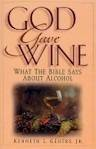
God Gave Wine (by Ken Gentry)
A biblical defense of moderate alcohol consumption. Considers all key biblical passages and engages the leading objections.
See more study materials at: www.KennethGentry.com
Tagged: Alcoholic beverage, wine drinking



 Postmillennial Worldview
Moderation seems to be wisdom’s guiding principle for consumption of wine and oil and that which most effectively imparts the blessings of each intended by God.