
PMW 2023-094 by Kenneth L. Gentry, Jr.
Christ upholds God’s Law. And this includes his upholding one of the laws most commonly misunderstood and employed today. This law is often used in arguing against the continuing relevance of God’s Law in the civil sphere. He upholds the law calling for capital punishment for incorrigible criminality. Even the parents of a dangerous individual are expected to turn him over to civil authorities for capital punishment:
And He answered and said to them, “And why do you yourselves transgress the commandment of God for the sake of your tradition? For God said, ‘Honor your father and mother,’ and, ‘He who speaks evil of father or mother, let him be put to death.’ But you say, ‘Whoever shall say to his father or mother, “Anything of mine you might have been helped by has been given to God,” he is not to honor his father or his mother.’ And thus you invalidated the word of God for the sake of your tradition.” (Matt 15:3–6)
This piece of capital punishment legislation is frequently brought forward in disgust to demonstrate the absurdity of the Law’s modern application. But this law should never be derided by the Christian for several reasons:
(1) In this very passage our Lord and Savior Jesus Christ defends the application of this law and rebukes the Pharisees for circumventing it. He complains that such people “invalidated the word of God,” calling them “hypocrites” who merely “honor Me with their lips” (Matt 15:7).
 God’s Law Made Easy (by Ken Gentry)
Summary for the case for the continuing relevance of God’s Law. A helpful summary of the argument from Greg L. Bahnsen’s Theonomy in Christian Ethics.
See more study materials at: www.KennethGentry.com
(2) In aligning these two laws from the Mosaic code Jesus specifically declares that they are God’s Law. Note that he states: “For God said. . . .”
(3) This capital sanction is in fact actually found in the Bible, which we are called upon to believe, defend, and promote. To mock a command found in God’s Word as absurd or reprehensible is simply not an option for the Christian. In fact, such a response reminds us of Adam and Eve’s reaction to God’s prohibition in Eden: God commands them not to eat (Gen 2:16–17); but they see that it was “good for food” — so they reject his command (Gen 3:1–6).
Contrary to popular opinion, this capital punishment legislation applies to a son that is: (1) old enough to be a threat to the community through criminal conduct and (2) mean enough to be turned over to the authorities by his own parents. An explanatory expansion of this law describes this son as “a glutton and a drunkard” who cannot be controlled by his parents (Deut 21:18–21). He is a curse to his parents and a menace to his community. This is not a ten year old who refuses to take out the garbage.
THE APOCALYPSE OF JOHN
by Milton S. Terry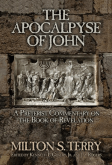
This book is Terry’s preterist commentary on the Book of Revelation. It was originally the last half of his much larger work, Biblical Apocalyptics. It is deeply-exegetical, tightly-argued, and clearly-presented.
For more study materials: https://www.kennethgentry.com/



 Postmillennial Worldview
Leave a comment