
PMW 2023-078 by Kenneth L. Gentry, Jr.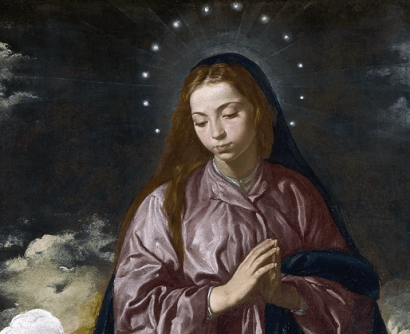
This is the third and final installment studying the woman in Revelation 12. So, let us now continue and conclude our study.
THE CROWN OF TWELVE STARS
The “crown of twelve stars” (12:1c) is a stephanos, a victor’s wreath (cp. 2:10; cf. 6:2; cp. 1Pe 5:4), rather than a diadēma, a crown representing political rule (L-N 1:76, 77). Ideal Israel embodied in the faithful remnant is deemed victorious, despite her diminished count and difficult circumstances. Unfortunately, the historical manifestation of the ideal community — Israel after the flesh — ultimately fails in that she does not recognize the true light that she should have accepted (Jn 1:4–5, 9–11; 3:19–20; 5:33–40). As a result we learn that “it is not the children of the flesh who are children of God, but the children of the promise are regarded as descendants” (Ro 9:8; cp. Ro 8:14; Gal 4:28). Consequently, earthly, corporate Israel’s failed light-bearing function is taken over by the new covenant church (Mt 5:14–16 //; Ac 13:46–47; 26:18, 23; 2Co 4:6; cp. Col 1:12; 1Th 5:5) which is the “Israel of God” (Gal 6:16), the “true circumcision” (Php 3:3). Therefore, in Revelation God’s judgments against earthly Israel darken her lights (8:12; cp. 6:12; 9:2) and cause her shining stars to fall (6:13).
Revelation presents the woman as “with child,” or literally “in womb” (en gastri, 12:2), an idiom for pregnancy (Mt 1:18, 23; 24:19; Lk 1:31; 1Th 5:3). While in this condition she “cries out, being in labor and in pain to give birth” (12:2). On the surface this appears to picture Israel’s readiness to give birth to Christ through Abraham’s seed-line by looking back to his nativity. Jesus certainly comes through Israel (Mt 1:1; 2:2), and this is surely a reasonable interpretation of the language here. Consequently, many scholars hold that this is John’s point (Swete 148; Mounce 232; Beale 629; Kistemaker 355; OBC 1296; Witherington 168; Boxall 178; Resseguie 171). In fact, Beale (631) declares that “most commentators” do so. I believe, however, that the context suggests otherwise. As I will argue more fully below (in both my second point, and later at 12:5), the “birth” mentioned here at 12:1 (and 12:5) actually speaks of Jesus’ resurrection from the tomb, rather than his birth from the womb. We may discern this from the following.
 Understanding the Creation Account
DVD set by Ken Gentry
Formal conference lectures presenting important information for properly approaching the Creation Account in Genesis. Presents and defends Six-day Creation exegesis, while presenting and rebutting the Framework Hypothesis.
See more study materials at: www.KennethGentry.com
THE MEANING OF THE BIRTH
First, the verb translated “in pain” is basanizomenē which speaks of a very intense pain that is never used for the pain of actual childbirth in Scripture or elsewhere (Beale 629; Osborne 456). In Revelation it is normally translated “torment” (9:5; 14:10; 20:10), as is its noun form, basanismos from basanos (9:5; 14:11; 18:7, 10, 15). This leads Prigent (384) to ask: “why are the woman’s sufferings indicated by a verb that does not commonly have this meaning” (i.e., of birth)? Not only does this word speak of an intense pain, but this verse is “quite wordy, emphasizing the woman’s intense suffering” (Bratcher 182): “she cried out, being in labor and in pain” (12:2). That being so, our text presents us with a double reality regarding the woman’s suffering: (1) This pictures ideal Israel who bears the Messiah into the world after long enduring suffering and tribulation, all while awaiting her Redeemer. The Messianic line and hope is maintained by the remnant despite persecution and trials (e.g., Ps 74; 79; 80; 89:38–51; 94; Isa 26; 51).
Note especially the persecution of the righteous outlined in Heb 11 (Heb 11:13, 23–27) — often even from within Israel herself (Heb 11:32–38). Thus, “the corporate figure of the woman in verse 1, then, becomes in verse 2 the true Israel in a ‘pre-messianic agony of expectancy’” (Smalley 316).
But we must also recognize another element in this imagery: (2) This long-standing suffering comes to imminent expression in the experience of Jesus’ disciples. They are the current embodiment of the remnant of Israel, the woman who is crying out in pain. Thus v 2 speaks of their intense fear and deep anguish as they endure persecution from apostate Judaism (the religion of Israel after the flesh) which puts Christ to death. During his ministry Jesus warns them that they will be persecuted, just as he is (Jn 15:20; cp. Mt 10:16–23). At the time of his trial and crucifixion, therefore, they fearfully forsake (Mt 26:56) and deny him (Mk 16:66–72) and will afterwards hide in “fear of the Jews” (Jn 20:19). Not only so, but his death (Jn 16:17–19) will cause them to “weep [klausete] and lament [thrēnēsete]” and “grieve [lupēthēsesthe]” (Jn 16:20), which Jesus likens to a woman bearing a child (16:21–22). Thus, the Jn 16 reference provides “a close similarity” to Revelation 12:2 (Boxall 178; cp. Smalley 316) and allows the disciples to “represent the mother, the messianic community” (Beale 630) who grieve over Christ’s death but will rejoice at his resurrection.
Understanding the Olivet Discourse 
By Ken Gentry
This 5 DVD lecture set was filmed at a Bible Conference in Florida. It explains the entire Olivet Discourse in Matt. 24–25 from the (orthodox) preterist perspective. This lecture series begins by carefully analyzing Matt. 24:3, which establishes the two-part structure of the Discourse. It shows that the first section of the Discourse (Matt. 24:4–35) deals with the coming destruction of the temple and Jerusalem in AD 70. This important prophetic event is also theologically linked to the Final Judgment at the end of history, toward which AD 70 is a distant pointer.
For more educational materials: www. KennethGentry.com
Second, John apparently has Ps 2 in mind, for he alludes to it in 11:15, 18, almost immediately before our text; he will again in 12:5 shortly after it. This Messianic Psalm has God declaring “today I have begotten You” (Ps 2:7) as it speaks of his enthronement (Ps 2:8–9). Christ’s enthronement occurs at his death and resurrection, not at his delivery and birth (see discussion at 12:5). Third, Satan is apparently behind Herod’s slaying of the children in an attempt to kill Jesus (Mt 2:16). Nevertheless, that episode, does not fit our text here, where Satan awaits the birth so that “whenever she bears the child [hotan tekē to teknon autēs]” he might immediately “devour” it. Note: (1) The Gospel record does not mention Satan’s involvement in this evil action. In the NT record Satan does not appear on the scene until after Jesus’ baptism at age 30 (Mt 4:1) (2) Herod’s assault on Christ occurs well after Jesus’ birth. When the Magi visit Jesus he is not an “infant” (brephos, Lk 2:16) but a “child” (paidion, Mt 2:9, 11, 13) and he is in a “house” (oikian, Mt 2:11), not a manger (phatnē, Lk 2:7). And Herod orders the slaying of children “two years old and under” (2:16).



 Postmillennial Worldview
do you still offer the writing course?
Yes, I do. https://www.kennethgentry.com/categories/Writing-Course/