
 PMW 2023-044 by Kenneth L. Gentry, Jr.
INTRODUCTION
Postmillennialism and amillennialism are closely related. In fact, they are both “post” millennial in that they believe the current age (the Church Age, if you will) is the “millennium,” and that Christ will return “post” (after) the millennium.
Both Post- and Amillennialists note that the “thousand year” reign of Christ occurs in only one passage in Scripture, Revelation 20:1–6. We further observe that it appears in the most symbolic book in all of Scripture. In Revelation we see a seven-headed beast, fire-breathing horses, locusts with the faces of men and the teeth of lions, a woman standing on the moon, and many more symbolic features. Consequently, we prefer that eschatological discussion begin elsewhere in more didactic portions of Scripture, and that it be controlled by passages other than the apocalyptically-charged, highly-wrought symbolic images in Revelation.
The millennial passage in Revelation 20 is prominent in contemporary eschatological discussion today. Indeed, it has given us the eschatological nomenclature highlighting our distinctive eschatological positions as millennial views. Yet I agree with James Blevins in the Mercer Bible Dictionary when he complains: “The millennium becomes the tail that wags the dog.”
As a postmillennialist I do not see Revelation 20 as a key text for eschatological discussion.[1] I do believe it is an important text for the story-line of Revelation. But biblical eschatology begins far earlier than in one of the last books of the Bible. And it is exhibited more clearly in those earlier passages.
In fact, by definition “eschatology” emphasizes end-time events. But Revelation is tied to the first century. John introduces and closes his remarkable vision with clear, near-term expectation statements:
“The Revelation of Jesus Christ, which God gave Him to show to His bond-servants, the things which must soon take place; and He sent and communicated it by His angel to His bond-servant John.” (Rev 1:1)
“Blessed is he who reads and those who hear the words of the prophecy, and heed the things which are written in it; for the time is near.” (Rev 1:3)
“And he said to me, ‘These words are faithful and true’; and the Lord, the God of the spirits of the prophets, sent His angel to show to His bond-servants the things which must soon take place.” (Rev 22:6)
“And he said to me, ‘Do not seal up the words of the prophecy of this book, for the time is near.’” (Rev 22:10)
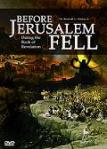
Before Jerusalem Fell Lecture
DVD by Ken Gentry
A summary of the evidence for Revelation’s early date. Helpful, succinct introduction to Revelation’s pre-AD 70 composition.
See more study materials at: www.KennethGentry.com
Besides this, Revelation 20 (the famed millennial passage) is actually the answer to the cry of the first-century martyrs mentioned earlier (and throughout Revelation). It has nothing to do with all Christians throughout Christian history. We can see this in the shared words and parallel assertions found between Revelation 6:9–10 and Revelation 20:4:
“When the Lamb broke the fifth seal, I saw underneath the altar the souls of those who had been slain because of the word of God, and because of the testimony which they had maintained; and they cried out with a loud voice, saying, ‘How long, O Lord, holy and true, will You refrain from judging and avenging our blood on those who dwell on the earth?’” (Rev 6:9–10)
“Then I saw thrones, and they sat on them, and judgment was given to them. And I saw the souls of those who had been beheaded because of their testimony of Jesus and because of the word of God, and those who had not worshiped the beast or his image, and had not received the mark on their forehead and on their hand; and they came to life and reigned with Christ for a thousand years.” (Rev 20:4)
We should note that according to the direct statements within Revelation 20:4, John is dealing with those Christians who had been slain because of their commitment to God’s word (thus, he sees “souls” and he declares they were “beheaded”). He also adds that they “had not worshiped the beast” (whom I believe to be Nero Caesar, the first imperial persecutor of the church [2]). Both of these facts fit within the time-frame designates of Revelation, i.e., that the events must
“soon take place” (Rev 1:1; 22:6) because “the time is near” (Rev 1:3; 22:10). [3] Both of these facts also militate against a future, earthly millennial reign of all the saints on earth.
Consequently, we must understand that biblical eschatology deals with the larger question of cosmic history, rather than narrowly focusing on the trials of the first-century church. Hence, postmillennialists go elsewhere to develop our eschatological outlook.
To be continued (barring the Rapture foiling my theories).

Navigating the Book of Revelation (by Ken Gentry)
Technical studies on key issues in Revelation, including the seven-sealed scroll, the cast out temple, Jewish persecution of Christianity, the Babylonian Harlot, and more.
See more study materials at: www.KennethGentry.com
NOTES
1. By stating this I am not denigrating Revelation. In fact, I have a deep and abiding interest in this fascinating book. I wrote my doctoral dissertation on Revelation’s dating (arguing for a pre-AD 70 composition, 1989), am a
contributor to Zondervan’s Four Views on the Book of Revelation (1998), have written several books on Revelation (including The Book of Revelation Made Easy and Navigating the Book of Revelation), have produced two video lecture series on Revelation (“Keys to the Book of Revelation” and “A Survey of the Book of Revelation”), and have completed a 1700 page commentary (The Divorce of Israel: A Redemptive-historical Commentary on the Book of Revelation, 2023 forthcoming).
2. See my book: The Beast of Revelation (Powder Springs, Geo.: American Vision, 2002. He is the sixth “king” of the seven-hilled city of Rome (Rev 17:9–10): Julius Caesar, Augustus Caesar, Tiberius Caesar, Gaius Caesar, Claudius Caesar . . . then Nero Caesar. See: Josephus (Ant. 19:1:11; cp. 18:2:2; 18:6:10), Suetonius (Lives of the Twelve Caesars, which began with Julius), Sib. Or. 5:12-51; and 4 Ezra 11-12 [2 Es 12:15] He was the one given power “to make war with the saints and to overcome them” (Rev 13:7). He was the one tortured Christians so badly that even the Roman historian Tacitus was appalled (Ann. 15:44).
3. For a defense of the pre-AD 70 composition date for Revelation see my: Before Jerusalem Fell: Dating the Book of Revelation (Chesnee, S.C.: Victorious Hope, 2010).

THE TWO AGES AND OLIVET (advertisement)
I am currently researching a study of the Two-Age structure of redemptive history. My starting point is based on the disciples’ questions to Jesus in Matthew 24:3. Much confusion reigns among those unacquainted with the Two-Age analysis of history, which was promoted by Jesus (Matt. 12:32; Mark 10:29-30) and by Paul (Gal. 1:4; Eph. 1:21). The Two Ages are not the old covenant and the new covenant, but world history since the fall and the consummate order following the Second Coming and the Final Judgment.
If you would like to support me in my research, I invite you to consider giving a tax-deductible contribution to my research and writing ministry: GoodBirth Ministries. Your help is much appreciated!



 Postmillennial Worldview
your links to products are not working
Thanks! I fixed them. (I hope).
They’re working now! FYI I had emailed you to THANK YOU GREATLY for writing Revelation Made Easy. I’m someone who always stayed away from that book, studying it, comprehending it, etc. because it was so foreign & ‘greek to me!’ You might as well have called it ‘Revelation for Dummies!’ because that’s how I felt & everything is sinking in for me now 😊😊😊
A million thank you’s & God Bless you for writing this!!
Once again thank YOU for noticing the problem and bringing it to my attention. And thanks much for your kind comments. Much appreciated and encouraging.
You’re welcome! super grateful it’s encouraging to you. I hope to read more of your books/articles!