Category Archives: Uncategorized

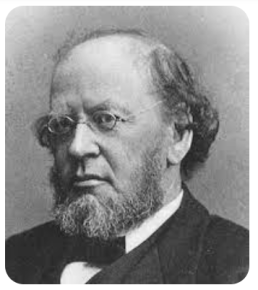
A. A. HODGE ON THE RESURRECTION

Hodge A APMW 2023-050 by A. A. Hodge

Gentry note: We are witnessing in our day a small but growing and tenacious number of Christians who are defecting from orthodox Christianity to a gnostic-like conception of salvation. By that I mean that these folks are denying the physical resurrection of the body and a physical eternal new heavens and new earth. And in this they are corrupting the biblical understanding of salvation as necessarily involving man in his fullness, body and soul. They are also so-reinterpreting Christ’s resurrection (as spiritual, not physical in nature!) that they deny his ongoing (resurrected) incarnation. And that is just the beginning of their slide out of orthodoxy.

I thought it might be helpful to present a Reformed discussion of the resurrection from A. A. Hodge, son of Charles Hodge. He presents his “Outlines of Theology” in a Q&A format, which is both succinct and helpful. The following material is from A. A. Hodge’s notes on the resurrection:

1. What is the meaning of the phrase, “resurrection of the dead,” and “from the dead,” as used in Scripture?

Anastasis signifies etymologically (based on earliest known translations) “a rising or raising up.” It is used in Scripture to designate the future general raising, by the power of God, of the bodies of all men from the sleep of death.

2. What Old Testament passages bear upon this subject?

Job 19:25–27; Psalm 49:15; Isaiah 26:l9; Daniel 12:1–3.

3. What are the principal passages bearing upon this subject in the New Testament?

Matthew 5:29; 10:28; 27:52, 53; John 5:28, 29; 6:39; Acts 2:25– 34; 13:34; Romans 8:11, 22, 23; Philippians 3:20, 21; 1 Thessalonians 4:13–17, and 1 Corinthians15

4. What is the meaning of the phrases, soma psuchikon, “natural body,” and soma pneumatikon, “spiritual body,” as used by Paul, 1 Corinthians 15:44?

The word psuche, when contrasted with pneuma always designates the principle of animal life, as distinguished from the principle of intelligence and moral agency, which is the pneuma. A soma psuchikon, translated natural body evidently means a body endowed with animal life, and adapted to the present condition of the soul, and to the present physical constitution of the world it inhabits. A soma pneumatikon, translated spiritual body, is a body adapted to the use of the soul in its future glorified estate, and to the moral and physical conditions of the heavenly world, and to this end assimilated by the Holy Ghost, who dwells in it, to the glorified body of Christ. 1 Corinthians 15:45–48.
Continue reading

PAUL’S CONCERN IN 1 CORINTHIANS 15

timingPMW 2023-049 by Kenneth L. Gentry, Jr.

A QUESTION ABOUT THE FIRST FRUITS

A reader wrote a question in response to my article: “Spiritual Resurrection at Death?” (PMW 2023-042). In that article I argued for the universal, historic doctrinal position of orthodox Christianity that our eschatological resurrection will be material/physical. There I pointed out that the “first fruit” resurrection of Christ (1 Cor. 15:20, 23) demands that the final resurrection will be of the same kind as Christ’s, which was material/physical (Luke 24:38–39; John 2:19–21; 20:19–20, 25–27).

In response, my reader wrote: “It seems that could make for an extremely long germination period. How does one decide whether the similarity of the harvest to the first fruit, i.e. Christ’s resurrection, is in nature and/or in timing?” Continue reading

POSTMILLENNIALISM AND THE MILLENNIUM (3)

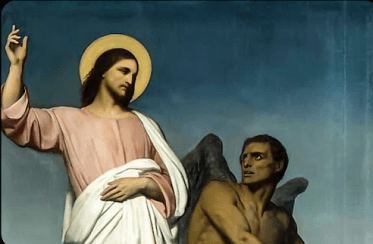
Christ vs SatanPMW 2023-046 by Kenneth L. Gentry, Jr.

This is the third and final installment in this three-part series. If you want anymore installments, you will have to write them yourself. I am weary because I have been up late worrying about next week. I told me wife that I finally decided that I want to be cremated. She immediately went out and got me an appointment for next Tuesday. How do I get in these messes? [1]

CHRIST AND THE POSTMILLENNIAL HOPE

In Christ’s earthly ministry we witness the coming of the prophesied kingdom. For instance, in Mark 1:15 we hear the Lord himself proclaim: “The time is fulfilled, and the kingdom of God is at hand; repent and believe in the gospel.” Thus, not only does he declare that “the” time is fulfilled (the prophetically-expected time) and that the “kingdom of God is at hand,” but he also associates it with the proclamation of the gospel. Later in Matthew 12:28 we read him state: “if I cast out demons by the Spirit of God, then the kingdom of God has come upon you.”
Continue reading

WHERE’S THE BEEF?

PMW 2023-043 by Kenneth L. Gentry, Jr.

PLEASE NOTE: I accidentally posted this article on 4/26/23 before it was complete. Here is the full article I was working on.

A reader’s question:

A reader, Nathan Radcliffe, responded to my posting of Andrew Sandlin’s article “DeMar’s Hidden Views”:

“Where’s the link to the clip Nathan Anderson provided in which Gary denies the future physical resurrection?”

My reply:

The clip is here (at 1:29 mark): https://hyperpreterism.substack.com/p/gary-demar-denies-the-resurrection

Here is Gary’s mocking the historic Christian position on the matter as he derisively interacts with the idea of a future, physical resurrection.

Continue reading

SPIRITUAL RESURRECTION AT DEATH?

PMW 2023-042 by Kenneth L. Gentry, Jr.Spirit bodies

In the universal, historic Christian faith, we have long believed in an intermediate state. That is, the state of existence that we experience immediately upon death and prior to the distant physical resurrection at the end of history. In certain forms of Hyperpreterism, as has been recently so vigorously promoted, there is no intermediate state: you die, are given a spiritual “resurrection” body, and you live in heaven forever.

Another reason many Hyperpreterists deny an intermediate estate is because this system also lacks a consummation. In this unorthodox theology’s view, history continues forever. This is necessarily so since (they believe) all biblical prophecy has been fulfilled in the first century at the destruction of the temple in AD 70.

Consequently, what we are now experiencing — prevailing sin, rebellion against God, the decay of all physical systems, and physical death in history, all which occur in the present operational universe — will continue occurring in history forever and ever and ever and ever. (We are not speaking of the cessation of the eternal, conscious torment experienced under God’s righteous judgment, which is endured by unbelieving sinners while forever constrained in and confined to hell. Hell is a place we cannot access from within the objective universe and which, therefore, cannot impact history or threaten God’s people.) Continue reading

CHRIST, YOU, AND PSALM 22

PMW 2023-041 by Kenneth L. Gentry, Jr. Cross and sunrise

God’s plan of salvation brings together both glory and suffering for Christ. Through his suffering we will experience glory. And this experience of glory begins in history. Let us do a summary survey of Psalm 22 in this regard.

Psa. 22:1–31
According to its title, David wrote this psalm. It is divided into two basic parts: lamentation (vv. 1–21) and thanksgiving (vv. 22–31). It was written about some intense historical problem in David’s experience. Yet God’s Spirit lifts his poetic cry to Messianic significance and points to Jesus’s crucifixion as the ultimate Suffering One. Several details of Jesus’s passion appear within: forsakenness (v. 1), mockery (v. 8), shame (vv. 13, 17), piercing (v. 16), and dividing of his garments (v. 18). We see this in its use in the New Testament (Matt. 27:35, 39, 43, 46; John 19:23, 24, 28; Acts 2:30–31; Heb. 2:12).

Psa. 22:1–2
My God, my God, why have You forsaken me
This cry calls out of a sense of deep despair that is intensified by God’s apparent forsaking (v. 1). But even in despair it shows an abiding trust in God that leads to the psalmist’s continuing prayer (vv. 2–3).
Continue reading

PSALM 2 AND POSTMILLENNIALISM

PMW 2023-040 by Kenneth L. Gentry, Jr.

Like Isaiah 2, Psalm 2 provides powerful evidence for postmillennialism in the Old Testament. As I did with the preceding articles on several Isaiah passages, here I will present just a quick, running analysis of this glorious Psalm.

Psa. 2:1–12

This is a royal psalm, wherein David (Acts 4:25) recalls his enthronement. It is also a Messianic Psalm, which skillfully weaves together David’s human kingship with Jesus’s divine (Messianic) kingship. As such it is a counterpart to Psalm 110 (see Psa. 110:1–7 Note). It is frequently cited in the New Testament (see esp. Acts 4:25–27; cp. Matt. 3:17; 17:5; Acts 13:33; Rom. 1:4; Heb. 1:5; etc.). David the king and Jesus the Messiah are related both biologically and theologically (Matt. 1:1; 22:41–46; Rom. 1:4): David is a type of Christ. Though the psalm opens with turmoil (vv. 1–3) it promises the universal dominion of God’s Son (vv. 7–9), then ends with a gracious invitation for kings to submit to God’s rule (vv. 10a, 11, 12a) — or be destroyed (vv. 10b, 12b).

Continue reading