Category Archives: Uncategorized

ISRAEL AND GOD’S PEOPLE (1)

Israel and the churchPMW 2024-010 by Kenneth L. Gentry, Jr.
Because of the prominence of dispensationalism and the Left Behind phenomenon in evangelical circles, it is important for us to reflect on a fundamental emphasis in contemporary prophecy discussions: Israel. This is also important in that Israel does ver clearly play a prominent role in Scripture. In this brief series I will provide a brief study of the Scripture’s view of Israel from a Reformed perspective both exegetically and theologically

As all Christians know, throughout most of the Old Testament Israel is God’s special people — beginning in seed form with the calling of Abraham in Genesis 12. She is God’s elect nation (Deut 7:7–8 ; 10:15; Zech 2:8; Rom 3:1–3; 11:1) and the focal point of his redemptive mercies in history (Deut 4:7–8; Psa 147:19–20; Amos 3:2; Rom 9:4). Because of her commanding presence in old covenant history and her central role in Old Testament prophecy she becomes a crucial issue in understanding the Bible.


Israel in the Bible and History (9 mp3 lectures)235 Israel in Bible and History 2
by Ken Gentry
The people of Israel are the people of God. But the modern church is divided over the nature, call and identity of Israel. This lecture series covers key issues for understanding the biblical concept of Israel.

See more study materials at: www.KennethGentry.com


Continue reading

EFFECTIVE BIBLE NOTATION

PMW 2024-009 by Kenneth L. Gentry, Jr.

Postmillennialists are a people of the Book. We are certainly not people of the Newspapers (dispensationalists argue that current news is contra postmillennialism). So, as committed Christians we are Bible-believing Christians (1 Thess. 2:13). We believe we are sanctified by the Word of truth (John 17:17). We understand that we must diligently feed upon the solid meat of Scripture (Heb. 5:12-14). We happily examine the words of ministers with great eagerness, searching the Scriptures to see whether these things are so (Acts 17:11). Consequently, a sign of the committed Christian is his or her well-marked Bible.

I am sure my experience has been that of the vast majority of Bible-carrying, text-marking Christians: I often regret having too hastily jotted indelible notes in my favorite expensive, leather-bound Bible. I still have the first Bible I received upon my conversion at age 16. Needless to say, I have plenty of notes in that Bible that I lament.

Continue reading

TERRY ON REVELATION’S DATE (2)

PMW 2024-008 by Milton S. TerryIrenaeus 4

[Gentry note: This is part 2 of Milton S. Terry’s two-part argument for the early date of Revelation]

Jewish persecution

A fair weighing of the arguments thus far adduced shows that they all, excepting the statement of Irenæus, favor the early rather than the later date. The facts appealed to indicate the times before rather than after the destruction of Jerusalem. And this opinion is corroborated by the further consideration that the persecutions of the time proceed from the Jews (Rev. 2:9; 3:9). We know that the persecutions of the apostolic age came chiefly through Jewish instigation and even at the time of Polycarp, we read in Eusebius (Eccl. Hist. 4:15) that the Christian martyr’s death was secured by the fierce zeal of the Jewish population.

Standing temple

The mention, in Revelation 11:1–3, of the temple, the altar, and the court and the mystical designation, in verse 8, of “the great city, which spiritually is called Sodom and Egypt, where also their Lord was crucified,” implies that the city and temple of Jerusalem were not yet overthrown. It is singularly futile to plead that these expressions are symbolical. For, whatever the mystical significance, the whole manner of statement supposes such a knowledge of the temple and the altar as would be unnatural and out of place if in fact the city and temple were then in ruins. But, on the other hand, if these were yet existing and the time of their utter demolition was near at hand, the allusions would be most natural and impressive.
Continue reading

TERRY ON REVELATION’S DATE (1)

PMW 2024-007 by Milton S. TerryNero or Domitian

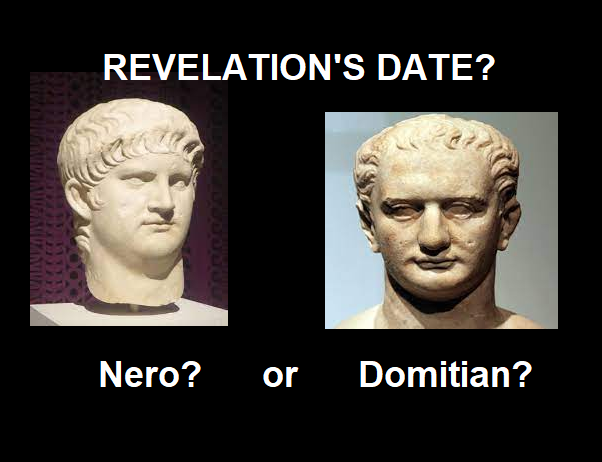
Two different opinions have long prevailed respecting the date of the Apocalypse. One rests mainly on a statement of Irenæus, who seems to place the composition in the latter part of the reign of Domitian (A.D. 96). The other is based upon internal evidence and maintains that the book was written before the destruction of Jerusalem. The most recent criticism, which finds documents of different authorship incorporated in the work, assigns some of the documents to an early and some to a later date. Deferring for the present the several hypotheses of the composite origin of the book, we may briefly state the arguments touching the date as follows:

Irenaeus’ statement

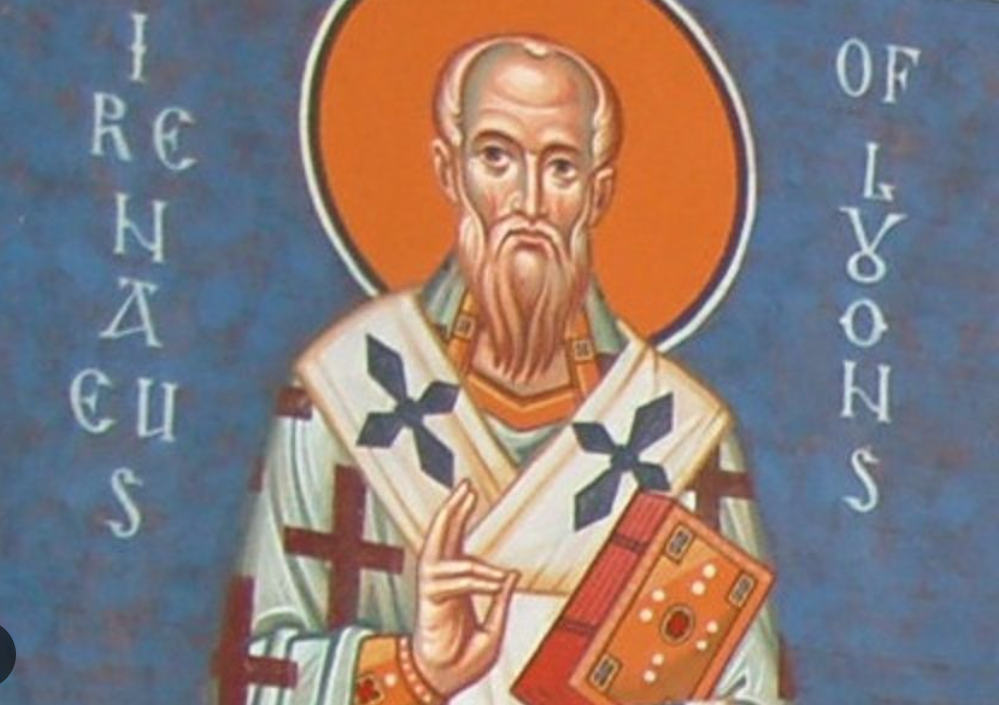
Irenæus, Bishop of Lyons, says that in his boyhood he had conversed with Polycarp and heard him tell of his personal fellowship with the apostle John (Eusebius, Eccl. Hist. 5:20). In speaking of the name of the Antichrist which is concealed in the mystic number given in Revelation 13:18, he says: “If it were necessary to have his name distinctly announced at the present time it would doubtless have been announced by him who saw the Apocalypse; for it was not a great while ago that [it or he] was seen (οὐδὲ γὰρ πρὸ πολλοὺ χρόνου ἑωράθη; oude gar pro pollou chronou eorathe), but almost in our own generation, toward the end of Domitian’s reign” (Irenaeus, Ag. Here. 5:30).

Continue reading

TERRY ON AUTHORSHIP OF REVELATION

PMW 2024-006 by Milton S. TerryApostle John

The different opinions respecting the authorship of the New Testament books commonly attributed to John may be stated as follows:

1. John, the son of Zebedee, the disciple and apostle of Jesus, was the author of the Apocalypse, the fourth gospel and the three epistles.

2. John the apostle was the author of the Apocalypse, but not of the gospel and the three epistles.

3. John the apostle was the author of the gospel and the three epistles, but not of the Apocalypse.

Those who adopt this third view attribute the Apocalypse either to:

1. A Presbyter John, who is mentioned in early writings.

2. John Mark, the companion of Paul and Barnabas.

3. A John whose only monument is this Book of Revelation and who is otherwise unknown.
Continue reading

WHY CHARAM WARFARE?

PMW 2024-005 by Kenneth L. Gentry, Jr.Canaanite destruction

Deuteronomy 7:1-26 is one of the most difficult passages in Scripture for the world to accept. It calls for the absolute extermination of the Canaanites (which is pursued in Joshua, e.g., Josh. 10:40).

This is not the destruction of a hapless people who happen to be at the wrong place at the wrong time. Rather God’s wrath is to be executed upon the Canaanites for much the same reasons it was exacted against the entire world in Noah’s day (Gen. 6:5–7, 11–13; 1 Pet. 3:20; 2 Pet. 2:5) and upon Sodom and Gomorrah in Abraham’s day (Gen. 19:13–15, 24–25; cp. Jer. 23:14; Lam. 4:6; 2 Pet. 2:6; Jude 7). That is, this is special charam [Heb., “ban, devoted to destruction”] warfare legislation which calls for the absolute destruction of the Canaanites.
Continue reading

THE DAVIDIC COVENANT “FOREVER”

PMW 2024-004 by Kenneth L. Gentry, Jr.

The Davidic Covenant states that Israel is God’s people forever (2 Sam. 7:24), and that David’s throne is established forever (vv. 13, 16, 25, 29).

We must understand, though, that the very nature of a covenant implies conditions and responsibilities, whether these are stated or not — despite the Davidic Covenant’s seeming unconditionality. Nothing in the Davidic Covenant declare that Israel’s king is freed from the obligation to obey God’s law. Indeed, it is very clear that: (1) God declares that the Davidic dynasty would continue only if it obeys God (e.g., 1 Kgs. 9:4–9; Psa. 132:11–12) and (2) the Davidic line was, in fact, removed from rule about 450 years after David, when the southern kingdom of Judah was defeated by the Babylonians (2 Kgs. 24:11–15).

Continue reading