Category Archives: Uncategorized

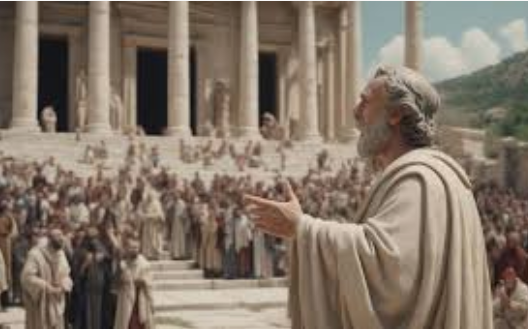
POSTMILLENNIALISM IN ACTS AND PAUL

Paul preachingPMW 2024-100 by Kenneth L. Gentry, Jr.

Though we had a brief interruption in this series due to a special Christmas article, we are now back to considering the presence of postmillennialism the New Testament. We are now in the Book of Acts as we move beyond the Gospels themselves. Having shown the establishment, expectation, and exhortation to the postmillennial hope in the teachings of Jesus, we now look just briefly at the proclaiming of the kingdom by his apostles after his departure to heaven.

The Gospels fit perfectly in the coherent message of Scripture that begins in creation, develops through covenant, and is promised victory in the Psalms and Prophets. And all that we learn in the Gospels undergirds what we hear so frequently in the remainder of the New Testament: the proclamation of the “kingdom of God.” In Acts 3:15 Peter preaches Christ as the “prince of life.” In Acts 5:29 he asserts his obligation to disobey civil authority when it demands that he cease preaching Christ. His rationale is important: “He is the one whom God exalted to His right hand as a Prince and a Savior” (Acts 5:31). The word “prince” here may literally be translated “leader, ruler, prince.” He is exalted as prince or ruler. Continue reading

POSTMILLENNIALISM IN THE GOSPELS (3)

PMW 2024-098 by Kenneth L. Gentry, Jr.

Having well-introduced the presence of the postmillennial hope in Jesus’ teaching in the Gospels, we now come to his formally commissioning his disciples for world-wide dominion. Christianity is not to end up like the Essenes in Qumran: a brief blip in religious history destined to quickly fade away. Christ is establishing his kingdom for the long run, as we can see in the Great Commission

As a king ruling over a kingdom destined to grow, the Lord directs his servants to promote that growth. And as their sovereign, he not only commands their labor but promises his presence with them to accomplish his goal. He is a king with a mission.

Christ’s post-resurrection, pre-ascension Great Commission clearly declares his enthronement and his mission to world conquest. We must hear and follow the sovereign declaration of the risen Lord.

“And Jesus came up and spoke to them, saying, ‘All authority has been given to Me in heaven and on earth. Go therefore and make disciples of all the nations, baptizing them in the name of the Father and the Son and the Holy Spirit, teaching them to observe all that I commanded you; and lo, I am with you always, even to the end of the age.’” (Matt 28:18–20)

Continue reading

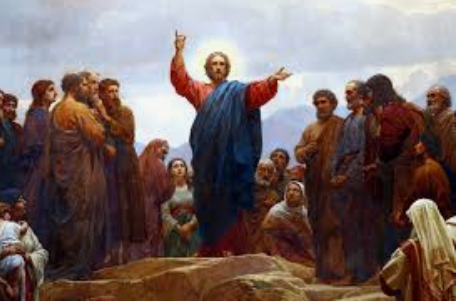
POSTMILLENNIALISM IN THE GOSPELS (1)

Christ preachingPMW 2024-097 by Kenneth L. Gentry, Jr.

THE APPROACHING OF THE KINGDOM

In the Gospels we discover Christ being introduced to Israel and the world through the ministry of John Baptist (Luke 1:76). John himself even fulfills prophecy by being the Messiah’s forerunner (Isa 40:3; Matt 3:3). He prepares the way for Jesus by preaching: “Repent, for the kingdom of heaven is at hand” (Matt 3:2). And Jesus picks up on this theme as he begins his own ministry in Mark 1:14–15:

“And after John had been taken into custody, Jesus came into Galilee, preaching the gospel of God, and saying, ‘The time is fulfilled, and the kingdom of God is at hand; repent and believe the gospel.’”

Let’s consider three crucial factors flowing out of this important pronouncement.

First, Jesus declares “the time” has arrived. What is “the time” to which he refers? It surely speaks of the prophetically-anticipated time, the time of the coming of David’s greater Son to establish his kingdom. We may surmise this in that he immediately adds: “the kingdom of God is at hand.” After all, the Father sent Christ into the world in “the fullness of time” (Gal 4:4; Eph 1:10), to initiate the “favorable year of the Lord” (Luke 4:16–21). This favorable year of the Lord is also called “the acceptable time . . . the day of salvation” (2 Cor 6:2). It is the very day righteous men and angels in the old covenant long desired to see (Matt 13:17; Luke 2:28–30; 10:24; John 8:56; Heb 11:13, 39–40; 2 Pet 1:10–11). Continue reading

YAHWEH

yahwehPMW 2024-089 by Kenneth L. Gentry, Jr.

In Hebrew God’s distinctive covenant name appears as four consonants: YHWH (pronounced Yahweh). It appears in English versions in all caps as: LORD (or sometimes GOD when linked with Adonai, which also is translated “Lord”). In Exodus 3:14 God defines himself via his special covenantal name. This name is so significant in redemptive history that the Scriptures can simply mention “the name” (Lev. 24:11, 16). God jealously declares that this is his name “forever” (Exo. 3:15; cp. Psa. 102:12; 135:13).

This name first appears, not in Gen. 1 where God’s power is exhibited (therefore, Elohim appears there). Rather it appears first when the LORD lovingly creates then covenants with Adam (see note at Gen. 2:4). Contrary to critics, it does not represent another and competing tradition about who the God of Israel is, but is used in his revelation from the beginning. Continue reading

WHY JOHN WROTE TO ASIA MINOR

seven churches 2PMW 2024-080 by Kenneth L. Gentry, Jr.

In my orthodox preterist understanding of Revelation, I see the bulk of John’s drama (as it transpire on the historical plane) as largely focusing on the destruction of Jerusalem in AD 70. Many opponents of this strong Judaic focus complain that we cannot explain John sends Revelation to Asia Minor (Rev. 1:4, 11; 2:1–3:22). It would seem that the message should be sent to Jerusalem. Why did John send his message on the destruction of the temple and Jerusalem to Christians in Asia Minor? The seven churches were not only several hundred miles away from Jerusalem, but were in non-Jewish territory well outside of Jewish Palestine.

There are several reasons for John’s directing his seven letters (actually “oracles”) to Asia Minor. I will briefly summarize a few. Continue reading

THE LORD’S POSTMILLENNIAL PRAYER

Lord''s PrayerPMW 2024-079 by Kenneth L. Gentry, Jr.

The Lord’s Prayer in Matthew 6:9–13 is well-structured and beautiful, despite its being quite succinct. If we look carefully at it, we will discover in its structure marvelous insights into just how postmillennial it really is. It is much more postmillennial in orientation than many have thought. Let me explain.

YOUR KINGDOM COME

We all recognize the postmillennial potential for two of its dramatic petitions: “Your kingdom come” and “Your will be done on earth as it is in heaven.” These (and all the petitions in the Lord’s Prayer) are in the aorist imperative form. Thus, they express the urgency of the pleas and the fervent desires behind the petitions.

The petitions currently before us are two future-oriented petitions asking that God bring his kingdom to bear over all the earth (the kingdom of God is his sovereign reign). This will ultimately transpire, of course, at the Last Day at the Second Coming of Christ which brings about the Final Judgment. These history-ending acts will dramatically, permanently, and fully establish the consummate New Heavens and New Earth wherein dwells righteousness. Continue reading

INTRODUCING THE TWO WITNESSES (3)

2 Witnesses (3)PMW 2024-068 by Kenneth L. Gentry, Jr.

I am continuing a study begun two issues ago on the two witnesses of Revelation. I will not be dealing with every aspect of their sudden appearance Revelation, but will be defining who they are in the context of the flow of redemptive history.

Not only does Jesus teach that the temple is doomed to destruction but that he is replacing it and its ceremonies in himself. And the early church emphasizes this message by recording it in the Gospels, then publishing, circulating, reading, and preaching it before the destruction of the temple in AD 70, either by means of prominent logia or in one or more of the final Gospels themselves released before that date. Jesus strongly asserts his own authority over the temple (Jn 2:14–17; Mt 21:12–17//) and equates his body with it (Jn 2:19–21). He declares that God now dwells (“tabernacles,” eskēnōsen) in him (Jn 1:14) and that he is “greater than the temple” (Mt 12:6).

He also diminishes the temple’s role in declaring that loving God and neighbor “is much more than all burnt offerings and sacrifices” (Mk 12:22). He authoritatively declares the leper cleansed (Mk 1:40-45), instead of directing him to go to the priests to secure cleansing (Lev 14:2ff). He does not even pay the temple tax, except on the occasion when temple authorities confront him about the matter (Mt 17:24–26). And then he does so only to avoid offense (Mt 17:27). In that context Jesus’ declaration that ‘the sons are free’ thus appears to have provided an unmistakable declaration of independence from the Temple and the attendant political-economic-religious establishment. Against the ceremonial prohibitions he touches the unclean woman, but is not made unclean himself (Mk 5:25–34; cp. Lev 5:2–3) and declares that food does not make one unclean (Mk 7:15; cp. Lev 11:4ff). Continue reading