PMW 2022-082 by Kenneth L. Gentry, Jr.
The starting point for developing a truly Christian ethical system must be the study of Scripture itself. The evangelical, born-again Christian confidently holds that God’s holy will is the perfect standard of righteousness. And he further trusts that God’s will is infallibly, authoritatively, and unchangeably revealed in the Scriptures of the Old and New Testaments. Consequently, the Bible — and the Bible alone — must be the starting point and supreme standard for defining truly Christian ethical behavior.
In the venerable Westminster Confession of Faith (hereinafter WCF) we find a beautiful declaration of the pre-eminency of Scripture as the standard for faith and life:
“It pleased the Lord, at sundry times and in divers manners, to reveal Himself, and to declare that his will unto his church; and afterwards, for the better preserving and propagating of the truth, and for the more sure establishment and comfort of the Church against the corruption of the flesh, and the malice of Satan and of the world, to commit the same wholly unto writing: which maketh the holy Scripture to be most necessary; those former ways of Gods revealing his will unto his people being now ceased.” (WCF 1:1)
______________________________________
God’s Law Made Easy
By Ken Gentry
This book focuses specifically on the question of the relevance of the Old Testament Law today. Christians need to return to a whole-Bible ethic rather than a piece-meal it-seems-to-me morality. God’s Law Made Easy is a good place to start.
For more Christian educational materials: www.KennethGentry.com
_____________________________________
Two Principles
The Scripture is God’s revealed and permanent will for man (Deut. 12:32; Isa. 8:20; Rom. 3:1-4). Because of this, evangelical Christian thought insists upon two important ethical principles:
(1) The ubiquity of ethics. That is, in that man is a moral creature created in the image of God (Gen. 1:26-27; 9:6), everything a man does has moral implications (Psa. 139:1-12; Prov. 15:3; 1 Cor. 10:31; 2 Cor. 5:10).
(2) The sufficiency of Scripture. That is, although God did not reveal detailed responses to each and every possible act of man, nevertheless, Scriptures provide express precepts and/or general principles that adequately govern every contingency (Deut. 8:3b; Psa. 119:105; 2 Tim. 3:16-17).
Again we would do well to note the emphatic and pointed declaration of the Westminster Confession of Faith in this regard: “The whole counsel of God concerning all things necessary for his own glory, man’s salvation, faith and life, is either expressly set down in Scripture, or by good and necessary consequence may be deduced from Scripture: unto which nothing at any time is to he added, whether by new revelations of the Spirit, or traditions of men” (WCF 1:6). Thus, we may confidently and boldly assert that “the supreme judge by which all controversies of religion are to be determined, and all decrees of councils, opinions of ancient writers, doctrines of men, and private spirits, are to be determined, and in whose sentence we are to rest, can be no other but the Holy Spirit speaking in the Scripture” (WCF 1:10).
These doctrinal affirmations themselves flow from the express teaching of Scripture itself: “All Scripture is inspired by God and profitable for teaching, for reproof, for correction, for training in righteousness, that the man of God may be adequate, equipped for every good work” (2 Tim. 3:16-17). To the apostles — who were divinely commissioned and supernaturally gifted bearers of the revelation of God — the Lord Jesus Christ promises: “But when He, the Spirit of truth, comes, He will guide you into all the truth” (John 16:13). God’s Word is unequivocal truth (Psa. 119:160; John 17:17; Rom. 3:4), just as Jesus Christ is the personification of God’s Word (John 1:1; 1 John 1:1; Rev. 19:13) and truth (John 1:17; 14:6). Therefore, God obliges to bring “every thought captive to the obedience of Christ” (2 Cor. 10:5). That is, we must submit every area of life to Christ and his will as revealed in Scripture (Rom. 12:2).
Our Current Need
In the intellectual and spiritual climate of our times, numerous examples of deviating from the norm of Scripture exist. For example, perhaps the foundational heresy of Mormonism is its belief in an open canon which allows for continued “revelation” from God (The Book of Mormon, The Doctrine and Covenants, The Pearl of Great Price, and so on). For example, 2 Nephi 29:3-10 in The Book of Mormon reads:
“Many of the Gentiles shall say: A Bible! A Bible! We have got a Bible, and there cannot be any more Bible. But thus saith the Lord God: . . . Thou fool, that shall say: A Bible, we have got a Bible, and we need no more Bible . . . .Wherefore murmur ye, because that ye shall receive more of my word? . . . Because that ye have a Bible ye need not suppose that it contains all my words; neither need ye suppose that I have not caused more to be written.”
Similarly, the ever-present danger in Pentecostalism and the charismatic movement lies in their frequent claims to continuing direct access to the mind of God. This allegedly comes through supernatural and miraculous revelatory gifts of the Holy Spirit, such as prophetic utterances, divine visions, and heavenly tongues. For instance, J. Rodman Williams writes:
“In prophecy God speaks. It is as simple, and profound, and starling as that! What happens in the fellowship is that the word may suddenly be spoken by anyone present, and so variously, a ‘Thus says the Lord’ breaks forth in the fellowship. . . . Many of us also had convinced ourselves that prophecy ended with the New Testament (despite all the New Testament evidence to the contrary), until suddenly through the dynamic thrust of the Holy Spirit prophecy comes alive again. Now we wonder how we could have misread the New Testament for so long!”
Finally, the clear error of neo-orthodoxy is its denial of propositional truth. This theological paradigm prefers existential subjectivism over objective revelation. That is, dynamic revelation, confrontational crises, and so forth prevail over propositional truth. By way of example, Karl Barth holds that “the Bible is God’s Word so far as God lets it be his Word.”
The Holy Spirit’s Guidance
These widely divergent camps suffer from a common malady: subjectivism in determining the will of God. Unfortunately, even conservative fundamentalism often borders on this error in its ethical reliance upon “the leading of the Holy Spirit” divorced from the Word of God, sign-seeking, special guidance by direct feelings and impressions of the Holy Spirit, and the like. We are greatly tempted to resort to “sanctified feelings” or “holy common sense” for resolving complex ethical issues, especially in our day of instant-this and freeze-dried-that.
Perspectives on Pentecost
By Richard B. Gaffin, Jr.
A careful examination of the New Testament teaching on the gifts of the Spirit. Makes a case for the cessation of tongues at the close of the apostolic era. Gaffin is professor emeritus of biblical and systematic theology at Westminster Theological Seminary, Philadelphia.
For more educational materials: www.KennethGentry.com
The following helpful paragraphs appear in Murray’s article “The Guidance of the Holy Spirit.”
“The basic premise upon which we must proceed is that the Word of God in the Scriptures of the Old and New Testaments is the only infallible rule of practice, as it is also the only infallible rule of faith. Complementary to this basic premise is another, namely, that the Word of God is a perfect and sufficient rule of practice. The corollary of this is that we may not look for, depend upon, or demand new revelations of the Spirit. . . .
“[However], we may still fall into the error of thinking that while the Holy Spirit does not provide us with special revelations in the form of words or visions or dreams, yet he may and does provide us with some direct feeling or impression or conviction which we may regard as the Holy Spirit’s intimation to us of what his mind and will is in a particular situation. The present writer maintains that this view of the Holy Spirit’s guidance amounts, in effect, to the same thing as to believe that the Holy Spirit gives special revelation. And the reason for this conclusion is that we are, in such an event, conceiving of the Holy Spirit as giving us some special and direct communication, be it in the form of feeling, impression, or conviction, a communication or intimation or direction that is not mediated to us through those means which God has ordained for our direction and guidance. In the final analysis this construction or conception of the Holy Spirit’s guidance is in the same category as that which holds to direct and special revelation, and that for the reason that it makes little difference whether the intimation is in the form of impression or feeling or conviction or in the form of a verbal communication, if we believe that the experience which we have is a direct and special intimation to us of what the will of God is. . . . We are abstracting the operation of the Spirit, in respect of guidance, from the various factors which may properly he regarded as the means through which we are to be guided.”s
What the world so needs today — second only to regeneration itself — is a coherent, biblically derived ethical system by which to judge all thought and behavior. Autonomous ethics are internally contradictory (because they are not true) and inherently evil (because they deny God). A truly Christian ethic arises from the self-authenticating Word of the Living God (John 17:17) — not the traditions of men, whether “secular” or “religious” (cf. Matt. 15:3, 6; Mark 7:13). The abiding strength of a truly vital Christianity derives from its sole reliance upon all-sufficient Scripture for all matters concerning faith and practice. The inspired, infallible, inerrant Word of God is and must always be the regulating principle of Christian thought and conduct. Theologian R. B. Kuiper well states this precept: “All Christian teachings, whether doctrinal or ethical, are drawn from the Bible. According to Christianity the acid test of truth and goodness is Scripturalness.”






 PMW 2022-080 by Kenneth L. Gentry, Jr.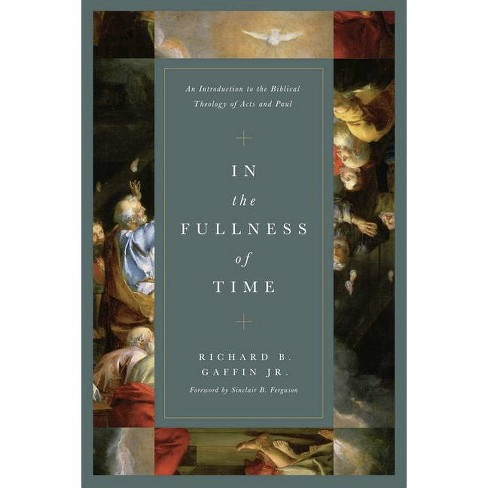
 PMW 2022-069 by Kenneth L. Gentry, Jr., Th.D.
 PMW 2022-066 by Kenneth L. Gentry, Jr.
 Postmillennial Worldview
Recent comments