Category Archives: Uncategorized

AD 70 AND THE FINAL JUDGMENT

PMW 2023-027 by Kenneth L. Gentry, Jr.

In this article I will offer a brief review of an important and helpful book on the eschatology of Jesus, Jesus and the Future. To paraphrase a well-known biblical proverb, we might say that “the writing of many books on prophecy is endless.” And too many of current prophecy books are downright useless, so that we must confess “that such is wearisome, for the eye is not satisfied with seeing charts and graphs, nor is the ear filled with hearing Antichrist and Rapture predictions.” But this is one of the rare prophecy books that is well worth reading.

Review of Jesus and the Future: Understanding What He Taught about the End Times, by Andreas J. Köstenberger, Alexander E. Stewart and Apollo Makara (Wooster, Ohio: Weaver, 2017). Paperback, 196 pp.

Köstenberger, Stewart, and Makara have written a helpful summary of Jesus’ eschatological teaching that is aimed at evangelical laymen in our confused times. They have designed this small work to “cut through the maze of end-time teaching” that has so befuddled contemporary evangelical thought (p. 17). Continue reading
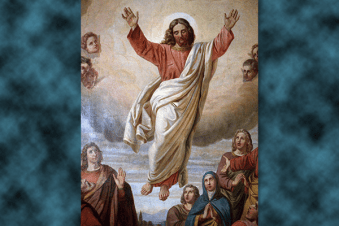

ACTS 1:9-11 AND HYPER-PRETERISM

PMW 2023-019 by Keith A. MathisonAscension 2

This is an abbreviated summary of Matthison’s full article, which may be found in full (with footnotes) at:
https://hyperpreterism.com/acts-19-11-and-the-hyper-preterism-debate/

INTRODUCTION

In recent years a challenge to traditional orthodox eschatology has arisen in the form of a doctrine that may be termed “hyper-preterism.” According to proponents of this doctrine, the Christian church has been mistaken in its expectation of a future Second Advent. According to proponents of this doctrine, all New Testament prophecy was fulfilled in the first century. This means that, according to hyper-preterism, the Second Advent, the general resurrection, and the final judgment, among other things, are past events. The emergence of this doctrine has generated a vigorous ongoing debate that shows no sign of slowing.1 Continue reading

CONCERNS RE: GARY DEMAR

Praying manWith a heavy heart this private letter to Gary DeMar has been approved for public posting by its signatories: Andrew Sandlin, Ken Gentry, Doug Wilson, Jeffery Ventrella, Phillip Kayser, John Frame, Ardel Caneday, Jeff Durbin, James White, Brian Mattson, Keith Sherlin, Jason Bradfield, Sam Frost, and Uriesou Brito

Please be in prayer for Gary, that he would return to orthodoxy on these important redemptive-eschatological issues. Here is the letter we sent twice to Gary in private:

Gary DeMar:

We are your brothers in the Lord, long-time friends, supporters, co-laborers in his Word, and co-promoters and defenders of the Christian worldview. We have contacted you privately twice in the last few months regarding our concerns, with the following:

We are writing to you once again with an earnest plea regarding your doctrinal transitioning that we are witnessing. Gary, we seriously and deeply hope that you will receive this as from deeply-burdened hearts and that you will respond to us as to those who love you in the Lord and have appreciated your public ministry. Continue reading

HYPERPRETERISM AND MELLO IN ACTS

PBible stack 2MW 2023-009 by Kenneth L. Gentry, Jr.

Hyperpreterism is a new theological paradigm that stands against universal historic Christian orthodoxy. It holds that the resurrection of the dead and the final judgment occurred in AD 70 with the destruction of the Jewish temple. Consequently, it also holds that earth history will never end (resulting in God’s tolerating a rebellious universe for ever and ever and ever). One method hyperpreterism uses to seek to topple the 2000 year old eschatology of Scripture is to focus on the Greek word mello.

In two previous articles (PMW 2022-014 and 015) I focused on Acts 24:15, which speaks of the resurrection of both the righteous and the wicked. The word mello appears in this text and is interpreted by hyperpreterists to mean: “there is about to be a resurrection of both the righteous and the wicked.”

In those articles I noted that a study of mello showed that it has several meanings, and does not simply mean “about to,” per the hyperpreterist approach. In fact, Greek scholar Daniel B. Wallace has written an important Greek grammar titled, Greek Grammar: Beyond the Basics: An Exegetical Syntax of the New Testament (1996). On p. 536 of this work he speaks of “the ambiguity of the lexical nuance of mello (which usually means either ‘I am about to’ [immediacy] or ‘I will inevitably’ [certainty]).” An ambiguous term is not sufficient to overthrow the historic Christian faith. Continue reading

SLIPPERY ESCHATOLOGICAL LABELS

PMW 2023-003 by Kenneth L. Gentry, Jr.Confused bible

Be aware, if you try to discover if an evangelical has adopted Full Preterism (aka Hyperpreterism), you have to be careful and precise when you ask him his views. You cannot simply ask him about a certain label to discover where he stands. This is so for two reasons:

(1) Full Preterism (Hyperpreterism), like most theological systems and movements, has many variations. You cannot simply ask someone, “Are you a Full Preterist?” That person might want to avoid association with a few (or even many) of its implications, so they could simply say they are not “Full Preterist” since they don’t adopt the whole system. This is much like the logical problem of the Fallacy of the Complex Question. You can’t answer “yes” or “no” to the question: “Have you stopped beating your wife?”
Continue reading

THE FIRST MAN IS FROM THE EARTH

PMW 2023-002 by Kenneth L. Gentry, Jr.Ascension

1 Cor 15:47: “The first man is from the earth, earthy; the second man is from heaven.”

In this verses Paul is comparing Adam and Christ, showing that Adam is a type of Christ. Despite the surface appearance and seeming plausibility, this is not speaking of each person’s source. That is, he is not arguing that Adam came into this world (or into history) from the ground (though that is certainly true), whereas Christ came down from heaven (though this also is true). This interpretation fits neither the context nor the flow of Paul’s argument. Note the following as I build the case.

First, Paul says that “the first man is from the earth, earthy.” This reflects Genesis 2:7, which is translated: “the LORD God formed man of dust from the ground.” The Greek of Paul’s statement reads: ho protos anthropos ek ges choikos. The Greek choikos means “made of earth, made of dust, earthy.” As noted, Paul is echoing the Genesis verse, which in the Septuagint reads: choun apo tes ges. Thus, choikos reflects the LXX choun apo tes ges. If this were all there was to the comparison, one might think Paul is speaking of the separate sources of these two figures. Continue reading

THE WORD BECAME FLESH

By Ardel B. Caneday

NativityAs the darkness of winter deepens, we are amid the season we Christians call Advent. Advent is the celebration of the dawning of the True Light in the arrival of Jesus, the Messiah, conceived by a young virgin whose birth pangs brought into this dark and hostile world God’s Son who would become the Savior of the world. Yet do we give adequate consideration to the wonder and daily significance of Advent?

Celebrations of Advent feature Matthew’s and Luke’s Gospels because both include narratives concerning the holy conception and birth of our Lord to the Virgin Mary. Also, both Matthew and Luke provide genealogical records that respectively reach back to Abraham, the God-appointed father of all believers, and to Adam, our disobedient ancestor whose sin brought the curse of death and darkness to us all. Continue reading