Category Archives: Revelation

WHAT VERSION DID JOHN USE?

Revelation in HebrewPMT 2015-073 by Kenneth L. Gentry, Jr.

Revelation is the most Old Testament oriented book in the New Testament. It exceeds both Matthew and Hebrews in its alluding to the Old Testament. But an intriguing question arises regarding this extremely OT-influenced work: What is John’s specific OT version? We know he did not use the King James Version, despite many KJV-Only enthusiasts.

J. B. Lightfoot states that John’s allusions “are so free that we cannot say whether they were taken from the Hebrew or the Greek.” R. H. Charles disagrees, expressing his position dogmatically: “John translated directly from the O.T. text. He did not quote from the Greek Version.” Steve Moyise surveys the following noted Hebrew-source advocates in addition to Charles A. Vanhoye, C. G. Ozanne, A. T. Hanson, J. Fekkes, F. D. Mazzaferri, J. P. M. Sweet, and L. P. Trudinger. I would also add S. Thompson and B. Witherington. Continue reading
JOHN’S USE OF EZEKIEL

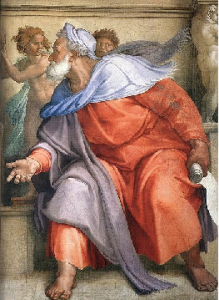
EzekielPMT 2015-072 by Kenneth L. Gentry, Jr.

Though John saw his visions, we do not. Consequently, he has to relate them to us through verbal communication. And John is so absorbed with the Old Testament Scriptures that he presents his visions in Old Testament language. John intentionally takes up the prophetic mantle, even mimicking the Old Testament grammar, as well as alluding to their writings.

H. Charles observes that “our author makes most use of the prophetical books.” Colin Hemer agrees: “the influence of the prophets on John’s mind is especially strong.” More precisely, H. B. Swete argues that John’s favorite OT books are in the following order: Daniel, Isaiah, Ezekiel, and the Psalms. I would qualify this by noting regarding the Psalms that John is especially interested in the prophetic and Messianic psalms. Charles Hill adds Zechariah to the list. G. K. Beale and D. A . Carson disagree with Swete’s ranking, pointing out that “Ezekiel exerts greater influence in Revelation than does Daniel.” Continue reading

REVELATION’S EARLY DATE (2)

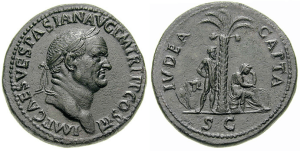
Judea CaptaPMT 2015-070 by Kenneth L. Gentry, Jr.

This is the second in a two-part series briefly presenting the evidence for the early dating of Revelation. That is, for a date prior to the destruction of the Jewish temple in AD 70. In the preceding article I presented the evidence from Revelation 11 regarding the presence of the temple in Revelation. In this article I will pose two more lines of argument.

The Seven Kings in Revelation 17

In Revelation 17:1-6 a vision of a seven-headed beast is recorded. In this vision we discover strong evidence that Revelation was written before the death of Nero, which occurred on June 8, A.D. 68. Continue reading

REVELATION’S EARLY DATE (1)

Ark CovenantPMT 2015-070 by Kenneth L. Gentry, Jr.

In this two-article series, I will briefly present the basic evidence for Revelation’s pre-AD 70 composition. A preteristic understanding of Revelation is strongly (though not absolutely) linked with its early dating. And the dating of Revelation is not a theoretical assumption, but is based on exegetical evidence.

There are two basic positions on the dating of Revelation, although each has several slight variations. The current majority position is the late-date view. This view holds that the Apostle John wrote Revelation toward the close of the reign of Domitian Caesar — about A.D. 95 or 96. The minority view-point today is the early-date position. Early-date advocates hold that Revelation was written by John prior to the destruction of Jerusalem and the Temple in A.D. 70. Continue reading

GOD’S THRONE; ISRAEL’S DIVORCE

Divorce decreePMT 2015-063 by Kenneth L. Gentry, Jr.

In Revelation 1:12-20 John’s first vision shows Christ in history (spiritually) walking among the churches as their ever-present Protector and Head (cp. Matt. 18:20; 28:18, 20; Acts 18:9-10; Heb. 13:5). The focal judgments of Revelation do not begin until Revelation 6. In Revelation 4 and 5, though, God braces John for those coming fearsome judgment scenes by spiritually transporting him above history to God’s throne room in heaven (Rev. 4:1-2).

Revelation 4 and the Throne

In Revelation 4 John sees God sitting on his judicial throne actively ruling over all creation (Rev. 4:2-6, 11). The four “living creatures” closest to the throne seem to be angels of the highest order: they ever watch (they are “full of eyes,” v. 6) over creation (they appear as creatures and sing of creation, vv. 7, 11), ready to do God’s holy bidding (they have six wings to swiftly fly and they sing of God’s holiness, v. 8) in all of creation (their number represents the four points of the compass, v. 7; cp. Rev. 7:1; 21:13). Whatever John witnesses thereafter — however terrifying the judgments, however vicious the opposition — he may rest assured that not only does Christ concern himself with the affairs of his people in history (Rev. 1), but that God is actively controlling all things from above history (Rev. 4; cp. Dan. 2:21; 4:35; Rom. 8:28; Eph. 1:11). Continue reading

DANIEL’S BEASTS AND REVELATION

Daniels beastsPMT 2015-058 by Kenneth L. Gentry, Jr.

From time-to-time I get questions that I think are insightful and may be helpful to other readers. The question below came from a Facebook friend, Cindy D. I believe this will be helpful to publish more broadly than simply in a Facebook “message.”

Question

Hey, Ken,
I have a question! I loved your book, The Beast of Revelation, and to me, it cleared up a lot of questions, and had a hand in bringing me OUT of futurism. I just now saw a post by a guy in a group I am in who wrote the following about why he says Nero can’t be the Beast. Can you give me some feedback on his post that I can share with him on it? Continue reading

PRETERISM JUSTIFICATIONS (4)

Prophets killedPMT 2015-057 by Kenneth L. Gentry, Jr.

This is my final argument for the preterism approach to Revelation. In this blog posting I will be focusing on Revelation’s Thematic Indicators.

As mentioned previously, the theme of divine judgment on Israel fits perfectly with the Olivet Discourse. Virtually all commentators note the remarkable parallels between Matthew 24 and Revelation 6. These parallels are sufficient alone to suggest the same theme. But other correspondences exist.

In Matthew 23 Christ scathingly denounces Israel’s leadership as he approaches the dramatic conclusion of his earthly ministry. He notes that Israel’s present failure is not an isolated event, but the culmination of a lengthy historical pattern: Continue reading