
Category Archives: Optimism

CALVIN, PUBLIC TRAGEDY, AND POSTMILLENNIALISM

PMT 2017-081 by John Calvin

Note by Ken Gentry:
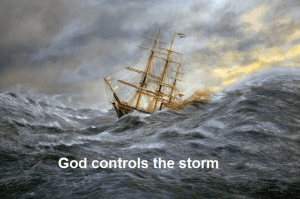
This citation of John Calvin was posted by American Vision on their website after the Las Vegas mass murder on October 1, 2017. Calvin was strongly committed to God’s sovereignty and held positions that aligned with postmillennialism. We must always keep our eyes heavenward, even in times of trial and tragedy. We must not be like Peter when walking on the water. When he took his eyes off of Jesus, he began to sink and cried out for help (Matt. 14:28–31). We must not be numbered among those “of little faith” who “doubt” (Matt. 14:31). Continue reading

THE IMPORTANCE OF GOOD NEWS

PMT 2017-079 by Eric Metaxas & G. Shane Morris (Breakpoint)
It’s been a summer of rough news for America. Racism, riots, and political violence. Communities on the Gulf Coast continue wading through the devastation of hurricane Harvey, and now another storm is bearing down on Florida. We have plenty of reasons to be praying and doing all we can to alleviate suffering. There’s cause for grief about the news—but not for pessimism.

Writing at The Guardian, Oliver Burkeman suggests that despite a dragging civil war in Syria, heart-rending photos of drowned refugees, North Korea’s nuclear saber-rattling, disasters, terrorist attacks, and racial violence, the world is objectively better now than it’s ever been. Continue reading

INCREDIBLE INDIAN CHRISTIANITY

indiaPMT 2016-090 by Jeremy Weber in Christianity Today

Gentry note: Christianity is experiencing growth in many unexpected parts of the world. Let’s pray for its continued growth and its growth into Reformed maturity.

The world’s most unexpected megachurch pastor might be an illiterate, barefoot father of five.

Bhagwana Lal grows maize and raises goats on a hilltop in Rajasthan, India’s largest state, famous for its supply of marble that graces the Taj Mahal. He belongs to the tribals: the cultural group below the Dalits, whose members are literally outcasts from India’s caste system (and often called “thumb signers” because of how they vote).

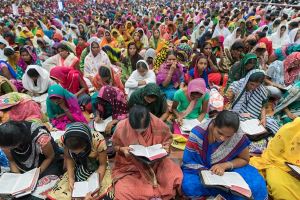
Yet every Sunday, his one-room church, with cheerful blue windows and ceiling fans barely six feet off the ground, pulls in 2,000 people. His indigenous congregation draws from local farmers, whose families’ members take turns attending so that someone is tending the family’s animals. The cracks in the church’s white outer walls are a source of pride: They mark the three times the building has been expanded. Continue reading

THE FALL AND VICTORY

darkness-and-hopePMT 2016-083 by Kenneth L. Gentry, Jr.

The biblical faith is inherently eschatological. God creates the world and has a plan for it. The goal of that plan is necessarily eschatological, for eschatology deals with “the last things.” Consequently, the very beginning of creation has within it the seeds of eschatology. Protology entails eschatology.

In this study I will focus on the sin of Adam in failing God’s test (Gen 2:15-17) which was established on the sixth day of creation (Gen 2 expands on the activities of the sixth day, which is recorded more succinctly in Gen 1:26-30). It is actually in Genesis 3:15 that we have the first genuinely eschatological statement in Scripture (though the creation account involves principles impacting eschatology). Continue reading

THE NARROW GATE AND THE POSTMILLENNIAL HOPE

narrow-gatePMT 2016-072 by Kenneth L. Gentry, Jr.

Introduction

I am frequently asked how postmillennialism can stand since Jesus speaks of the narrow gate to salvation. This is certainly a reasonable question, because it is a biblical one.

Inquirers often challenge me: I just can’t imagine this present world becoming a Christian majority at any point, especially in light of Christ’s wide and narrow gates and many being called, but few chosen, etc. I don’t see that at all. Never has the world been a friend of God and I don’t see a future scene like that at all in Scripture.

This is an important question. Let’s consider how we can resolve the theoretical problem. Continue reading

THE EFFECT OF RIGHTEOUSNESS

King JesusPMT 2016-055 by Christopher Hume

Peace. It is illusive, yes, but it is not unattainable. The best of human rulers can only give thanks to God if his kingdom or country is characterized by peace. To say a kingdom is characterized by peace is a high commendation. For example, the reign of Israel’s greatest king, David, was characterized by peace (though not before much fighting had to be done; see 1 Chronicles 22:18; 23:25). Peace was even more prominent during Solomon’s days (1 Kings 4:20; 1 Chronicles 22:8). But the peace of King David and King Solomon was short-lived. As great as they were, these kings were still sinners. Imagine, however, a perfect king, ruling in perfect righteousness. What would be the effect of that? What would the result be if such a king were ruling over us? Would there be peace? Or would there be increasing wickedness and sin? The Bible not only answers that question, it also tells us who that king is. Continue reading

THE CHURCH IS GROWING

PMT 2016-050 by Krish KandiahChurch growing

Without my glasses, younger children in my household look at me as though I am a stranger they have never met before. To me, the world around feels very different. Last week my glasses were stolen and I became very aware how my myopia caused me to feel disoriented, claustrophic, nervous, and unconfident.

Something similar happens to Christians when we lose our global glasses. We fail to see what God is doing on the world stage and instead we become parochial and introverted, limited in our vision and witness. Continue reading