
 PMT 2015-072 by Kenneth L. Gentry, Jr.
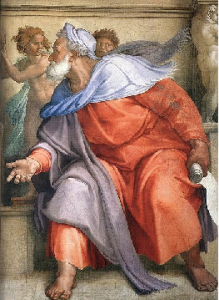
Though John saw his visions, we do not. Consequently, he has to relate them to us through verbal communication. And John is so absorbed with the Old Testament Scriptures that he presents his visions in Old Testament language. John intentionally takes up the prophetic mantle, even mimicking the Old Testament grammar, as well as alluding to their writings.
H. Charles observes that “our author makes most use of the prophetical books.” Colin Hemer agrees: “the influence of the prophets on John’s mind is especially strong.” More precisely, H. B. Swete argues that John’s favorite OT books are in the following order: Daniel, Isaiah, Ezekiel, and the Psalms. I would qualify this by noting regarding the Psalms that John is especially interested in the prophetic and Messianic psalms. Charles Hill adds Zechariah to the list. G. K. Beale and D. A . Carson disagree with Swete’s ranking, pointing out that “Ezekiel exerts greater influence in Revelation than does Daniel.” Continue reading
 PMT 2015-004 by John Calvin
 PMT 2015-003 by John Calvin
 PMT 2015-002 by John Calvin
 PMT 2014-001 by John Calvin
 In studying Daniel’s Seventy Weeks prophecy, it is important that we carefully consider Daniel 9:24. This verse provides the ultimate goal of the prophecy: “Seventy weeks are determined for your people and for your holy city, to finish the transgression, to make an end of sins, to make reconciliation for iniquity, to bring in everlasting righteousness, to seal up vision and prophecy, and to anoint the Most Holy.” Let me briefly sketch the events in verse 24 within the context of the whole prophecy.
 Postmillennial Worldview
Recent comments