Category Archives: Old Testament

OT SUMMARY OF POSTMILLENNIALISM

Old Testament scrollsPMW 2025-078 by Kenneth L. Gentry, Jr.

We can adequately understand God’s sovereign plan for the world only when we approach it in light of its historical inception. In the Bible’s account of universal origins we discover the very purpose of history. God creates man in his own image (Ge 1:26) as a materio-spiritual being (Ge 2:7). Man’s God-ordained purpose is to bring honor and glory to God by exercising godly dominion in the earth (Ge 1:26–30). Protology leads to eschatology for eschatology is rooted in creation.

Because God possesses almighty power (Job 40:1–42:6); Isa 40:12 –28), and governs by inscrutable wisdom (Isa 55:8–9; Ro 11:32–35), the Christian actually should be predisposed to the historical victory postmil-lennialism expects. The postmillennial system best balances the material and spiritual aspects of Scripture and gives full significance to both the temporal and eternal features of God’s plan and man’s obligation to him. The Lord creates man and history for his glory; therefore, man and history will bring glory to him. “You are worthy, O Lord, to receive glory and honor and power; for You created all things, and by Your will they exist and were created” (Rev 4:11). “For of Him and through Him and to Him are all things, to whom be glory forever. Amen” (Ro 11:36). Continue reading

INTRODUCING GENESIS (2)

PMW 2025-051 by Kenneth L. Gentry, Jr.

This is my second in a two-part, rather extensive series introducing Genesis. We now move on to consider its:

Genre
Moses was a gifted writer, as both the careful structure of Genesis as a whole and the exalted prose of Genesis 1 particularly testify. He was also quite capable of writing compelling poetry; in fact, and he did so frequently, both in Genesis (e.g., 2:23; 3:14–19; 12:1–3; 27:27–29; 49:2–27) and elsewhere (e.g., Exo. 15:1–8; Num. 6:24–26; Deut. 32:1–43; Psa. 90). But what is the basic genre of Genesis?

The content and structure of Genesis show that he wrote in narrative, historical prose. This is expected in that Israel possessed a factual, real-world oriented faith. As noted above, Genesis serves as the prologue to the Pentateuch. This is significant in that the Pentateuch is a lengthy narrative of the historical formation of Israel as a nation. Genesis would be useless for its purposes if we discount its historicity. Scholars do not doubt the basic historical nature of his genre in Exodus through Deuteronomy, even when they dispute its accuracy. And only a few scholars from critical schools of thought doubt his historical intent in Genesis 12–50. Nor do we have any evidence of a genre shift in the historical narratives from Genesis through the rest of the Pentateuch. Continue reading

INTRODUCING GENESIS (1)

PMW 2025-050 by Kenneth L. Gentry, Jr.

Title
Genesis is the first of the five books of Moses (the Pentateuch). The titles to the first five books of the Bible are actually the first words of the Hebrew text in each book. Thus, the Jews called the first book Bereshith, which is the first word in the Hebrew of Genesis 1:1. It means “by way of beginning, or in beginning.”

The title by which we today call this book is derived not from the first words of the Hebrew, but from its Septuagint title. The Septuagint title is directly transliterated as: Genesis. Each of the Greek titles of the Pentateuch summarize the subjects of the books, rather than presenting their first words. Had the ancient Greek translators used Genesis’s first words, it would have been called: En archē (“in beginning”). They apparently derived the title we use from Genesis 2:4a which reads: “This is the book of the generation [geneseos] of heaven and earth.” The Greek word means “origin, source, or generation.”
Continue reading

WAS EVIL KING MANASSEH SAVED?

PMW 2025-041 by Kenneth L. Gentry, Jr.

On this blog site I define postmillennialism as follows:

Postmillennialism holds that the Lord Jesus Christ established his kingdom on earth in the first century through his preaching and redemptive work. Since then he has continued to equip his Church with the gospel, empower her by his Spirit, and charge her with the Great Commission to disciple all nations. Postmillennialism expects that eventually the vast majority of men living will be saved. Increasing gospel success will gradually produce a time in history prior to Christ’s return in which faith, righteousness, peace, and prosperity will prevail in the affairs of men and of nations. After an extensive era of such conditions, the Lord will return visibly, bodily, and gloriously, to end history. Associated with his return will be the general resurrection and the final judgment after which the eternal order follows. Because of its worldwide historical implications, postmillennialism generates an holistic worldview touching on all areas of life.

That being the case, we must be alert to an important distinction between true and false conversions. Postmillennialists are glad for the general influence of Christianity on the world. But what we labor for and ultimately expect is a dramatic impact on the world that is rooted in true conversions by the gospel which is the power of God unto salvation (Rom. 1:16). We are all aware that much of Christianity is today made up of falsely-professing “believers.” These people should be targets of our evangelistic outreach, for being “almost persuaded” is not enough. Continue reading

THE APOCALYPSE AND THE OLD TESTAMENT

PMW 2025-042 by Kenneth L. Gentry, Jr.

Revelation is a difficult book to interpret. We must read it carefully to detect clues as to John’s meaning. One important issue regarding Revelation’s interpretation regards it extremely Hebraic style. In this brief series I will be highlighting several elements of its Hebraic character.

As a Redemptive-historical Preterist I believe that John is writing about the soon-coming destruction of the Jewish temple in AD 70. When we read Rev we are immediately struck by John’s strongly Jewish presentation. No competent commentator fails to mention this. Fiorenza notes that “it is often judged to be more Jewish than Christian.” Charles argues on the basis of its style that it is obvious that John was a “Palestinian Jew.” Buchanan agrees with J. F. Whealon who “observed that Rev 4:1–22:7 was a Jewish document that was later Christianized by the introduction, conclusion, and a few editorial additions.” Continue reading

COMPREHENSIVE HOPE IN ESCHATOLOGY

PMW 2025-024 by Donald E. GowanGowan eschatology

Gentry note:
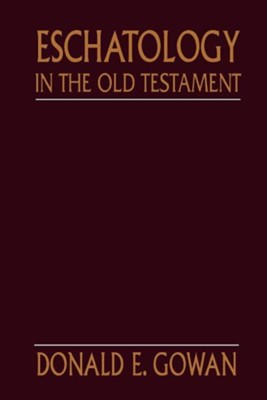
The following is a series of thoughts selected from a very helpful book by Gowan on Eschatology on the Old Testament (pp. 122 ff.). Though he is not writing as a postmillennialist, he has many helpful observations that this article will share. His book basically argues for a holistic concept of redemption, both man (body and soul) and the broader creation (new heavens and new earth). He is not a conservative evangelical (as far as I can tell), but he is a good scholar insightful analyses of important eschatological issues.

Gowan’s Observations
The OT’s expectations and longings are distinct from those to be found in other religions and cultures. Thereby they offer a challenge for alternative forms of hope — Christian and otherwise — and insight into the nature of the eschatologies of the Western world.

1. Old Testament eschatology is a worldly hope. The OT does not scorn, ignore, or abandon the kind of life which human beings experience in this world in favor of speculation concerning some other, better place or form of existence, to be hoped for after death or achieved before death through meditation and spiritual exercises. This sets the OT in sharp contrast to Gnosticism, to the otherworldly emphases that often have appeared in Christianity, and to the concepts of salvation taught by Hinduism and Buddhism. Whether it is better and truer than those other forms of hope, or is just irredeemably “unspiritual,” remains, of course, a matter for faith to decide. But this quality of the OT hope surely ought to commend its outlook to an age that is equally worldly in its concerns. Continue reading

POSTMILLENNIALISM & PSALM 2

PMW 2024-022 by Kenneth L. Gentry, Jr.

Psalm 2 is an important Psalm undergirding the postmillennial hope. In this article I will provide a simple survey of this glorious psalm, highlighting several of its key features.

Psa. 2:1–12
This is a royal psalm, wherein David (Acts 4:25) recalls his enthronement. It is also a Messianic Psalm, which skillfully weaves together David’s human kingship with Jesus’s divine (Messianic) kingship. As such it is a counterpart to Psalm 110. It is frequently cited in the New Testament (see esp. Acts 4:25–27; cp. Matt. 3:17; 17:5; Acts 13:33; Rom. 1:4; Heb. 1:5; etc.). David the king and Jesus the Messiah are related both biologically and theologically (Matt. 1:1; 22:41–46; Rom. 1:4): David is a type of Christ . Though the psalm opens with turmoil (vv. 1–3) it promises the universal dominion of God’s Son (vv. 7–9), then ends with a gracious invitation for kings to submit to God’s rule (vv. 10a, 11, 12a) — or be destroyed (vv. 10b, 12b).

Psa. 2:1
Why are the nations in an uproar

Evidently David writes this psalm during some crisis in his kingdom (perhaps 2 Sam. 10?). Knowing that God’s covenant promises his kingdom’s permanent establishment (2 Sam. 7:8–16), David is astonished that the nations would bother to rebel against his rule. Thus, the very opening of the psalm sounds a note of confidence regarding the “vain” attempt to overthrow his rule (vv. 2–3). The word translated “devising” is the same word translated “meditate” in Psalm 1:2. While the righteous meditate on God’s word for directives for righteous living, the wicked meditate on vain actions doomed to catastrophic failure.


Dispensational Distortions
Three Lectures by Kenneth Gentry. Reformed introduction to classic dispensationalism, with analysis of leading flaws regarding the Church, kingdom, redemptive history, and Christ. Helpful for demonstrating errors to dispensationalists.

See more study materials at: www.KennethGentry.com


Psa. 2:2a
The kings of the earth take their stand

Though this undoubtedly reflects some current crisis under David’s rule, the New Testament recognizes its deeper significance. When Peter and John were warned by the Jewish authorities not to speak about Jesus in Jerusalem, they responded by referencing this psalm to show that opposition to Christ is “futile.” They apply this psalm to Herod and Pontius Pilate’s roles in crucifying Christ and in persecuting his followers (Acts 4:25–28). The apostles (Peter and John, Acts 4:19) are confident as the march of the Christian faith throughout the world begins (Matt. 28:18; Acts 1:8; cf. John 3:17; 12:32).

Psa. 2:2b
Against the LORD and … His Anointed

The nations’s attempt to overthrow David’s rule is “vain” (v. 1), i.e., empty or worthless. This is because they align themselves not only against the Lord’s Anointed, but the Lord God himself. The Hebrew word for “Anointed” is mashiach, the word from which we derive “Messiah.” The Greek translation of the Hebrew word is christos (“Christ”). The prophets spoke of a coming Davidic king (Isa. 9:2–7; Jer. 23:5–6; 33:14–16; Eze. 34:23–24; Hos. 3:5) who would rule the nations in righteousness (Isa. 2:2–4; 11:10; Mic. 4:1–5).

Psa. 2:4–5
He who sits in the heavens laughs

Despite the raging of the nations, the Lord scornfully mocks the opposition to his rule (cf. v. 2). The psalmist turns his attention from the earthly sphere (vv. 1–3) to the heavenly realm as he declares his confidence in God’s rule. Believers must always factor God into their daily lives and concerns (Matt. 10:28; John 14:1, 27; Rom. 8:28).

Psa. 2:6a
I have installed My King

In the Hebrew, the “I” is emphatic as God counters the bombast of the kings of the earth (vv. 1–3). As with Israel of old, we must recognize that the outcome of all issues is up to God alone (Psa. 75:6–7; Dan. 2:21; 4:17).

Psa. 2:6b
Upon Zion

“Zion” is the name of a hill in Jerusalem, the city of David (Neh. 3:15; Luke 2:4, 11). It was the location of the fortress David captured from the Jebusites (2 Sam. 5:6–7; 1 Chron. 11:4–9). The name “Zion” applies to this stronghold in Jerusalem (Isa. 40:9; Mic. 3:12). God chose it as his dwelling place (Psa. 132:13).


Four View Rev

Four Views on the Book of Revelation (ed. by Marvin Pate)

Helpful presentation of four approaches to Revelation. Ken Gentry writes the chapter on the preterist approach to Revelation, which provides a 50 page survey of Revelation .

See more study materials at: www.KennethGentry.com


Psa. 2:7–9
I will surely tell of the decree of the LORD

These verses highlight the Davidic Covenant (2 Sam. 7:8–16), which promises that his descendant’s rule will be forever. The rule is not only everlasting, but here is even declared to extend to all “the nations” and to the “ends of the earth” (v. 8; cp. Psa. 67:7). This ultimately speaks of the kingdom of David’s greater son, Jesus Christ (Luke 1:32–33; Acts 2:25–36). This will be fulfilled by means of Christ’s Great Commission (Matt. 28:18–20; cp. Acts 1:8). Christ’s kingdom is divinely-ordained to conquer the world in righteousness (Isa. 2:2–4; 9:6–7; 11:1–16; cp. Psa. 22:27; 72:8–11; John 3:17; 12:32). This hope was already embedded in the patriarchal promises (Gen. 22:17–18; 26:4; 28:14) and is confirmed by Jesus (John 3:17; 12:31–32). Believers must always trust in Christ’s victory in time and on earth.

Psa. 2:7
You are My Son

This statement by the Lord in heaven (vv. 4, 6) declares the king to be his divine Son. David is such typologically (2 Sam. 7:12–16); but Jesus is God’s Son personally (Heb. 1:5; Matt. 1:1). According to Paul, this adoption comes to full expression at Jesus’s resurrection (Acts 13:33; Rom. 1:4). However, earlier declarations at his baptism (Matt. 3:17) and transfiguration (Matt. 17:5) marked him out as God’s Son.

Psa. 2:9
You shall break them with a rod of iron

The Messiah will effectively rule over the nations (v. 8), even if he has to employ destructive force. This verse appears three times in Revelation, once concerning Christians as co-rulers with Christ (Rev. 2:26–27) and twice regarding Christ himself (Rev. 12:5; 19:15). In the LXX the Hebrew word for “break” is translated “shepherd” or “rule.” Christians have a calling to engage Christ’s rule among the nations (2 Cor. 10:3–5; Rev. 20:4–6).

Psa. 2:10–12
Now therefore, O kings

The psalmist now calls on the world’s kings and judges (v. 10) to “worship the Lord” (v. 11). Serving him with “fear” would represent wisdom on their part (Psa. 111:10; Prov. 9:10; 15:33). This is a gracious call, even though it holds out a terrifying warning of his potential wrath.


God’s Law Made Easy (by Ken Gentry)

Summary for the case for the continuing relevance of God’s Law. A helpful summary of the argument from Greg L. Bahnsen’s Theonomy in Christian Ethics.

See more study materials at: www.KennethGentry.com