Category Archives: Objections

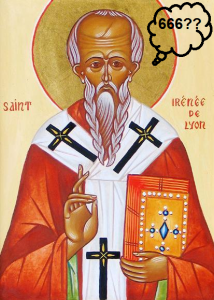
WHY DIDN’T IRENAEUS KNOW WHAT 666 MEANT?

Irenaeus 666PMT 2014-122 by Kenneth L. Gentry, Jr.

My readers’ questions keep turning to Revelation. I hope I don’t answer them all before my commentary comes out! But here is another one.

Reader’s question:

As I study your argument for 666 as a reference to Nero Caesar, these two questions arise. Could you please explain your understanding of these objections?

If Irenaeus’s statement refers to John rather than the apocalypse, the statement seems to suggest that John wasn’t telling people who the beast was during his lifetime. That seems odd if those things had already occurred.

If John did reveal to his contemporaries the identity of the beast why wouldn’t it have been common knowledge amongst the Christians and therefore Irenaeus? Continue reading

IS WORLD VIOLENCE DECLINING?

Obama work donePMT 2015-103

Postmillennialism’s distinctive element is the conviction that Scripture teaches that the gospel and righteousness will dominate the world for a long period of time before Christ returns. And that this will occur as the Great Commission progresses in its saving work among men. This is also its most doubted and debated point. Each of the other eschatological perspectives predicts the world will get worse until Christ comes to rescue us out of it and effect the Last Judgment.

Postmillennialists have a powerful response to those who see no improvement in world conditions since the first century and the Neronic persecution of Christianity as a minority class. Continue reading

HIDE US FROM THE WRATH OF THE LAMB

Jerusalem cavesPMT 2015-093 by Kenneth L. Gentry, Jr.

In my last article I noted the moving mountains in Revelation and how they do not speak of a literal tectonic movements. That passage is easily applied to the Roman warfare method during the Jewish War. But similarly, the calling upon the mountains to fall also speaks of the circumstances of the Jewish War.

Rev 6:17 reads:

“They said to the mountains and to the rocks, ‘Fall on us and hide us from the presence of Him who sits on the throne, and from the wrath of the Lamb; for the great day of their wrath has come, and who is able to stand?’”

Men hiding in caves is easy enough to understand in a literal fashion. But we need to realize how important a feature this becomes in the Jewish War. Its appearance in Revelation is not a simple matter of local color; it was an issue of great significance. Continue reading

OBAMA, SIN, AND POSTMILLENNIALISM

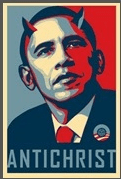
Obama antichristPMT 2015:017 by Kenneth L. Gentry, Jr.

Most evangelical Christians recognize and lament the widescale cultural collapse America is witnessing. This seems to better fit the dispensationalist’s gloomy outlook on the future. How can one hold to the postmillennial hope while witnessing the demise of the Christian influence in America?

But this question has a deeper significance. A leading objection against the postmillennial hope of gospel conquest is the fact of man’s inborn total depravity. In this blog posting I will explain how postmillennialism may offer an optimistic outlook on history even though we live in a world of depraved sinners. Continue reading

UNIVERSALISM, POSTMILLENNIALISM, AND CONFUSION

Confused UniversalismPMT 2015-061 by Kenneth L. Gentry, Jr.

Many Christians wrongly believe that postmillennialism implies the ultimate salvation of all men. Riddlebarger, for instance, speaks against postmillennialism: “Although the kingdom advances throughout this age, the final eschatological victory is won by Jesus Christ himself at his second coming (1 Cor. 15:54). Not before.” And of certain negative verses he comments that they “all speak of the present spiritual kingdom as finally consummated in ‘the age to come’ but not before.” [1] Reymond believes of the postmillennial vision that “the world of mankind of necessity must be brought eventually to a state of virtual moral perfection — the major contention of postmillennialism . . . a representation of world conditions at the time of Christ’s return which amillennialists reject.”

But postmillennialism does not claim that “final” eschatological victory comes before Christ returns. We do believe that because of the kingdom’s long-term expansion “the number finally of the lost in comparison with the whole number of the saved will be very inconsiderable.”[3] Continue reading

IS LAODICEA A PROBLEM FOR REVELATION’S DATE?

Ancient earthquakePMT 2015-025 by Kenneth L. Gentry, Jr.

Many scholars argue that Jesus’ rebuke of Laodicea in Rev 3:17 is evidence for a late-date for Revelation. But the postmillennial preterist sees Revelation as being written in the mid-AD 60s, well before the mid-90s (late date). Let’s consider this alleged problem for the early-date.

Revelation 3:17 reads:

Because you say, “I am rich, and have become wealthy, and have need of nothing,” and you do not know that you are wretched and miserable and poor and blind and naked.

Leon Morris notes that in the Laodicean letter “we are told that the church in Laodicea was ‘rich, and increased with goods’ (iii. 17). But as the city was destroyed by an earthquake in AD 60/61 this must have been considerably later” (Morris, Revelation, 37). Mounce and Kummel also endorse this observation, a major component of the complex of evidence derived from the Seven Letters (Robert Mounce, Revelation, 35 and W. G. Kummel, New Testament Introduction, 469). Continue reading

2 TIM 3 (# 16): UNIVERSAL SCRIPTURE V. SPECIFIC HERESIES

Weak linkPMT 2015-021 by Kenneth L. Gentry, Jr.

With this article I am closing this series responding to Dr. James White’s rebuttal of my views on 2 Tim 3. In his October 16, 2014 webcast he rejected my argument that Paul’s statements should be understood as applying to the first-century heretics Timothy was facing in Ephesus. He sees Paul’s warnings as more general, applying to all the future. As a result, he sees Paul as undermining postmillennialism.

In my response, I have been pointing out that Paul’s letters to Timothy are occasional epistles dealing with occasions in the first century. I noted that Paul mentions the names of specific first-century heretics (Hymenaeus, Alexander, Phygelus, Hermogenes, and Philetus, 1 Tim 1:15, 20; 2:17) and criticizes their particular deeds (e.g., 2 Tim 3:5–9) and doctrines (e.g., 2 Tim 2:16–18). And consequently, in the very context in question, Paul specifically warns Timothy: “Avoid such men as these (2 Tim 3:5b).

I think it is quite clear that Paul is confronting issues in his own day. Continue reading