
PMT 2014-106 by Kenneth L. Gentry, Jr.
John’s stating that these nations are in the “four corners of the earth” is a Semitism for the far reaches of the earth, represented by the four cardinal directions (Rev 20:8; 21:13; cp. Ge 28:14; Dt 3:27; Ps 107:3; Isa 11:11-12; Jer 49:36). Here he mentions “nations,” which shows that tes ges here is not “the Land” of Israel (as commonly in Rev), but the broader world.
We should understand that “after the Thousand years the symbols become even simpler and broader. They are in the far future now, and St. John deals only with gigantic general principles” (Carrington, The Meaning of Revelation, 325). “This shows that the very distant future is designed to be merely glanced at by the writer. So it is with the Hebrew prophets. But here, there is a special reason for brevity. The main object of writing the book is already accomplished, for substance. Christians have been consoled by assurances, that all the enemies with whom the church was then conflicting, would surely be overthrown. . . . [So that] mere touches and glances are all which it exhibits, or which were intended to be exhibited” (Stuart, Apocalypse, 2:354). Continue reading


 PMT 2014-046 by Kenneth L. Gentry, Jr.
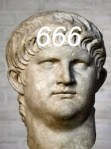 of 666. We believe it has John using a Hebrew spelling of “Nero Caesar” for understanding his meaning. Some reject this analysis because Revelation was written to Asia Minor and not to Israel.
 understanding of 666. We believe it has John using a Hebrew spelling of “Nero Caesar” for understanding his meaning. Some reject this analysis because Revelation was written to Asia Minor and not to Israel.
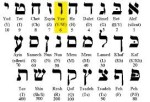 name of Nero Caesar as a cryptogram. The usefulness of this number for John’s readers derives from the fact that in antiquity alphabets serve dual purposes. Letters function, of course, as phonetic symbols for building words in written communication. As such, they serve just as our modern alphabet does. But in ancient times letters also function as numerals, in that the Arabic numbering system is a later development of history.
 Postmillennial Worldview
Recent comments