Category Archives: Millennium

RE-IMAGINING THE MILLENNIUM (1)

PRevelation commentariesMW 2025-004 by Kenneth L. Gentry, Jr.

Revelation 20 is not only a hotly debated passage in a hotly debated book, but it is a passage that has greatly impacted the eschatological debate. And unnecessarily so! According to Warfield, Revelation 20 is the tail that wagged the dog. And he is correct.

Revelation 20 has given the name to the several eschatological schools: premillennialism, amillennialism, and postmillennialism. Each name has “millennium” (which means, “thousand years”) in it, which is obviously drawn from Revelation 20. This text’s outsized impact on the eschatological debate is unfortunate for several reasons: (1) the idea of a thousand year reign of Christ is only found in one book; (2) it is only found in one chapter of that one book; (3) it is only found in one-half of that one chapter of that one book; and (4) that book is the most symbolic book in all of Scripture.
Continue reading

POSTMILLENNIALISM AND THE MILLENNIUM (2)

Glorious sunrisePMW 2023-045 by Kenneth L. Gentry, Jr.

This is part 2 in a three-part series on Postmillennialism and the Millennium. We are now at the place where we must define what we mean by “postmillennialism.”

So now: What is the postmillennial outlook? Why is it called post-millennial? And what are its expectations?

Postmillennialism teaches that Christ will return to earth after a long era of gospel progress and worldwide righteousness. As the gospel wins greater influence the world will witness a long era of social stability, economic development, and international peace. The basic structure of the postmillennial hope is as follows:

First, Christ came into the world in the first century and established his kingdom, the Messianic kingdom prophesied in the Old Testament. We are in that kingdom now (the “millennium,” if you will) (Luke 17:20–21; Col 1:13).

Second, he confronted and defeated Satan while on earth, through his ministry, death, burial, resurrection, and ascension. Satan is bound from deceiving the nations, so that they are open to the power of the gospel (Matt 12:28–29; Rev 20:3).

Third, he gave the marching orders for his kingdom in the “Great Commission.” This commission is great because it is established on his grant of “all authority,” he command to “make disciples of all the nations,” his directive for us to teach the nations “all that I commanded you,” and his promise that “I am with you always, even to the end of the age” to get it done (Matt 28:18–20).

Fourth, he promised to bless his kingdom with growth, likening it to a mustard seed that begins incredibly small but results in a tree that dominates the garden; and comparing it to leaven that leavens the entire bushel (Matt 13:31–33).
Continue reading

POSTMILLENNIALISM AND THE MILLENNIUM (1)

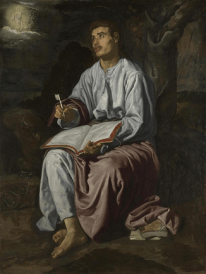
John on PatmosPMW 2023-044 by Kenneth L. Gentry, Jr.

INTRODUCTION

Postmillennialism and amillennialism are closely related. In fact, they are both “post” millennial in that they believe the current age (the Church Age, if you will) is the “millennium,” and that Christ will return “post” (after) the millennium.

Both Post- and Amillennialists note that the “thousand year” reign of Christ occurs in only one passage in Scripture, Revelation 20:1–6. We further observe that it appears in the most symbolic book in all of Scripture. In Revelation we see a seven-headed beast, fire-breathing horses, locusts with the faces of men and the teeth of lions, a woman standing on the moon, and many more symbolic features. Consequently, we prefer that eschatological discussion begin elsewhere in more didactic portions of Scripture, and that it be controlled by passages other than the apocalyptically-charged, highly-wrought symbolic images in Revelation.
Continue reading

DISPENSATIONALISM’S EXALTATION OF RACE

Races of worldPMW 2022-022 by Kenneth L. Gentry, Jr.

Dispensationalism is the bull in the china shop of biblical eschatology. The door needs to be opened and the bull released from the minds of earnest Christians. This will require an expose into the non-biblical nature of dispensationalism. I am continuing a series on the distortions of theology in the system.

A distinctive feature of dispensationalism is that the Millennial kingdom will be fundamentally Jewish in character, even to the point of rebuilding the temple, setting up David’s tabernacle, re-instituting the Jewish sacrificial system, and exalting the Jews: “This is the point: once Israel is restored to the place of blessing and the tabernacle of David is rebuilt, then will follow the third phase in the plan of God. That period will be the time of the millennium, when the nations will indeed by converted and ruled over by Christ” (House and Ice, Dominion Theology, 169; cp. Pentecost, Things to Come, ch. 30). Continue reading

LONG REIGN IN SHORT BOOK?

Close farPMW 2021-069 by Kenneth L. Gentry, Jr.

Although the vast majority of Revelation focuses on events that will occur “soon” (Rev 1:1, 3), the Revelation 20 section on the thousand years begins, but is not completed, in the first century. It projects itself into the distant future, allowing a glimpse of the end result of the events beginning in the apostolic era. Continue reading

PRIMER ON POSTMILLENNIALISM (3)

isaiah-preachingPMT 2021-063 Kenneth L. Gentry, Jr.

This is the third in a series of studies on the “millennium” from Rev. 20 and how postmillennialists understand it, especially over against amillennialists.

Prophecy and the Postmillennial Hope

The Old Testament is, of course, full of eschatological pronouncements. Israel was blessed with many writing prophets who have left us a record of their inspired insights into the future. I could profitably survey a number of the Messianic Psalms.

For instance, I could highlight Psalm 2, taking special note of the promise: “Ask of Me, and I will surely give the nations as Your inheritance, / And the very ends of the earth as Your possession” (Psa 2:8). Did Jesus ask for the nations from the father? Yes, he did as we see in his Great Commission: “And Jesus came up and spoke to them, saying, ‘All authority has been given to Me in heaven and on earth. ‘Go therefore and make disciples of all the nations, baptizing them in the name of the Father and the Son and the Holy Spirit’” (Matt 28:18–29). Continue reading

PRIMER ON POSTMILLENNIALISM (1)

rainbowPMW-2021-061 Kenneth L. Gentry,

Postmillennialism and amillennialism are closely related. In fact, they are both “post” millennial in that they believe the current age (the Church Age, if you will) is the “millennium,” and that Christ will return “post” (after) the millennium.

Both Post- and Amillennialists note that the “thousand year” reign of Christ occurs in only one passage in Scripture, Revelation 20:1–6. We further observe that it appears in the most symbolic book in all of Scripture. In Revelation we see a seven-headed beast, fire-breathing horses, locusts with the faces of men and the teeth of lions, a woman standing on the moon, and many more symbolic features. Consequently, we prefer that eschatological discussion begin elsewhere in more didactic portions of Scripture, and that it be controlled by passages other than the apocalyptically-charged, highly-wrought symbolic images in Revelation Continue reading