 PMW 2020-013 by Kenneth L. Gentry, Jr.
This article continues an eight-part series on the seven-sealed scroll in Revelation 4–5. This scroll occurs early in Revelation: it opens the plot-line of Revelation.
So now let us note that in the Old Testament economy God’s prophets function as his lawyers. They prosecute Israel’s breaches of God’s covenantal law by bringing his legal case (riyb) against them. Just as God was married to Israel at his throne (Ex 24:10), so her divorce issues from his throne.
In Isaiah 1:2 the heavens and earth are called as witnesses against Israel, as per the Mosaic example (Dt 4:26; 30:19; 31:26, 28). In Isaiah 3:14 the Lord “enters into judgment with the elders and princes” (cp. Isa 41:21; 43:26; 45:21). In Micah 6:2 we read: “Listen, you mountains, to the indictment of the Lord, / And you enduring foundations of the earth, / Because the Lord has a case against His people; / Even with Israel He will dispute.” The passage in which Micah 6:2 appears is “an elaborate representation of a legal case ‘Yahweh v. Israel,’ in which God brings a grievance against his people” in this “covenant lawsuit.” In Jeremiah 30:13–14 the Lord speaks through Jeremiah stating “there is no one to plead your cause” for “all your lovers have forsaken you.” Continue reading →

 PMT 2020-031 by Kenneth L. Gentry, Jr.
 PMW 2020-016 by Kenneth L. Gentry, Jr.
 PMW 2020-015 by Kenneth L. Gentry, Jr.
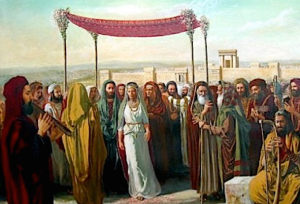 PMW 2020-014 by Kenneth L. Gentry, Jr.
 PMW 2020-012 by Kenneth L. Gentry, Jr.
 PMW 2020-011 by Kenneth L. Gentry, Jr.
 Postmillennial Worldview
Recent comments