Category Archives: Israel

ISRAEL’S FAILURE & THE NT

PMW 2026-001 by Kenneth L. Gentry, Jr.

As John writes the Book of Revelation, Israel has been a part of the Roman regime for almost a century. As such she enjoyed special leagues of “friendship and mutual alliance” which began with Julius Caesar (Jos. Ant. 14:10:1 §185). Her love for Caesar was so great that after he was murdered, Jews wept for many nights at the site of his cremation (Suetonius, Jul. 84:5). Josephus, a priestly member of the Jewish aristocracy, praises Julius and records many of the treaties with the Jews which were established by Caesar and later Roman authorities (Ant. 14:10:2-25 §190-267). He then declares: “there are many such decrees of the senate and imperators of the Romans and those different from these before us” (Ant. 14:10:26).

Israel engages these alignments despite her OT prophets condemning unholy alliances as harlotry (e.g., Hos 7:11). As we read in Rev 13, the exercise of the Land beast’s authority is “in his [the Roman emperor’s] presence” (13:1a). Later in Rev 17 we see Israel’s alliance symbolized by a harlot engaged in a drunken sexual orgy with the sea beast. Continue reading

ISRAEL’S LAND FOREVER?

PMW 2025-049 by Kenneth L. Gentry, Jr.

In Genesis 3:14–15 we read: The LORD said to Abram, after Lot had separated from him, “Now lift up your eyes and look from the place where you are, northward and southward and eastward and westward; for all the land which you see, I will give it to you and to your descendants forever.”

In this context God promises that he will give the land to Abraham’s descendants “forever” (cp. 12:7). This will soon be confirmed by solemn covenant (cp. 15:7, 18) and is noted elsewhere in Scripture (Exo. 32:13; Josh. 14:9; 2 Chron. 20:7; Isa. 60:21).

Since “the earth is the LORD’s, and all it contains, / The world, and those who dwell in it” (Psa. 24:1), as Moses well knows (Exo. 9:29; Deut. 10:14), the land is God’s to give to whomever he pleases. Besides this, the evil Canaanite culture would eventually (15:16) justify God’s expelling them from the land (Lev. 18:2–3, 24–28). Continue reading

ISRAEL DESERVED GOD’S WRATH

.PMW 2025-044 by Kenneth L. Gentry, Jr.

Preterists believe that Jesus called down judgment upon Israel, and that this judgment was deserved by the people of Israel. Because of our modern historical situation — post-Holocaust — this view is deemed by some to be an immoral position because of its latent anti-Semitism. But is the charge legitimately brought against the preterist?

This is the second in a series on the question. More will follow. But now let us consider: Continue reading

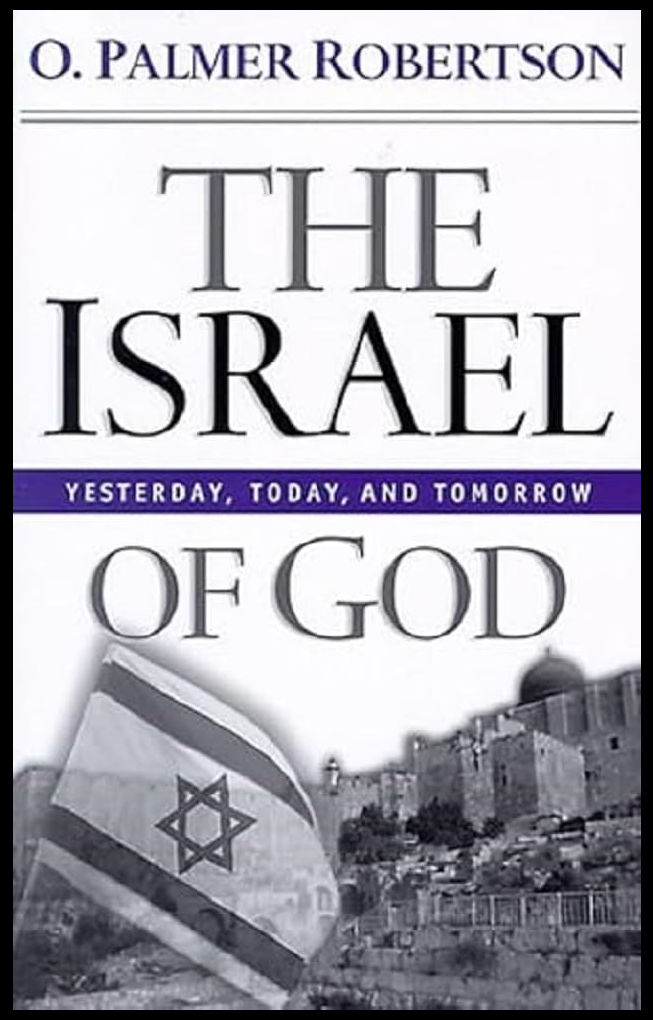
THE ISRAEL OF GOD: THE LAND

Israel of GodPMW 2025-011 by O. Palmer Robertson

It has been rightly observed that the idea of the “land” as a theological concept has been largely overlooked by both Judaism and Christianity. Except for eschatological speculations concerning the return of Israel to the land, the whole concept of the land as presented in Scripture has been generally neglected. The reasons for this neglect might be variously evaluated.¹ But unquestionably the significance of the land as a theological idea needs fuller exploration.²

The concept of a land that belongs to God’s people originated in Paradise. This simple fact, so often overlooked, plays a critical role in evaluating the significance of the land throughout redemptive history and in its consummate fulfillment.³ Land did not begin to be theologically significant with the promise given to Abraham. Instead, the patriarch’s hope of possessing a land arose out of the concept of restoration to the original state from which man had fallen. The original idea of land as paradise significantly shaped the expectations associated with redemption. As the place of blessedness arising from unbroken fellowship and communion with God, the land of paradise became the goal toward which redeemed humanity was returning. Continue reading

POSTMILLENNIALISM AND ISRAEL (4)

Israel (4)PMW 2024-094 by Kenneth L. Gentry, Jr.

This is my last study in this four-part series on Israel in theology and the Bible. I am demonstrating the Reformed view of Israel in the Scriptures. We are now ready for my sixth observation:

6. THE NEW COVENANT CHURCH IS CALLED ABRAHAM’S SEED

Israel’s biological descent from Abraham was a source of great Jewish pride. God is often called in Scripture “the God of Abraham” (Gen 28:13; 31:42, 53; Exo 3:6, 15–16; 4:5; 1 Kgs 18:36; 1 Chron 29:18; 2 Chron 30:6; Psa 47:9; Matt 22:32; Mark 12:36; Luke 20:37; Acts 3:13; 7:32). Because he is “the God of Abraham” the Jews expected blessings in terms of their Abrahamic descent (Matt 3:9; 8:11; Luke 3:8; 13:16, 28; 16:23–30; 19:9; John 8:39, 53; Rom 11:1; 2 Cor 11:22). Yet in the new covenant, Gentile Christians are called the children of Abraham.

We see this in Galatians where Paul writes: “therefore, be sure that it is those who are of faith who are sons of Abraham. And the Scripture, foreseeing that God would justify the Gentiles by faith, preached the gospel beforehand to Abraham, saying, ‘All the nations shall be blessed in you’”(Gal 3:7–8). Then a few verses later he forthrightly declares: “if you belong to Christ, then you are Abraham’s offspring, heirs according to promise” (Gal 3:29).
Continue reading

POSTMILLENNIALISM AND ISRAEL (3)

Israel (3)PMW 2024-093 by Kenneth L. Gentry, Jr.

This is my third installment on the question of Israel in redemptive history and the Bible. I am providing this four-part survey in order to expose significant errors in dispensationalism, held so dearly by so many.

Regarding what the Bible teaches about Israel, I will continue with my third observation:

3. THE NEW COVENANT CHURCH RECEIVES OLD TESTAMENT PROMISES

Not only do we learn that Old Testament prophecies regarding Israel are fulfilled in the church, but we even see that old covenant promises for Israel apply to the church. The new covenant church is the recipient of old covenant Israel’s blessings.

For instance, when Paul speaks to the Gentiles in Ephesians, he reminds them that “formerly” they were “at that time” in the past “strangers to the covenants of promise” (Eph 2:12). That is, in their past they were devoid of God’s “promise.” But this no longer is true!
Continue reading

POSTMILLENNIALISM AND ISRAEL (2)

PIsrael (2)MW 2024-092 by Kenneth L. Gentry, Jr.

In my last posting I began consideration of an important debate topic separating dispensationalism from most of the rest of evangelical theology: the question of Israel. In this article I am beginning a brief survey showing what Scriptures teaches, while setting it over against dispensationalism’s view. How does the Bible see Israel?

1. THE OT ANTICIPATES THE EXPANSION OF GOD’S PEOPLE

The Old Testament writers foresee a time in which God will expand his people by bringing blessings on the Gentiles and including them within Israel. This hope is established early in Israel’s formative history when God establishes his covenant with Abraham: “As for Me, behold, My covenant is with you, / And you shall be the father of a multitude of nations” (Gen 17:4).

Perhaps the clearest and more remarkable expression of this appears in Isaiah 19:23–25. There we read that God will include Israel’s greatest enemies in his covenant:

“In that day there will be a highway from Egypt to Assyria, and the Assyrians will come into Egypt and the Egyptians into Assyria, and the Egyptians will worship with the Assyrians. In that day Israel will be the third party with Egypt and Assyria, a blessing in the midst of the earth, whom the Lord of hosts has blessed, saying, ‘Blessed is Egypt My people, and Assyria the work of My hands, and Israel My inheritance.’”
Continue reading