
PMW 2026-022 by Kenneth L. Gentry, Jr.
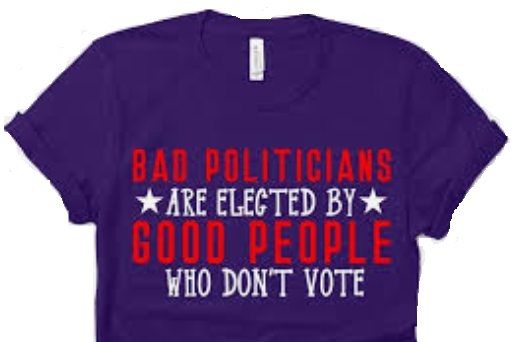
As we move closer to our important off-year elections, American Christians need to think carefully about the options before us. As postmillennialists we recognize that we are in a socio-political struggle. For the long run. Therefore, we must act accordingly. Like it or not, in politics we cannot expect overnight success through one particular election or by means of a “perfect” candidate. To continually vote for the “perfect” candidate when we know he is going to lose does not help us build for the future, for by that we are ceding more victories to the overt liberals. Liberalism is a mess. And when its goo gets all over the place, it is very difficult to clean up the mess.
America is a republic, not a democracy. Rather than being a democracy run directly by the people, we are a republic in which we elect our officials and empower them to make decisions on our behalf. Every adult citizen of the United States (unless he is a felon) has the right to vote. And as Christians our worldview obligates us to vote so that we might exercise a righteous influence on the governance of the nation.
Political Issues Made Easy by Kenneth Gentry Christian principles applied to practical political issues, including the importance of borders, the biblical warrant for “lesser-of-evils” voting, and more. A manual to help establish a fundamentally biblical approach to politics. Impressively thorough yet concise. See more study materials at: www.KennethGentry.com
But now the rub. Though Christians are well-represented in America, two problems reduce our influence: (1) we do not represent a majority of the population, and (2) we are not in agreement among ourselves regarding political matters.
As a consequence of our present circumstances, we have few really good candidates from which to choose for our leaders. What are we to do? How shall we operate in such a mixed political environment? I would like to offer direction for what we as Christian citizens should do. As I begin I will first consider:
Our Current Dilemma
Because there are so few candidates operating on strongly-held biblical principles, and because more often than not those few good ones have little chance of winning a general election, we find ourselves facing a dilemma. The voting quandary we face is known as “the lesser of evils” problem. That is, if we as voters are in a political election involving several candidates and we realize that the best candidate cannot win, what are we to do? We face the prospect of either voting for our preferred candidate, knowing that he will lose, or voting for an alternative, more viable but less acceptable candidate with the hope that he will defeat the other even lesser qualified candidate. In this case the alternative candidate becomes the “lesser of evils” remaining among those who have a good chance of being elected.
Covenantal Theonomy
(by Ken Gentry)
A defense of theonomic ethics against a leading Reformed critic. Engages many of the leading objections to theonomy.
See more study materials at: www.KennethGentry.com
Many devout Christians even urge us not to consider voting for the lesser of evils. For instance, a website called “Defending. Contending” states: “my current position is that true Christians should not have to vote if they first have to sit down and estimate which candidate is the lesser of two evils.” [1] Peter Diezel puts it more forcefully: “I just can’t get myself to believe that it is good to vote for evil. The last I heard, the lesser of two evils is still evil.” [2]
These are strong words representing vigorous evangelical challenges to Christians considering voting for a candidate lacking the full panoply of conservative convictions. Yet we certainly must bring our firmly-held Christian worldview to bear upon the political order. What are we to think of these challenges? How are we to respond to the challenge of the lesser of evils?
I believe that though these comments are well-intended, and though they have a surface plausibility, they ultimately fail as a proper Christian response to our predicament. Let me explain from a conservative-political and a Bible-based Christian perspective why I would say this.
In allowing the lesser-of-evils approach to voting from a Christian perspective, I would have us first note the principles involved, then consider their theological and biblical justifications. I present the question of principles first to introduce the argument; then I will show why I believe we can endorse it from within a Christian worldview. But this must await my next posting!
Notes
- “Pilgrim” on the “Defending Contending” website (June 6, 2009). http://
defendingcontending.com/2011/06/09/should-christians-vote-for-the-lesser-of- two-evils/ - 2 Peter Diezel, “Voting for the Lesser of Two Evils Is Evil.” “Word of His Grace” website (May 9, 2008). http://www.wordofhisgrace.org/evilisevil.htm



 Postmillennial Worldview
Leave a comment