
.PMW 2025-061 by Kenneth L. Gentry, Jr.
In a previous posting I listed a few ancient postmillennial writers, noting that this would have been a budding postmillennialism, not a full-blown postmillennial scheme. In this article I will present the names of some Reformation postmillennialists, as well as some contemporary ones
Reformation Postmillennialism
As Donald Bloesch notes, “postmillennialism experienced an upsurge in the middle ages,” as illustrated in the writings of Joachim of Fiore (A.D. 1145-1202) and others. But a more fully developed postmillennialism enjoys its greatest growth and influence in the seventeenth through nineteenth centuries, especially under Puritan and reformed influence in England and America.
Rodney Peterson writes that “this perspective had undergone changes, particularly since Thomas Brightman (1562-1607).” Brightman, who died in 1607, is one of the fathers of Presbyterianism in England. His postmillennial views are set forth in detail in his book A Revelation of the Revelation, which was published posthumously in 1609 and quickly established itself as one of the most widely translated works of the day. In fact, some church historians consider this work the “most important and influential English revision of the Reformed, Augustinian concept of the millennium.” Thus, Brightman stands as the modern systematizer (not creator) of postmillennialism.
Three Views on the Millennium and Beyond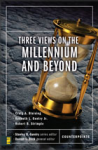
(ed. by Darrell Bock)
Presents three views on the millennium: progressive dispensationalist, amillennialist, and reconstructionist postmillennialist viewpoints. Includes separate responses to each view. Ken Gentry provides the postmillennial contribution.
See more study materials at: www.KennethGentry.com
Bloesch lists subsequent “guiding lights” from “the heyday of postmillennialism”: Samuel Rutherford (1600-1661), John Owen (1616-1683), Philip Spener (1635-1705), Daniel Whitby (1638-1726), Isaac Watts (1674-1748), the Wesley brothers (1700s), and Jonathan Edwards (1703-1758). To this list we could add John Calvin (1509-1564) as an incipient postmillennialist. In his Prefatory Address to King Francis I of France, Calvin writes: “Our doctrine must tower unvanquished above all the glory and above all the might of the world, for it is not of us, but of the living God and his Christ whom the Father has appointed King to ‘rule from sea to sea, and from the rivers even to the ends of the earth. . . .’ And he is so to rule as to smite the whole earth with its iron and brazen strength, with its gold and silver brilliance, shattering it with the rod of his mouth as an earthen vessel, just as the prophets have prophesied concerning the magnificence of his reign.”
Calvin is a forerunner to the flowering of the postmillennialism of the reformers Martin Bucer (1491-1551) and Theodore Beza (1519-1605). Following in their train but with greater clarity still are the Puritans William Perkins (1558-1602), William Gouge (1575-1653), Richard Sibbes (1577-1635), John Cotton (1585-1652), Thomas Goodwin (1600-1679), George Gillespie (1613-1649), John Owen (1616-1683), Elnathan Parr (d. 1632), Thomas Brooks (d. 1662), John Howe (d. 1678), James Renwick (d. 1688), Matthew Henry (1662-1714), and others.
The Puritan form of postmillennialism generally holds not only to a future glory for the church, but that the millennial era proper will not begin until the conversion of the Jews and will flower rather quickly thereafter, prevailing over the earth for a literal thousand years. A purified church and a righteous state governed by God’s Law arises under this intensified effusion of the Spirit. This culminates eventually in the eschatological complex of events surrounding the glorious Second Advent. Many of the Puritans also hold that the Jews would return to their land during this time.
Covenantal Theonomy
(by Ken Gentry)
A defense of theonomic ethics against a leading Reformed critic. Engages many of the leading objections to theonomy.
See more study materials at: www.KennethGentry.com
Modern Postmillennialism
Generic postmillennialists of the nineteenth and twentieth centuries generally do not hold that the Jewish people will return to their land as a fulfillment of prophecy — though Iain Murray and Erroll Hulse are notable contemporary exceptions. They also believe that the millennium spans all of the new covenant phase of church history, developing incrementally from the time of Christ until his Second Advent.
Prominent generic postmillennial writers include: Jonathan Edwards (1703-1758), William Carey (1761-1834), Robert Haldane (1764-1842), Archibald Alexander (1772-1851), Charles Hodge (1797-1878), Albert Barnes (1798-1870), David Brown (1803-1897), Patrick Fairbairn (1805-1874), Richard C. Trench (1807-1886), J. A. Alexander (1809-1860), J. H. Thornwell (1812-1862), Robert L. Dabney (1820-1898), William G. T. Shedd (1820-1894), A. A. Hodge (1823-1886), Augustus H. Strong (1836-1921), H. C. G. Moule (1841-1920), B. B. Warfield (1851-1921), O. T. Allis (1880-1973), J. Gresham Machen (1881-1937), John Murray (1898-1975), Loraine Boettner (1903-1989), and J. Marcellus Kik (1903-1965).
Contemporary defenders include: R. C. Sproul, Norman Shepherd, John Jefferson Davis, Erroll Hulse, Iain Murray, Donald Macleod, Douglas Kelly, John R. deWitt, J. Ligon Duncan, Henry Morris III, and Willard Ramsey.
Published advocates of theonomic postmillennialism include: Greg L. Bahnsen, Gary North, Rousas J. Rushdoony, Mark Rushdoony, Martin Selbrede, Kenneth L. Gentry, Jr., David Chilton, George Grant, Francis Nigel Lee, Steve Schlissel, Douglas Jones, Reuben Alvarado, Jason Quintern, Bruce Gore, Jeff Durbin, James White, Douglas Wilson, Stephen C. Perks, Jack Van Deventer, Stephen J. Hayhow, Andrew Sandlin, Joseph Boot, Colin Wright, Jay Rogers, Jeff Ventrella, and Joseph C. Morecraft III.
Conclusion
Though our numbers are not what they one day will be, postmillennialism is not without witnesses in Christian history. But our hope is in the future of God’s providential development of his kingdom.
Click on the following images for more information on these studies:
 |
 |
 |



 Postmillennial Worldview
Leave a comment