
PMW 2025-021 by Robert L. Dabney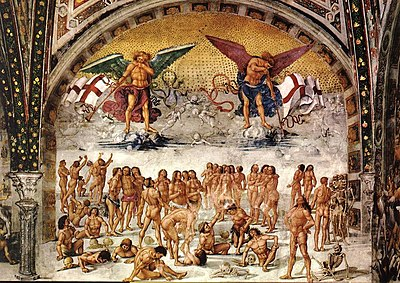
Note: This concludes our previous posting presenting Robert L. Dabney’s argument for the physical resurrection of the dead.
Objection From Wonderfulness, Answered
The general objection is from the incredible greatness of the work. That is, since the particles that composed human bodies are scattered asunder by almost every conceivable agency, fire, winds, waters, birds and beasts of prey, mingled with the soil of the fields, and dissolved in the waters of the ocean, it is unreasonable to expect they will be assembled again.
We reply (reserving the question whether a proper corporeal identity implies the presence of all the constituent particles; of which more shortly), that this objection is founded only on a denial of God’s omnipotence, omniscience, and almighty power. The work of the resurrection does indeed present a most wondrous and glorious display of divine power. But to God all things are easy.
Indeed, we may briefly reply, that to all who believe in a special Providence, there is a standing and triumphant answer visible to our eyes. It is in the existence of our present bodies. Are they not formed by God? Are they not also formed from “the dust of the earth?” And it is not any one hundred and fifty pounds of earth, which God moulds into a body of that weight. But there is a most wonderful, extensive, and nice selection of particles, where a million of atoms are assorted over and rejected, for one that is selected; and that from thousands of miles. In my body there are atoms, probably, that came from Java (in coffee), and from Cuba or Manilla (in sugar), and from the western prairies (in pork), and from the savannahs of Carolina (in rice), and from the green hills of Western Virginia (in beef and butter), and from our own fields (in fruits). Do you say, the selection and aggregation have been accomplished gradually, by sundry natural laws of vegetation and nutrition? Yes, but what are natural laws? Only regular modes of God’s working through matter, which He has in His wisdom proposed to Himself! If God actually does this thing now, why may He not do another thing just like it, only more quickly?
Physical Objection Answered
But an objection supposed to be still more formidable, is derived from the supposed flux of particles in the human body. And even further from the cases in which particles which belonged to one man at his death, become parts of the structure of another man’s body. This may happen through cannibalism, or the derivation by beasts from the mould enriched with human dust, which beasts are in turn consumed by men, etc. Now, since one material atom cannot be in two places at the same time, the resurrection of the same bodies, say they, is a physical impossibility. And if the flux of particles be admitted, which shall the man claim, as composing his bodily identity: those he had first, or those he had last — or all he ever had?
The Truth about Postmillennialism
 By Ken Gentry
A group Bible study guide for explaining the optimistic prophetic hope for this world to be accomplished before Christ’s Second Coming. Establishes the postmillennial system in both the Old and New Testaments. Touches on key eschatological issues, such as creation, covenant, interpretive methodolgy, the great tribulation, the Book of Revelation, the Jewish Temple, and more. It presents and answers the leading objections to postmillennialism.Twelve chapters are ideal for one quarter of Sunday School.
See more study materials at: www.KennethGentry.com
To the first of these questions, we reply that there is no evidence that a particle of matter composing a portion of a human corpse, has ever been assimilated by another human body. It is only assumed that it may be so. But now, inasmuch as the truth of Scripture has been demonstrated by an independent course of moral evidences, and it asserts the same body shall be raised, if there is, indeed, any difficulty about this question of the atoms, the burden of proof lies upon the objector. And he must demonstrate that the difficulty exists, and is insuperable. It is not sufficient merely to surmise that it may exist.
Now, I repeat, a surmise is good enough to meet a surmise. Let me assume this hypothesis, that
it may be a physiological law that a molecule, once assimilated and vitalized by a man (or other animal), undergoes an influence which renders it afterwards incapable of assimilation by another being of the same species. This, indeed, is not without plausible evidence from analogy: witness, for instance, the fertility of a soil to another crop, when a proper rotation is pursued, which had become barren as to the first crop too long repeated. But, if there is any such law, the case supposed by the objector against the resurrection, never occurs.
And, second, in answer to both objections, it can never be shown that the numerical identity of all the constituent atoms is necessary to that bodily sameness, which is asserted by the Bible of our resurrection bodies. We are under no forensic obligation whatever, to define precisely in what that sameness consists. But we take our stand here, that the Bible, being written in popular language, when it says our resurrection bodies will be the same, it means precisely what popular consciousness and common language apprehend when it is said my body at forty is the same body grown stronger, which I had at fifteen.
Let that meaning be whatever it may be. If this doctrine of the flux of particles, and this possibility of a particle that once belonged becoming a part of another, prove that our resurrection bodies cannot be the same that died: they equally prove for that flux, if there is any truth in it, has already occurred. That is, that my body cannot now be the body I had some years ago. And there is just as much probability that I have been nourished with a few particles from a potato, manured with the hair of some man who is still living, as that two men will both claim the same particles at the resurrection.
But my consciousness tells me (the most demonstrative of all proof), that I have had the same body all the time, so that, if these famous objections disprove a resurrection, they equally contradict consciousness. You will notice that I propound no theory as to what constitutes precisely our consciousness of bodily identity, as it is wholly unnecessary to our argument that I should. Nor do I undertake to define precisely how the resurrection body will be constituted in this particular. And this is most proper for me, because the Bible propounds no theory on this point.
But if curiosity leads you to enquire, I answer that it appears to me our consciousness of bodily identity (as to a limb, or member, or organ of sense, for instance) does not include an apprehension of the numerical identity of all the constituent atoms all the while. Rather that it consists of an apprehension of a continued relation of the organism of the limb or organ to our mental consciousness all the time, implying also that there is no sudden change of a majority, or even any large fraction of the constituent atoms thereof at any one time.
 The Truth about Salvation By Ken Gentry
A study guide for personal or small group Bible study. Deals with the Christian doctrine of salvation from a Reformed theological perspective. It opens with a study of God as loving Creator, the shows how the first man fell into sin. Shows God’s righteousness requires that sin be dealt with. Presents Jesus as both God and man so that he can be man’s Savior. Includes review questions and questions for further study.Twelve chapters are ideal for one quarter of Sunday School.
See more study materials at: www.KennethGentry.com
Proofs That Bodies Will Rise
In presenting the Bible-proof, nothing more will be done, than to cite the passages, with such word of explanation as may be necessary to show their application. If we believe our Saviour, implications of this doctrine appear at a very early stage of the Old Testament Scriptures. For indeed the sort of immortality implied all along, is the immortality of man, body and soul (see Exo. 3:6, as explained in Matt. 22:31–32; Mark 12:26–27).
The next passage is Job 19:26, which I claim quicunque vult, as containing a clear assertion of a resurrection. In Psalm 26:9, 11 (expounded in Acts 2:29, 32; 13:36–37) David is made by the Holy Ghost to foretell Christ’s resurrection. Doubtless, the Psalmist, if he distinctly knew that he was personating Christ in this language, apprehended his own resurrection as a corollary of Christ’s. Psalm 17:15 probably alludes also to a resurrection in the phrase: “awake in thy likeness;” for what awakes, except the body? Nothing else sleeps. So Isaiah 25:8 may be seen interpreted in 1 Corinthians 15:54; Daniel 12:2. Both teach the same doctrine.
In the New Testament the proofs of bodily resurrection are still more numerous and explicit. The following are the chief: Matthew 22:31, etc.; Mark 12:26–27; John 5:21, 29; 6:39–40; 11:24; Acts as above; 1 Corinthians 15; 1 Thessalonians 4:13ff.; 2 Timothy 2:8; Philippians 3:21; Hebrews 6:2; 11:35.
Other strong Scriptural proofs are urged by the Reformed divines, which need little more than a mere statement here. The resurrection of Christ is both the example and proof of ours (1 Cor. 15:20; 1 Pet. 1:3). First, it demonstrates that the work is feasible for God. Second, it demonstrates the sufficiency and acceptance of Christ’s satisfaction for His people’s guilt. But bodily death is a part of our penalty therefor: and must be repaired when we are fully invested with the avails of that purchase. Third, Scripture shows such a union between Christ, the Head, and His members, that our glorification must result as His does (1 Cor. 6:15).
The exposition given of the Covenant of Grace, by our Saviour Himself in Matthew 22:31, etc., shows that it includes a resurrection for the body. This covenant, Christ there teaches us, is first, perpetual: death does not sever it. But second, it was a covenant not between God and angels or ghosts, but between Him and the incorporate men, Abraham, Isaac, and Jacob. Then, its consummation must restore them to their incorporate state.
The inhabitation of our bodies by the Holy Ghost implies the redemption of the body also. Although not the primary seat of sanctification, the body, thus closely dedicated to the Spirit’s indwelling, will not be left in the dust (Rom. 8:11).
Last, we have seen Turrettin unfold the reasonableness of men’s being judged in the bodies in which they have lived. The rewards and penalties cannot, in any other way, be so appropriate, as when God makes the bodily members which were abused or consecrated, the inlets of the deserved penalties, or the free rewards (1 Cor. 5:10).
 Why I Left Full-Preterism (by Samuel M. Frost)
Former leader in Full Preterist movement, Samuel M. Frost, gives his testimony and theological reasoning as to why he left the heretical movement. Good warning to others tempted to leave orthodox Christianity.
See more study materials at: KennethGentry.com
Reprobate not raised in Christ, but by Christ
Some divines, as e. g. Breckinridge, say that the resurrection of both saints and sinners is of Christ’s purchase, quoting 1 Corinthians 15:22, making the “all” mean the whole human race. But we teach, that while Christ, as King in Zion, commands the resurrection of both, it is in different relations. The resurrection of His people being a gift of His purchase, is effectuated in them by the union to Him, and is one result of the indwelling of the Holy Ghost. The resurrection of the evil is an act of pure dominion, effected in them by His avenging sovereignty. The other idea would represent the wicked also, as vitally connected with Christ, by a mystical union. But if so, why does not that union sanctify and save? Are we authorized to say that, had Christ not come, there would have been no resurrection unto damnation for Adam’s fallen race at all? Moreover, that opinion puts an unauthorized and dangerous sense upon 1 Corinthians 15:22 and similar verses.
GOODBIRTH AND THE TWO AGES
I am currently researching a technical study on the concept of the Two Ages in Scripture. This study is not only important for understanding the proper biblical concept of the structure of redemptive history. But it is also absolutely essential for fully grasping the significance of the Disciples’ questions in Matthew 24:3, which spark the Olivet Discourse. This book will be the forerunner to a fuller commentary on the Olivet Discourse in Matthew’s comprehensive presentation. This issue must be dealt with before one can seriously delve into the Discourse itself.
If you would like to support me in my research, I invite you to consider giving a tax-deductible contribution to my research and writing ministry: GoodBirth Ministries. Your help is much appreciated! https://www.paypal.com/donate/?cmd=_s-xclick&hosted_button_id=4XXFLGKEQU48C&ssrt=1740411591428



 Postmillennial Worldview
Leave a comment