
PMW 2025-019 by O. T. Allis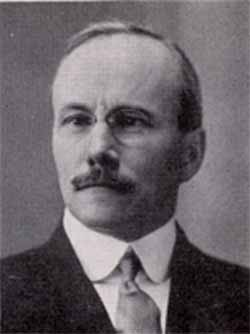
Gentry note:
O. T. Allis (1880-1973) was an internationally recognized philologist and Reformed theologian who helped found Westminster Theological Seminary, along with J. Gresham Machen, Robert Dick Wilson, and others. He is noted especially for his work in the Old Testament. Allis was a postmillennialist, as we can see from his Foreword in Roderick Campbell’s Israel and the New Covenant, a powerful postmillennial book. The following is his Foreword in full.
The author of this valuable contribution to Biblical Interpretation belongs to a class of writers which is not as numerous today as has sometimes been the case, the lay theologian. Being both an earnest and active Christian and a successful man of business, Mr. Campbell very naturally became, as he tells us in his Preface, deeply concerned over the economic depression and the moral degeneracy which followed in the wake of the first World War. Being a Christian he turned to the Bible for the answer; and he also consulted many of the ablest interpreters of the Bible, in the hope of solving this pressing problem. The answer which he found is the thesis of the present volume. It can be stated briefly and in a single sentence: The Christian church has for centuries failed to take seriously and carry out fully the Great Commission.
When the present is uncertain and the future dark and ominous, there is likely to be a far greater concern regarding “the things that are coming and shall come” than there is when “all the earth sitteth still, and is at rest.” It is when the foundations seem to be removed, that men ask anxious questions. The worldly ask them of the philosopher, the statesman, the political economist, even of the star-gazer and charlatan. The Christian turns to the Bible. We naturally expect the answers of the worldly-wise to be varied and even contradictory, a babel of conflicting opinions. But it is a significant as well as a deplorable fact that, among those who profess to go to the Bible for the answer, the solutions offered are in some respects almost equally various and conflicting.
He Shall Have Dominion
(paperback by Kenneth Gentry)
A classic, thorough explanation and defense of postmillennialism (600+ pages). Complete with several chapters answering specific objections.
See more study materials at: www.KennethGentry.com
Is there any way out of the labyrinth of confused terminology and conflicting interpretations which envelops and befogs so much of the current discussion of the Christian Hope? Is it possible for earnest Christians to attain to a practical measure of agreement regarding the meaning of the words of the angelic proclamation, “Glory to God in the highest and on earth peace, good will toward men,” of the oft-recited petition, “Thy kingdom come. Thy will be done in earth, as it is in heaven,” and of the glorious affirmation of the risen Christ, “Behold, I make all things new”? Must we be content to remain in a state of controversy, of uncertainty, or of indifference regarding the objective which has been set before the church of Christ, or the means of its successful accomplishment? These are some of the questions with which this book deals and for which it offers a clear and definite answer, an answer which will sound strange and novel to many ears, but which for that very reason may well deserve a careful and attentive hearing.
Mr. Campbell is well-read in the relevant literature and he is quite familiar with the questions under debate. As a result of his studies he has come to the definite conclusion that the whole subject of the Christian task and hope needs to be restudied from a different viewpoint and with a different emphasis. He has indicated this in the title which he has chosen for his book, Israel and the New Covenant. He finds the key to the problem of the duty and the destiny of the church in the covenants which are set forth so plainly in the Bible, notably the Abrahamic, the Mosaic, the Davidic, and the New Covenant of our Lord and Saviour Jesus Christ. He is convinced that in the promise given to Abraham, “in thy seed shall all the nations of the earth be blessed,” we have the Old Testament prediction of the task assigned to the Christian church in the Great Commission. He does not accept what he calls the “easy” solution of the problem, according to which we are to accept the failure of the church to win the world for Christ as evidence that this is not really the task of the church, and that we are to expect Lord by His coming and visible reign to accomplish the task of establishing His kingdom upon earth. He tells us very definitely that this task is assigned to the church; and he challenges her to bestir herself for its achievement. For he believes, that it is only when the church has accomplished the task assigned her, that she can expect her Lord to say unto her, “Well done good and faithful servant,” and to receive her unto Himself. This is the reason that the constant emphasis in the book so the present task of the church as the ambassador of Christ to a needy, sin-cursed world.
Thine Is the Kingdom
(ed. by Ken Gentry)
Contributors lay the scriptural foundation for a biblically-based, hope-filled postmillennial eschatology, while showing what it means to be postmillennial in the real world.
See more study materials at: www.KennethGentry.com
It is to be carefully noted that Mr. Campbell does not claim to be presenting a new interpretation, but rather a teaching which has been widely held in the past and by able scholars, an interpretation which can only be called novel, because it has been largely obscured by the quite different teachings which are so popular today. This is made clear by the footnotes which form a valuable addition to and confirmation of the argument presented in the text.
GOODBIRTH AND THE TWO AGES
I am currently researching a technical study on the concept of the Two Ages in Scripture. This study is not only important for understanding the proper biblical concept of the structure of redemptive history. But it is also absolutely essential for fully grasping the significance of the Disciples’ questions in Matthew 24:3, which spark the Olivet Discourse. This book will be the forerunner to a fuller commentary on the Olivet Discourse in Matthew’s comprehensive presentation. This issue must be dealt with before one can seriously delve into the Discourse itself.
If you would like to support me in my research, I invite you to consider giving a tax-deductible contribution to my research and writing ministry: GoodBirth Ministries. Your help is much appreciated! https://www.paypal.com/donate/?cmd=_s-xclick&hosted_button_id=4XXFLGKEQU48C&ssrt=1740411591428
I have known Mr. Campbell personally for a number of years; and I have discussed with him many of the problems dealt with in this book. So I count it a privilege to write a word of commendation of a work on which he has spent many years of careful study and research. I do this the more gladly because my own studies in this and related fields have convinced me that the most serious error in much of the current “prophetic” teaching of today is the claim that the future of Christendom is to be read not in terms of Revival and Victory, but of growing impotence and apostasy, and that the only hope of the world is that the Lord will by His visible coming and reign complete the task which He has so plainly entrusted to the church. This claim is rendered formidable and persuasive by the all too obvious fact of the past failures and present feebleness of the church. But it is pessimistic and defeatist. I hold it to be unscriptural. The language of the Great Commission is world-embracing; and it has back of it the authority and power of One who said: “All power is given unto me in heaven and in earth. Go ye therefore and make disciples of all nations.” The duty of the church is to address herself to the achieving of this task in anticipation of her Lord’s coming, and not to expect Him to call her away to glory before her task is accomplished. In a word, this book is both a challenge and a tonic for an enfeebled and discouraged church. May it have a wide and sympathetic reading. — OSWALD T. ALLIS
Click on the following images for more information on these studies:
 |
 |
 |



 Postmillennial Worldview
Leave a comment