
PMW 2025-018 by Iain Murray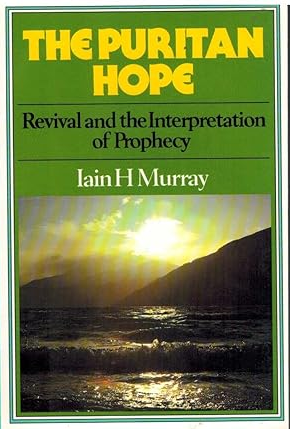
Note from Ken Gentry:
The following is an excerpt from Iain Murray’s The Puritan Hope, pp. xviii–xxii. He is explaining his conversion from premillennial thinking to a more hope-filled eschatology as found in many Puritans.
For some while after I gave up the millenarian view of future history the only truth respecting unfulfilled prophecy which I could regard as clear was this great one that Christ’s coming will be at the consummation of his kingdom. therefore all conversion-work yet to be in history must occur before the Second Advent. Of the certainty or extent of any future work I was entirely in doubt. I still retained the conviction that the testimony of Scripture on human depravity requires the expectation of an ever-darkening world and the signs of the twentieth century seemed to point me to the same conclusion.
Only very slowly did I come to believe that the Christian Church has indeed a great future in the world and this conviction came as the result of several lines of thought. For one thing all the scripture texts claimed as proof that the coming of Jesus Christ must now be close at hand have also been confidently so used in former generations. Not a few Christians in the past have been erroneously convinced that their age must witness the end. When the Teutonic barbarians overturned Rome and reduced a stable world to chaos in the fifth century A.D., many in the Church despairingly drew the wrong conclusion that the world could have no future. Even larger numbers did so at the approach of the year 1000, believing that the closing millennium would end the world. In the gloom of the fourteenth century such tracts appeared as The Last Age of the Church, and in terms very similar to that old title a great number have written since.
All this does not make scripture predictions a subject for legitimate scepticism but it does prove that the signs of the end are not nearly so clear as some men would make them. To believe that “the end is not yet” is not therefore so patently unscriptural as it is often represented. In the absence of any certain evidence to the contrary, the possibility that history is not about to close cannot be other than a real one. The acceptance of this may not change one’s thoughts profoundly but it can open the way to other considerations. Supposing the church, after all, is to have a future in history, and that our individual end will not coincide with the end of the world, what then may that future be? To be disinterested in such a question simply because it does not affect our own individual salvation would not be an attitude worthy of a Christian.
The Beast of Revelation
by Ken Gentry
A popularly written antidote to dispensational sensationalism and newspaper exegesis. Convincing biblical and historical evidence showing that the Beast was the Roman Emperor Nero Caesar, the first civil persecutor of the Church. The second half of the book shows Revelation’s date of writing, proving its composition as prior to the Fall of Jerusalem in A.D. 70. A thought-provoking treatment of a fascinating and confusing topic.
For more study materials, go to: KennethGentry.com
Another subject which increased my doubts about the rightness of my pessimism was the significance of revivals. One common reason for believing that the world must grow worse and worse has always been the evidence of abounding moral decay. Confronted by this evidence it has too often been supposed that the only work left for God is judgment. Yet the history of revivals should teach us that even in the midst of prevailing evil it is possible to form precisely the opposite conviction. For example, when John Wesley arrived in New-castle-upon-Tyne in May, 1742, he wrote these memorable words: “I was surprised; so much drunkenness, cursing and swearing (even from the mouths of little children) do I never remember to have seen and heard before in so small a compass of time. Surely this place is ripe for Him who “came not to call the righteous, but sinners to repentance”. And the great evangelical revival which was then dawning proved this conviction to be right. The gospel of grace does not need promising conditions to make its reception a certainty. Such a result depends upon the will of him who declares his love to the ungodly. Thus in various centuries revivals of apostolic Christianity have broken out in the most improbable circumstances and have powerfully, rapidly and extensively affected whole communities. “When the enemy shall come in like a flood, the Spirit of the Lord shall lift up a standard against him” (Isa. 59. 19). The wonder of God’s saving works ought therefore to make Christians slow to believe that only doom and catastrophe must await the vast population of this evil earth. If, as men predict, the world population is to double in the next thirty years, why should it not be that God is going to show on a yet greater scale that truth is more powerful than error, grace more powerful than sin, and that those given to Christ are indeed “as the sand which is upon the sea-shore” for multitude?
It may be replied, however, that though such a bright future is possible in terms of the character of God, yet one is prevented from believing it by God’s purposes as revealed in the prophetic word of Scripture. The key issue here is whether Scripture prompts us yet to expect any time of wider blessing for the Church before the Advent. I had many hesitations on this point, conscious that there is much in the symbolic Old Testament descriptions of a period of world-wide blessing which may already be fulfilled, and also that some of the exalted anticipations of the prophets may well have more to do with the eternal state than with any period in time. Is there any event predicted by Scripture to take place in history of which one can say with any certainty that it is yet unfulfilled? In considering this question I came to believe that there is at least one event, namely, a great revival, which is both promised and, as yet, unaccomplished.
God’s Law Made Eas y
y
(by Kenneth Gentry)
Summary for the case for the continuing relevance of God’s Law. A helpful summary of the argument from Greg L. Bahnsen’s Theonomy in Christian Ethics.
See more study materials at: www.KennethGentry.com
The predictions of Scripture concerning Israel’s conversion, particularly those of Romans 11, cannot be said to be already fulfilled. Still less can they be referred to the eternal state. They must await fulfillment in history. This conclusion is not a detail which can be treated apart from our general view of the future of the Church of Christ, for Paul himself points to the spiritual repercussions of Israel’s future conversion upon the world (Romans 11. 12, 15) and, by referring to Isaiah 59. 20 as a scriptural confirmation of his own apostolic testimony respecting the salvation of the Jews (Romans 11. 26), he teaches us that we are to look for a larger fulfillment in history of some of the grandest Old Testament predictions. When I saw this, like Bunyan’s Pilgrim I was ready to emerge from Doubting Castle. Men have spoken too soon in claiming that the world has now entered a post-christian era and we have been fools to believe them.
The mention of John Bunyan leads me to say something on the school of Christians to which he belonged and of which we speak more largely in subsequent pages. J. C. Ryle in “An Estimate of Thomas Manton” written in 1870 says, “The Puritans, as a body, have done more to elevate the national character than any class of Englishmen that ever lived.” The source of this influence was their theology and within that theology there was an attitude to history and to the world which distinguished them as men of hope. In their own day this hope came to expression in pulpits and in books, in Parliaments and upon battlefields, but it did not end there. The outlook they had done so much to inspire went on for nearly two hundred years after their own age and its results were manifold. It coloured the spiritual thought of the American colonies; it taught men to expect great outpourings of the Holy Spirit; it prepared the way to the new age of world-missions; and it contributed largely to that sense of destiny which came to characterize the English-speaking Protestant nations. When nineteenth-century Christian leaders such as William Wilberforce viewed the world not so much as a wreck from which individual souls must escape, but rather as the property of Christ, to whose kingdom the earth and the fulness thereof must belong, their thinking bore the genuine hall-mark of the Puritan outlook.

Greatness of the Great Commission (by Ken Gentry)
An insightful analysis of the full implications of the great commission as given in Matthew 28:18-20. Impacts postmillennialism as well as the whole Christian worldview.
See more study materials at: www.KennethGentry.com
A hope which led to such world-wide results is surely worth examining. In the light of history we can hardly say that matters prophetic are too secondary to warrant our attention. The fact is that what we believe or do not believe upon this subject will have continual influence upon the way in which we live. The greatest spiritual endeavours and achievements in the past have been those energized by faith and hope. By comparison how small are our efforts! And can we disregard the possibility that this stands related to the smallness of our anticipations and to the weakness of our faith in the promises of God? As one of the last great representatives of Puritan theology, J. H. Thornwell, wrote more than a century ago:
“If the Church could be aroused to a deeper sense of the glory that awaits her, she would enter with a warmer spirit into the struggles that are before her. Hope would inspire ardour. She would even now arise from the dust, and like the eagle, plume her pinions for loftier flights than she has yet taken. What she wants, and what every individual Christian wants, is faith — faith in her sublime vocation, in her Divine resources, in the presence and efficacy of the Spirit that dwells in her — faith in the truth, faith in Jesus, and faith in God. With such a faith there would be no need to speculate about the future. That would speedily reveal itself. It is our unfaithfulness, our negligence and unbelief, our low and carnal aims, that retard the chariot of the Redeemer. The Bridegroom cannot come until the Bride has made herself ready. Let the Church be in earnest after greater holiness in her own members, and in faith and love undertake the conquest of the world, and she will soon settle the question whether her resources are competent to change the face of the earth”.
GOODBIRTH AND THE TWO AGES
I am currently researching a technical study on the concept of the Two Ages in Scripture. This study is not only important for understanding the proper biblical concept of the structure of redemptive history. But it is also absolutely essential for fully grasping the significance of the Disciples’ questions in Matthew 24:3, which spark the Olivet Discourse. This book will be the forerunner to a fuller commentary on the Olivet Discourse in Matthew’s comprehensive presentation. This issue must be dealt with before one can seriously delve into the Discourse itself.
If you would like to support me in my research, I invite you to consider giving a tax-deductible contribution to my research and writing ministry: GoodBirth Ministries. Your help is much appreciated! https://www.paypal.com/donate/?cmd=_s-xclick&hosted_button_id=4XXFLGKEQU48C&ssrt=1740411591428



 Postmillennial Worldview
Thank you for that great excerpt from a great book by a great man of our own time! This book convinced me long ago that the conversion of Israel would bring worldwide and enduring spiritual blessings to the world. As a historical study, it is worth reading. But the heart of it is the Puritan exegesis of Romans 10 and 11. I wish that all our pastors could read Murray’s book with an open mind. The logical force of it is irresistible.
Unfortunately some leading preterists teach Romans 10 and 11 are only about how God will complete the salvation of a remnant of the Jews for inclusion in the kingdom of Christ and nothing more and the lesson for gentiles that they can be cut off too if they don’t continue to stand by faith. But the logical force of the those passages indicates something more that has eschatological implications relative to the Great Commission – not an eventual world rule of Christ through Israel, but a dramatic conversion of Jews that springboards the fulfillment of the Great Commission in the world before His return.