
 PMW 2025-001 by Kenneth L. Gentry, Jr.
As I am considering objections to postmillennialism, I will not move from popular practical objections to a more serious class of objections: those related to doctrinal issues. Eschatology is a doctrine, therefore, any doctrinal problems would be self-destructive for the system.
“SIN UNDERMINES THE POSTMILLENNIAL HOPE”
Many evangelical scholars reject postmillennialism because of the Bible’s strong commitment to the doctrine of sin. According to amillennialist Hanko, postmillennialism “is a mirage, therefore, a false hope, because it fails to reckon properly with the fact of sin” and “cannot take sin as seriously as do the Scriptures.” This sounds like a strong objection on the surface. Its beauty, however, is only skin deep.
This complaint surprisingly overlooks the reality of salvation. We must note the obvious: despite the presence of sin in the world, sinners are nevertheless converted to Christ. Each convert to Christ was at one time a totally depraved sinner. Were you a sinner before conversion to Christ? And yet we have hundreds of millions of Christians in the world today — despite “the fact of sin.”
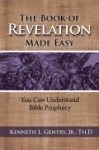
The Book of Revelation Made Easy
(by Ken Gentry)
Helpful introduction to Revelation presenting keys for interpreting. Also provides studies of basic issues in Revelation’s story-line.|
See more study materials at: www.KennethGentry.com
Besides, salvation comes by the gospel which is the power of God unto salvation (Rom 1:16). Is man’s sin more powerful than God’s grace? How can we deny the gospel’s power that has already saved millions of depraved sinners? What God can do for one sinner he can do for another.
“CHRIST’S KINGDOM IS A FAILURE SO FAR”
Amillennialist Kim Riddlebarger charges postmillennialism with this error: “Indeed, the nagging question remains, ‘If postmillenarians are correct about their millennial expectations, what does this say about the progress of the kingdom thus far?’ Must we speak of the history of the church to date as an abject failure, although a golden age presumably lies ahead? Of course not. But this is the direction in which postmillennial expectations push us.” How shall we respond?
This objection is based on a truncated definition. Such complainants forget the postmillennial definition of the kingdom: The kingdom is by divine design to enter the world “mysteriously” (Matt 13:11) growing from a “seed” to a “mature plant,” from imperceptible, fragile-appearing beginnings to obvious, world-dominating fullness. How can its early stages be a “failure” because they are unlike its final stages?
Christ’s kingdom rule is no more a “failure” than a seed is a “failure” because it is not a mature tree with edible fruit. The kingdom is not failing of its purpose any more than a baby is failing because he lacks teeth, cannot walk, and cannot talk. Both the seed and the baby are successes when they operate according to their design, a design which promotes gradually developing maturity. Gradual kingdom growth to full dominion is God’s design — and the postmillennial hope.
Three Views on the Millennium and Beyond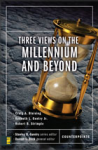
(ed. by Darrell Bock)
Presents three views on the millennium: progressive dispensationalist, amillennialist, and reconstructionist postmillennialist viewpoints. Includes separate responses to each view. Ken Gentry provides the postmillennial contribution.
See more study materials at: www.KennethGentry.com
This objection overlooks historical reality. The postmillennialist argues that the kingdom has grown since the first century. We are delighted that we are no longer being thrown to the lions as a hated minority. The kingdom has not attained its full maturity, but it has definitely grown as prophesied. After all, the postmillennial definition highlights “increasing gospel success” and which “gradually” produces its effect. Progress has been made; the kingdom is not failing.
There is more to come! Stay tuned.
Click on the following images for more information on these studies:
 |
 |
 |



 Postmillennial Worldview
Leave a comment