
 PMW 2024-088 by Kenneth L. Gentry, Jr.
Despite recent unorthodox influences on evangelical Christians, numerous arguments demand that animal death results from God’s curse on creation after Adam’s fall, rather than being a feature of God’s original creational activity. Consider the following:
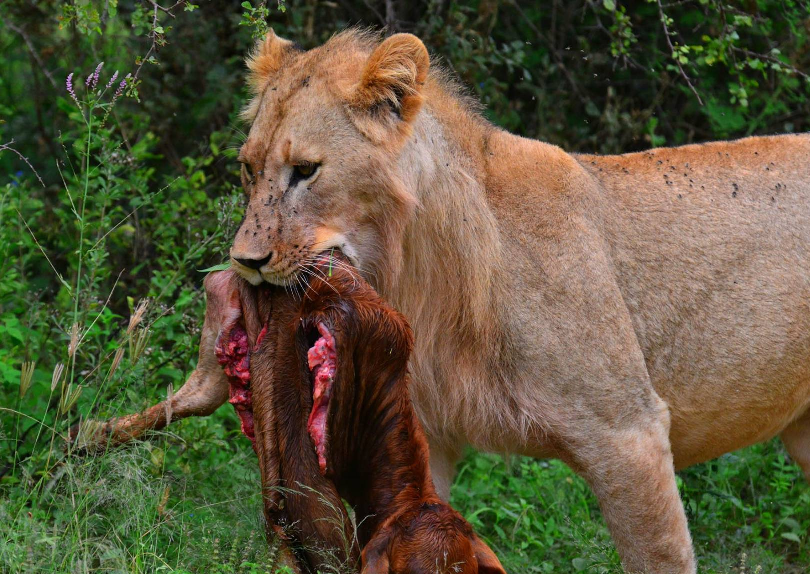
FIRST, by divine decree man and animals were herbivorous originally. In Genesis 1:29-30 God grants only vegetation for food, for both man and animals. As Hamilton notes regarding man’s dominion over the animals: “such dominion does not allow him to kill these creatures or to use their flesh as food. Only much later (9:3, post-Flood) is domination extended to include consumption” (Hamilton, 139). He continues: “Man is to have as his food the seed and fruit of plants. Animals and birds are to have the leaves. . . . At no point is anything (human beings, animals, birds) allowed to take the life of another living being and consume it for food. . . . What is strange, and probably unexplainable (from a scientific position), is the fact that the animals too are not carnivores but also vegetarians” (Hamilton, 140; cp. Wenham, 33).
UNDERSTANDING THE CREATION ACCOUNT (5 DVDs)
by Ken Gentry
These formal conference lectures present important information for properly approaching the Creation Account in Genesis. They lay the groundwork for analyzing the text by means of sound exegetical methodology. In doing so, they defend the view that God created the universe in six, twenty-four days. They do not give an exposition of the six day process, but show why it is the necessary result of reading the Creation Narrative.
See more study materials at: www.KennethGentry.com
SECOND, the “death” of vegetation is of a qualitatively different order, and not as a result of divine curse, for:
(1) God expressly designs vegetation alone for food consumption (Ge 1:29-30).
(2) Plants lack a nephesh, unlike animal and man (Ge 1:20, 24, 30; 2:7). In fact, both animal (Ge 1:20-21, 24; 9:10) and man (Ge 2:7) are called “living creatures” (nephesh hayah). Of Genesis 1:20-24, Waltke explains: “Man is here being associated with the other creatures as sharing in the passionate experience of life and is not being defined as distinct from them.”
(3) Plants do not possess the “breath (ruach) of life,” as do animals and man (Ge 6:17; 7:15, 22).
(4) Scripture never ponders the loss of a plant’s ruach, as it does animal’s and man’s (Ecc 3:20); in fact, a similarity exists between man’s ruach and animal’s (Ecc 3:19).
(5) When animal life “returns to the dust” it is because God “hides his face” (Ps 104:29). Scripture does not present God responding to plant death in such a way.
THIRD, the creation account does not record God’s “blessing” creation until the creation of sentient life on Day 5 (Ge 1:22). By this means of blessing, God draws a distinction between the zoological and the botanical orders of life. In that “blessing” often implies fecundity — which plants also have (Ge 1:11-12) — the lack of God’s “blessing” plant life indicates this divine benediction is more than endowing living organisms with the capacity to multiply (contra Kline, “Space and Time,” 6; Irons, 28).
FOURTH, Paul relates the effects of the curse upon the creation in such a way that surely implies the post-fall creation must be quite different from the original, uncursed world. He even strongly suggests that animal death is a consequence of it: “For the creation was subjected to futility, not of its own will, but because of Him who subjected it, in hope that the creation itself also will be set free from its slavery to corruption into the freedom of the glory of the children of God. For we know that the whole creation groans and suffers the pains of childbirth together until now” (Ro 8:20-23). Note that this “slavery to corruption” and “groaning and suffering” result from God’s “subjecting creation to futility” — obviously by divine curse.
In fact, according to the Westminster Larger Catechism 29: “The punishments of sin in this world are either inward, as blindness of mind, a reprobate sense, strong delusions, hardness of heart, horror of conscience, and vile affections; or outward, as the curse of God upon the creatures for our sakes, and all other evils that befall us in our bodies, names, estates, relations, and employments; together with death itself.” According to Murray, the bondage of corruption in the creation itself (Ro 8:21) “must be taken in the sense of the decay and death apparent even in non-rational creation.” (For more information on this matter see later arguments.)
AS IT IS WRITTEN (by Ken Gentry)
The framework hypothesis or literary framework view has grown in acceptance as more readers of Scripture place “science” as the authority over the interpretation of God’s Word. By re-interpreting Genesis, this view encourages Christians to disregard the plainly declared timeline of creation (the majestic march of days of Genesis 1) and instead consider it as merely figurative or poetic rather than historical and accurate. Kenneth Gentry carefully defines the framework hypothesis, while tracing its historical origins and purpose. This provides a helpful introduction both for those who know the framework hypothesis as well as any hearing the term for the first time.
Tagged: animal death before the Fall, creation, Eden



 Postmillennial Worldview
Leave a comment