
 PMW 2024-074 by Kenneth L. Gentry, Jr.
In this new five-part series I will focus on a pesky biblical worldview question: Does the Bible condemn alcohol use? I believe it does not, for even Jesus turned water into wine. But the approach I will take in this series is to consider the leading passages that some evangelicals believe condemn alcohol consumption. Several biblical passages seem upon cursory reading to imply that all wine drinking is prohibited. I will focus on the nine most prominent passages employed in the argument against imbibing. I will provide brief explanatory statements showing that these passages perfectly harmonize with my statement that God does not prohibit is consumption.
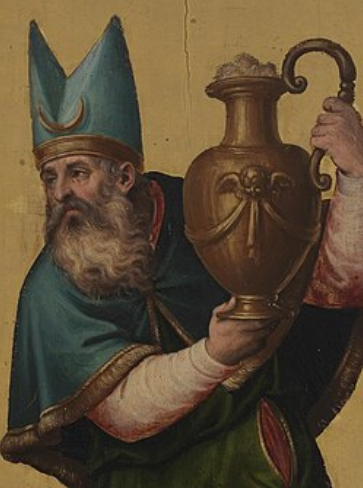
Leviticus 10:8–11 reads:
The LORD then spoke to Aaron, saying, “Do not drink wine or strong drink, neither you nor your sons with you, when you come into the tent of meeting, so that you may not die — it is a perpetual statute throughout your generations — and so as to make a distinction between the holy and profane, and between the unclean and the clean, and so as to teach the sons of Israel all the statutes which the LORD has spoken to them through Moses.”
This passage clearly institutes as a “perpetual statute” that members of the Aaronic priesthood should not drink alcoholic beverages when they enter the tabernacle.
 God Gave Wine Lectures
By Ken Gentry
Professionally-produced, four-part doculecture series, engages a hotly-debated issue within the Christian church: the question of the Christian and alcoholic beverages. Presents and defends the case for a moderate consumption of alcoholic beverages by Christians.
For more biblical studies, see: KennethGentry.com
Notice the Qualifications
Nevertheless, against those attempting to use this passage in the present debate, we must note two important qualifications. (1) This prohibition applies only to the priest in the priesthood (Aaron and his sons). And (2) only forbids the use of alcoholic beverages when actually engaging in the priestly function. Josephus notes that “as for the priests, [Moses] prescribed to them a double degree of purity” (Ant. 3:12:1). This special purity includes the following: “nor are they permitted to drink wine so long as they wear those garments” (Ant. 3:12:2). The priests only wore their “sacerdotal garments” (Ant. 3:12:2) while ministering: “when he enters the holy place” (Exo. 28:2-4, 29), “when he goes in before the Lord” (Exo. 28:30), “when he ministers” (Exo. 28:35), “when they approach the altar to minister in the holy place” (Exo. 28:43).
Apparently God provides this legislation as a safety valve for the priesthood, to prevent any accidental profanation of the tabernacle service. The context seems to demand such an interpretation, for in Leviticus 10:1 we read: “Now Nadab and Abihu, the sons of Aaron, took their respective firepans, and after putting fire in them, placed incense on it and offered strange fire before the LORD, which He had not commanded them.”
Verses 2 and 3 give the result of such profaning of the priestly function, and God’s reason for such severe punishment:
And fire came out from the presence of the LORD and consumed them, and they died before the LORD. Then Moses said to Aaron, “It is what the LORD spoke, saying, ‘By those who come near Me I will be treated as holy, And before all the people I will be honored.’” So Aaron, therefore, kept silent.
Nadab and Abihu die because they offered things on the altar God did not command. Consequently, the priest must be extremely careful that he follow God’s stipulations in the holy service. Were the priest allowed to drink just before or during a priestly service, his mind might not carefully follow God’s order of service (cp. Hos 4:11).
Thus, this passage has nothing to do with us today, since we are not of the Aaronic priesthood, which has passed away (cf. Hebrews 9 and 10).
A New Testament Application?
Despite these observations some argue that this prohibition remains incumbent upon New Testament era believers because we are “kings and priests” (cf. e.g., 1 Pet. 2:5, 9; Rev. 1:6). I will cite the arguments of two representatives of this strained but widespread position. One is prohibitionist Stephen Reynolds; the other is an abstentionist, Gleason L. Archer; both are evangelical scholars of great knowledge. In Reynolds’s case the focus is not on the present passage, but on Proverbs 31:4–5, which forbids kings to drink. The manner and assumptions of the arguments of both men are the same, however.
Debate on Use of Alcohol
Downloadable mp3
In this radio broadcast debate Gentry engages the president of the National Templar’s Society on the question of whether it is ever acceptable for a Christian to drink alcohol. Provides helpful insights into both sides of the issue.
See more study materials at: www.KennethGentry.com
Referring to Revelation 1:6 (which teaches that believers are “kings and priests”), Reynolds states:
“It follows, if we accept this reading [i.e., the Textus Receptus], that all Bible believers must be abstainers, since what was required of kings in the Old Testament is required of kings under the New.” In the next paragraph he adds: “If ancient kings were warned not to drink intoxicants lest they forget the law, modern believers who wish to keep God’s law in their heart, should accept this prohibition as binding on themselves.” In a similar vein, and with an identical spiritual non sequitur, Archer informs us that “this has implications for the New Testament priesthood of all believers (1 Peter 2:9) and suggests that they may be seriously handicapped in carrying on the work of soulwinning if they personally indulge in the use of alcohol.”
This methodology is inappropriate due to a number of problems. A few brief observations will illustrate the spurious nature of such an application of Scripture:
First, if such methodology were proper, both of these provisions (relating to both priests and kings) would witness against our High Priest and King of kings, Jesus Christ. As I show in the preceding chapter, Jesus does partake of wine. This evidence alone exposes the argument’s reductio ad absurdum.
Second, even in the Old Testament this spiritual truth (that believers are kings and priests) is true. The Old Testament background for both 1 Peter 2:5, 9 and Revelation 1:6 is Exodus 19:6, which reads: “You shall be a kingdom of priests.” Yet the Old Testament clearly permits Israelites to manufacture, sell, and drink wine.
Third, both the priestly and kingly prohibitions have implied limitations: the prohibition is in effect during the actual exercise of official powers. Leviticus 10:9 particularly commands: “Do not drink wine or strong drink . . . when you come into the tent of meeting.” A similar limitation is strongly implied in the rationale for the prohibition upon kings in Proverbs 31:5: “Lest they drink and forget what is decreed, and pervert the rights of all the afflicted.” The perversion of rights could only come about with official sanction, i.e., while acting magisterially or judicially. God prohibits wine-drinking in these limited contexts in order to prevent the frequent corruption of justice brought about by kings who function magisterially while intoxicate (e.g., Isa. 28:7). Biblical law does not forbid wine to kings permanently and universally (cf. Gen. 14:18-20).
Reformed Eschatology in the Writings of Geerhardus Vos
Ed. by Ken Gentry and Bill Boney
This is a collection of several key eschatological studies by the renowned Reformed theologian Geehardus Vos. We have modernized Vos’ grammar and syntax and updated his layout style according to modern publishing conventions (shorter sentences and paragraphs). We did this without changing any of Vos’ arguments.
For information on the upcoming Geerhardus Vos work or to pre-order it, see:
https://axeheadpress.com/pages/coming-soon-vos
The most we can say of such an argument is that while in the process of carrying on the work of soulwinning, the believer as a priest to God should not drink. Or while elders are judicially pursuing church discipline, they are acting as kings and should not imbibe.
Fourth, if we allow such a hermeneutic, what sense could we make of Paul’s requirements for the eldership and diaconate? Earlier we saw how the prerequisites specifically exclude only those “addicted to much wine” (1 Tim. 3:8) and those “addicted to wine” (v. 3). Furthermore, how could we understand Paul’s “be not drunk with wine”? Why did he not say, “Do not drink wine”?
God Gave Wine (by Ken Gentry)
A biblical defense of moderate alcohol consumption. Considers all key biblical passages and engages the leading objections.
See more study materials at: www.KennethGentry.com
Stay tuned for part 2 of this study in my next article.
Tagged: Alcoholic beverage, wine drinking



 Postmillennial Worldview
The book God Gave Wine was a great help to me in understanding this issue. Very clear. Very biblical. It did not encourage me to drink, but it did encourage me to see this practice through the Scripture, and therefore not to condemn my brothers who do drink. That change was worth the price of the book!
Additionally, our priestly status doesn’t stem from the Levitical or Aaronic Priesthood, which was done away with.
Also, it sounds like they may also be closet theonomists!
Just the fact that Jesus tacitly condoned or at least permitted, rather than prohibited or condemned, the drinking of wine (otherwise he could not have been willing to turn water into wine at the feast in Cana) is sufficient and convincing proof that God permits believers to partake of it—Jesus is our model and master teacher: would they accuse Jesus of being a drunkard and glutton if he clearly forbade wine, why would he use the new wine and wineskins illustration to convey spiritual truth if wine was sinful and forbidden?