
PMW 2023-068 by Kenneth L. Gentry, Jr. 
This is the third and final installment of my series on the benefits of God’s Law in today’s world. In this article, I will provide a few examples of particular societal benefits that accrue from an approach to culture based on God’s Law.
1. God’s Law establishes stable monetary policies
It obligates government to maintain just monetary policies by requiring that “you shall not have in your bag differing weights, a large and a small. You shall not have in your house differing measures, a large and a small. You shall have a full and just weight; you shall have a full and just measure, that your days may be prolonged in the land which the Lord your God gives you” (Deut 25:13–15; cp. Lev 19:35–37; Prov 11:1; 20:23; Eze 45:10; Mic 6:11). The Law thereby prohibits three contemporary monetary phenomena that have contributed so heavily to the economically precarious position of modern nations: fiat money, fractional reserve banking, and deficit spending.
2. God’s Law provides a moral basis for elective, representative governmental officials
We see the Law establishing elective government in the following passage:
Choose wise and discerning and experienced men from your tribes, and I will appoint them as your heads. . . . So I took the heads of your tribes, wise and experienced men, and appointed them heads over you, leaders of thousands, and of hundreds, of fifties and of tens, and officers for your tribes. . . . You shall not show partiality in judgment; you shall hear the small and the great alike. You shall not fear man, for the judgment is God’s. And the case that is too hard for you, you shall bring to me, and I will hear it. (Deut 1:13, 15, 17)
 Political Issues Made Easy
by Kenneth Gentry
Christian principles applied to practical political issues, including the importance of borders, the biblical warrant for “lesser-of-evils” voting, and more. A manual to help establish a fundamentally biblical approach to politics. Impressively thorough yet concise.
See more study materials at: www.KennethGentry.com
3. God’s Law encourages equitable taxation
God forbids undue, abusive taxation of the rich: “The rich shall not pay more, and the poor shall not pay less than the half shekel, when you give the contribution to the Lord to make atonement for yourselves” (Exo 30:15). Socialistic policies punish the wealthy — and the poor — whereas God’s Law protects the rights of both the poor and rich.
4. God’s Law calls for a system of just restitution
Rather than establishing a prison system the Law warns that :
If a man steals an ox or a sheep, and slaughters it or sells it, he shall pay five oxen for the ox and four sheep for the sheep. If the thief is caught while breaking in, and is struck so that he dies, there will be no bloodguiltiness on his account. But if the sun has risen on him, there will be bloodguiltiness on his account. He shall surely make restitution; if he owns nothing, then he shall be sold for his theft. If what he stole is actually found alive in his possession, whether an ox or a donkey or a sheep, he shall pay double.” (Exo 22:1–4, cp. vv 7–9)
Thus, it would justly reimburse crime victims, eliminate taxpayer support of criminals, and rid society of a major training ground for criminals.
5. God’s Law insures criminal justice
For instance, the Law forbids the pardoning and paroling of court-convicted murderers by requiring their execution:
But if there is a man who hates his neighbor and lies in wait for him and rises up against him and strikes him so that he dies, and he flees to one of these cities, then the elders of his city shall send and take him from there and deliver him into the hand of the avenger of blood, that he may die. You shall not pity him, but you shall purge the blood of the innocent from Israel, that it may go well with you. (Deut 19:11–13)
House Divided: The Break-up of Dispensational Theology
 By Greg Bahnsen and Ken Gentry
This book presents and defends Christian Reconstruction theology, particularly theonomic ethics and postmillennial eschatology. It does to by responding to dispensationalism’s social and exegetical theology.
For more educational materials: www. KennethGentry.com
Capital punishment is am often repeated theme in God’s Law: “He who strikes a man so that he dies shall surely be put to death” (Exo 21:12). “But if he struck him down with an iron object, so that he died, he is a murderer; the murderer shall surely be put to death” (Num 35:16). The justification for capital punishment arises from the nature of man as the image of God: “Whoever sheds man’s blood, / By man his blood shall be shed, / For in the image of God / He made man” (Gen 9:6).
6. God’s Law punishes malicious, frivolous lawsuits
Rather than allowing and even encouraging a lawyer-based society, God establishes a law-based society. For instance, his Law warns:
If a malicious witness rises up against a man to accuse him of wrongdoing, then both the men who have the dispute shall stand before the Lord, before the priests and the judges who will be in office in those days. And the judges shall investigate thoroughly; and if the witness is a false witness and he has accused his brother falsely, then you shall do to him just as he had intended to do to his brother. Thus you shall purge the evil from among you. And the rest will hear and be afraid, and will never again do such an evil thing among you. (Deut 19:16–20)
7. God’s Law protects unborn human life
The Law of God not only does not condone abortion it vigorously legislates against it:
If men fight, and hurt a woman with child, so that she gives birth prematurely, yet no harm follows, he shall surely be punished accordingly as the woman’s husband imposes on him; and he shall pay as the judges determine. But if any harm follows, then you shall give life for life. (Exo 21:22–23 NKJV)
When this case law states “yet no harm follows,” it means no harm to either the mother or the child. Here we see severe judicial consequences for even an accidental abortion, how much more would this law bear upon intentional abortion. Abortion is not only a sin, but a crime, and, indeed, a capital crime.
Click on the following images for more information on these studies:
 |
 |
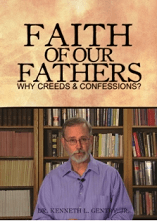 |



 Postmillennial Worldview
Did you know that “civil law” is also known as “municipal law” and “municipal law” is that which pertains SOLELY to the CITIZENS and INHABITANTS of a state? See Black’s Law Dictionary, 5th. Edition.
The law of the land and the law of God are one and they pertain to all the PEOPLE including persons that are citizens, inhabitants, as well as PEOPLE who are STRANGERS a.k.a “transient foreigners” or “transient persons.” Municipal law only pertains to “persons” who are citizens or inhabitants.
Transient foreigner. One who visits the country, without the intention of remaining. See Black’s Law Dictionary, 5th. Edition.
Transient person. Within venue statute one who is found in state but who has no fixed place of residence [i.e. domicile] therein. See Black’s Law Dictionary, 5th. Edition.
God’s people are strangers and foreigners on the earth as was Abraham while he was sojourning in the promised land.
An inhabitant is one who resides actually and PERMANENTLY in a given place and has his DOMICILE there. The words “inhabitant,” “citizen,” and “resident,” as employed in different constitutions to define the qualifications of electors, mean substantially the same thing; and, in general, one is an inhabitant, resident, or citizen at the place where he has his DOMICILE or [permanent] home.
One’s domicile is the place where a man has his true, fixed, and permanent home and principal establishment, and to which whenever he is absent he has the intention of returning. … A person may have more than one residence but only one domicile. The legal domicile of a person is important since it, rather than the actual residence often controls the jurisdiction of the taxing authorities and determines where a person may exercise the privilege of voting and other legal rights and privileges. “Citizenship,” “habitancy,” and “residence” are severally words that in particular cases may mean precisely the same as “domicile,” which in other uses may have DIFFERENT meanings. For purposes of federal diversity jurisdiction, “citizenship” and “domicile” are SYNONYMOUS. See Black’s Law Dictionary, 5th. Edition.
Therefore if you claim to be an Amendment 14 citizen of the United States you are claiming to be a “federal citizen” or citizen of the United States federal government who has their “domicile” in Washington DC – i.e. in Federal territory. As such you are only secondarily a citizen in the particular state of the Union in which you “reside” as a “resident.” Only Amendment 14 federal citizens may register and vote.
As a spiritual man of God your “domicile” or one true, fixed, and permanent home is in the Kingdom of Heaven, and while you are living on this earth your legal status or standing is that of a “transient foreigner” – i.e. in biblical terms a stranger and pilgrim in the world after being born anew.
Your “citizenship” is in Heaven and you are no longer a natural person or human being but now you are a spiritual man of God.
“Citizens” are members of a political community who, in their associated capacity, have established or SUBMITTED themselves to the DOMINION of a government for the promotion of their general welfare and the PROTECTION of their individual as well as collective rights. See Black’s Law Dictionary, 5th. Edition.
“Protection draws with it subjection and subjection protection.” Maxim of Law
The protection of an individual by government is on condition of his submission to the laws and such submission on the other hand entitles the individual to the protection of the government. See Black’s Law Dictionary, 5th. Edition.
Why not give up the government’s protection on the condition that one would no longer be subject to the civil laws of the government? One would still be subject to the common law or law of God.
When have you knowingly with intention voluntarily submitted yourself to the dominion [i.e. PERFECT CONTROL IN RIGHT OF OWNERSHIP] of the United States federal government [in consideration] for the promotion and protection of your individual rights?
All men are supposed to have been born equally free and independent of government so when did you voluntarily submit yourself to the dominion of the federal government FOR the promotion and protection of your rights?
Dominion. The generally accepted definition of “dominion” is PERFECT CONTROL IN RIGHT OF OWNERSHIP. See. Black’s Law Dictionary, 5th. Edition.
Federal citizenship. Rights and obligations ACCRUING by reason of being a [FEDERAL] citizen of the United States. [Federal citizenship is the] State or status of being a citizen of the United States. A person born or naturalized in the United States AND SUBJECT to the jurisdiction thereof [i.e. the jurisdiction of the federal government] is a citizen of the United States and [secondarily] of the state wherein he RESIDES [but does not have his permanent domicile] Amendment 14.
Where a man or woman STANDS in relation to others in the community determines who he or she is – one either stands as an unregenerate natural person/human being OR one stands as a regenerate spiritual man or woman of God.
There are only two places a man or woman may stand on this earth. Either with both feet firmly planted in and under the government of the Kingdom of Heaven and the King of kings under the Law of God OR with both feet planted in some earthly secular humanistic government of unregenerate men under the civil or municipal laws of unregenerate men. One cannot sit on the fence for he would then have both feet firmly planted in mid-air.
A spiritual man or woman of God cannot pledge allegiance and fidelity to two governments and attempt to serve two masters. Choose this day whom you will serve. As for me and my house, we will serve the LORD and Him only.
Peace